Wind Damage Roof Repair in Glendale, AZ
Home / Roof Damage Repair / Wind Damage Roof Repair
Request A
Roof Assessment
Tell us about the building and the roof. We reply with the next practical step for your property.
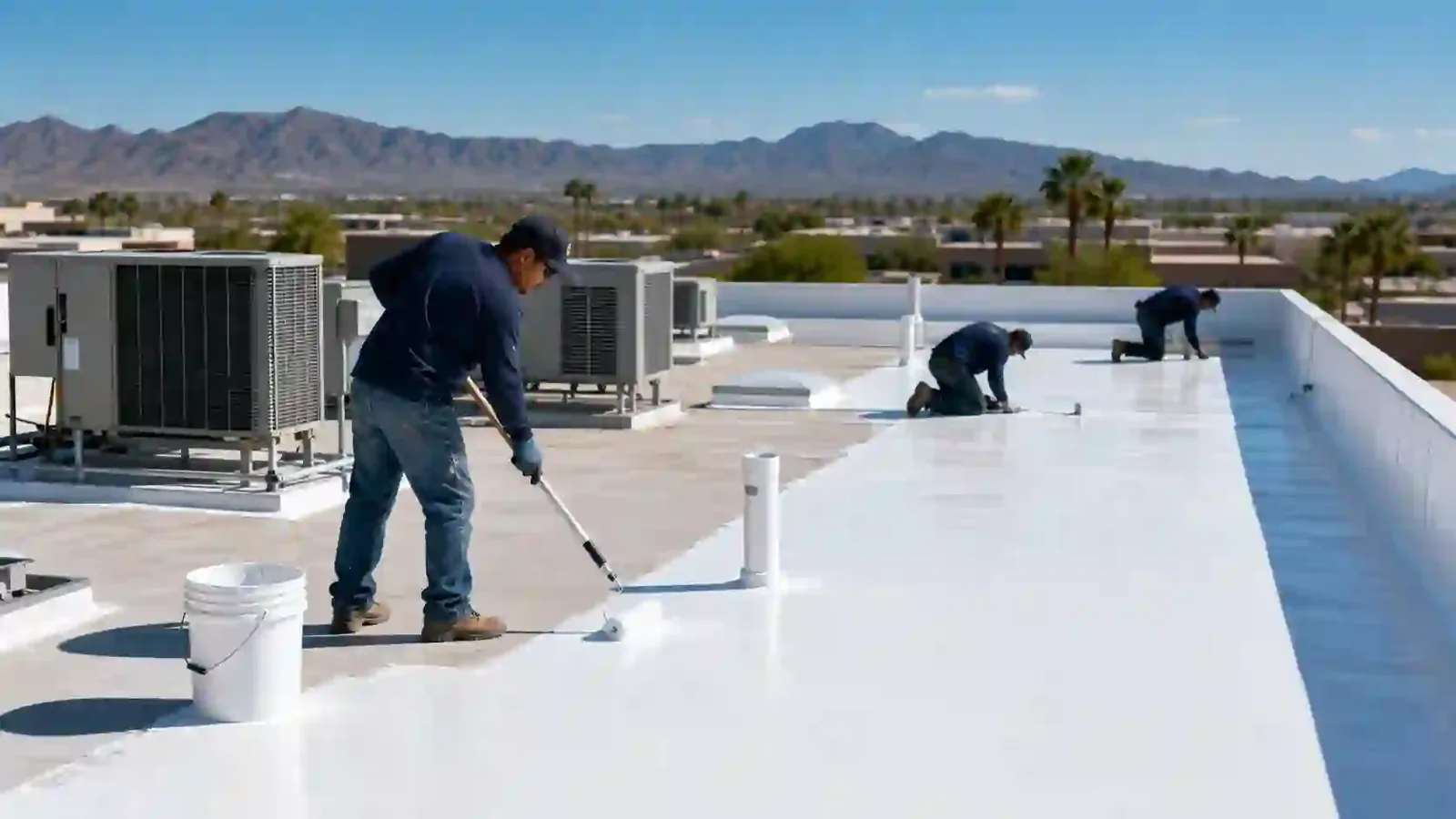
Wind damage roof repair in Glendale, AZ: we inspect lifted membrane, edge metal and coping after monsoon storms and price repairs from what we find.
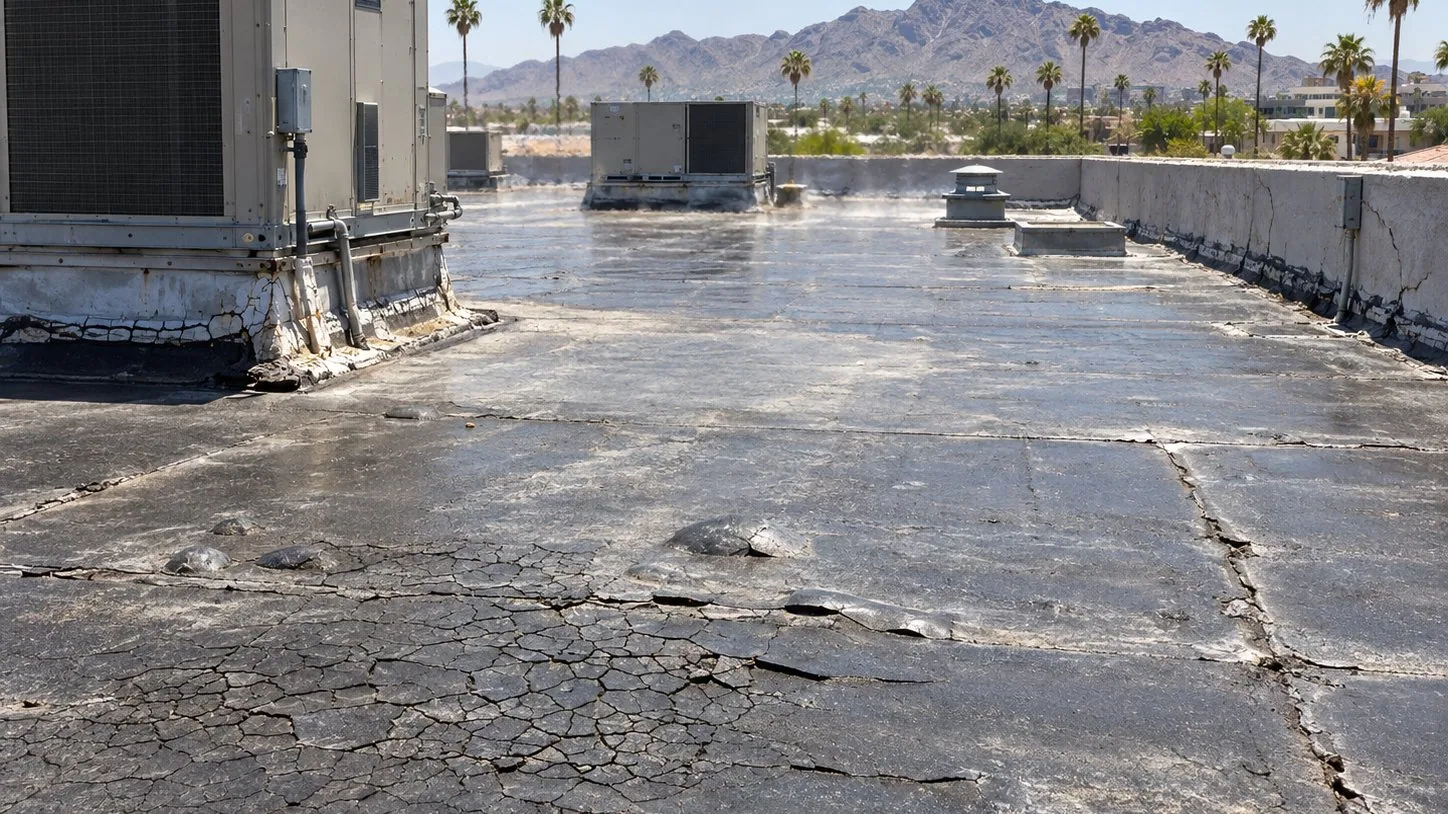
Monsoon season in the Desert Southwest officially runs June 15 through September 30, and in Glendale, AZ that is when most wind damage shows up on commercial roofs. Outflow gusts from a passing storm can peel back a membrane corner, lift edge metal or pop coping caps off a parapet, and what you can see from the ground is usually only part of it. A storm report tells us where to look. It does not tell us which fasteners pulled, whether the insulation got wet, or how far a loose sheet has let go underneath. So we walk the roof, find what actually moved, and price the repair from that, with a clear note on anything we could not see without opening the roof.
If the building is near State Farm Stadium at 1 Cardinals Drive or Glendale Main Library at 5959 West Brown Street, give us the exact address and a contact who can get us on the roof. Each building gets its own inspection. Photos from before the storm help, because they show what changed. The estimate ties each line item to something we found, not to a general claim that the area had high winds.
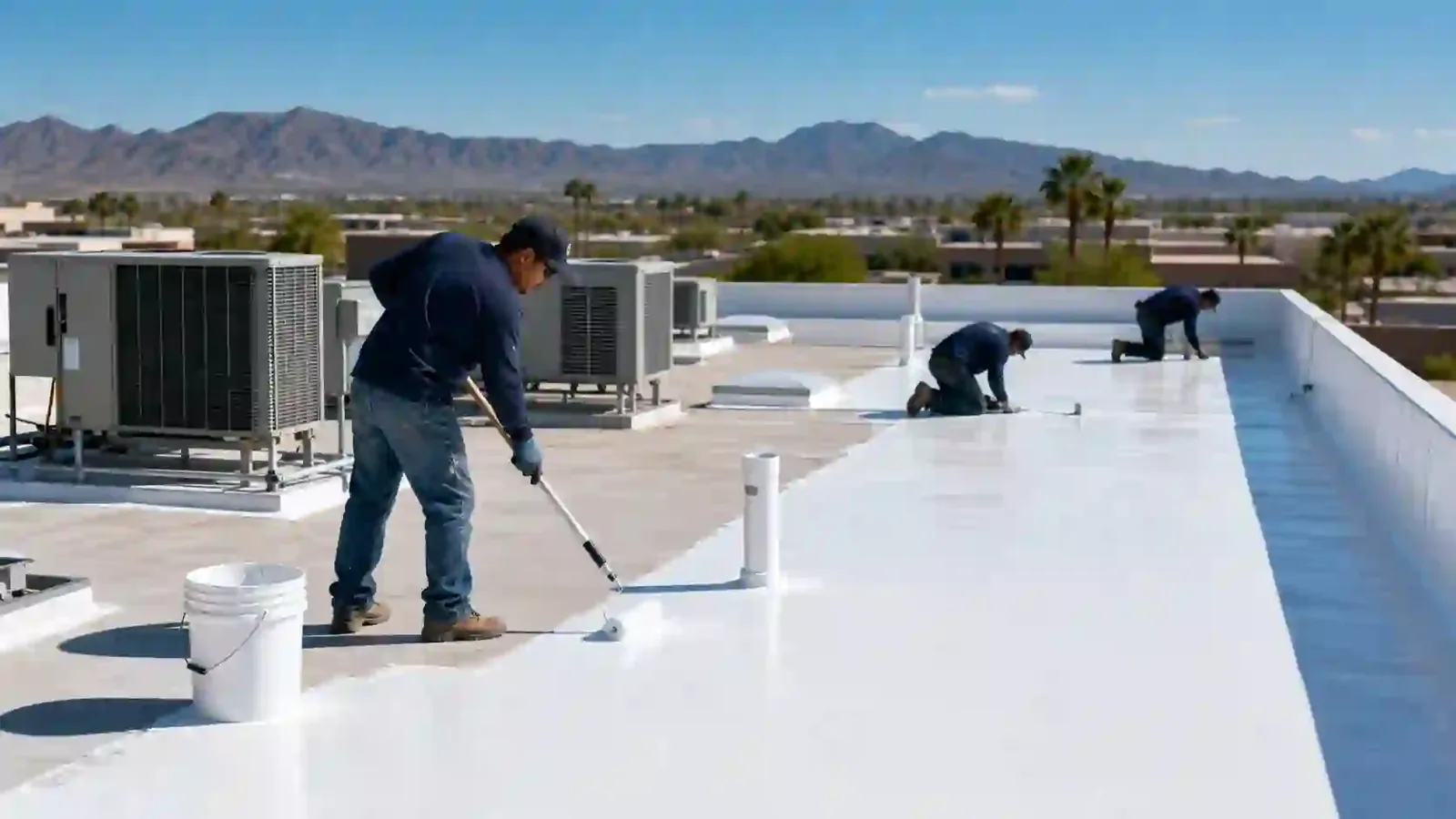
Find what moved before deciding how much to fix
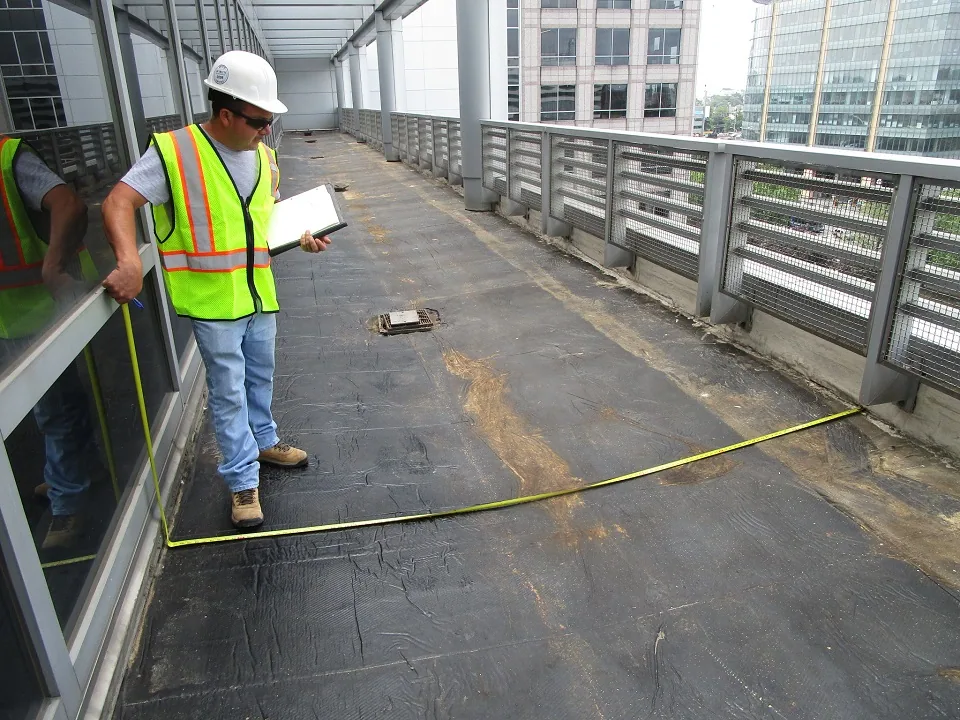
Wind damage usually starts at a corner or an edge, where uplift is strongest. On the roof we look for lifted or wrinkled membrane, torn seams, bent drip edge, missing coping caps and anything that slid or blew loose, then photograph each spot along with the sound roof next to it. We also ask when someone first noticed the problem and whether the roof has had repairs before, and we keep what you tell us separate from what we see. Some spots need a temporary patch the same day, before anyone knows the full size of the repair. Anything we could not reach goes on the report as unchecked, not as fine.
A commercial roof inspection is the starting point. Not every scuff or crease near the damage came from the same storm, and not all of it needs to come off. If a rooftop unit shifted or a support looks bent, the mechanical contractor or an engineer needs to see it. Better to sort that out now than to carry a big allowance for roofing nobody has defined yet.
Check the edge metal and what holds it down
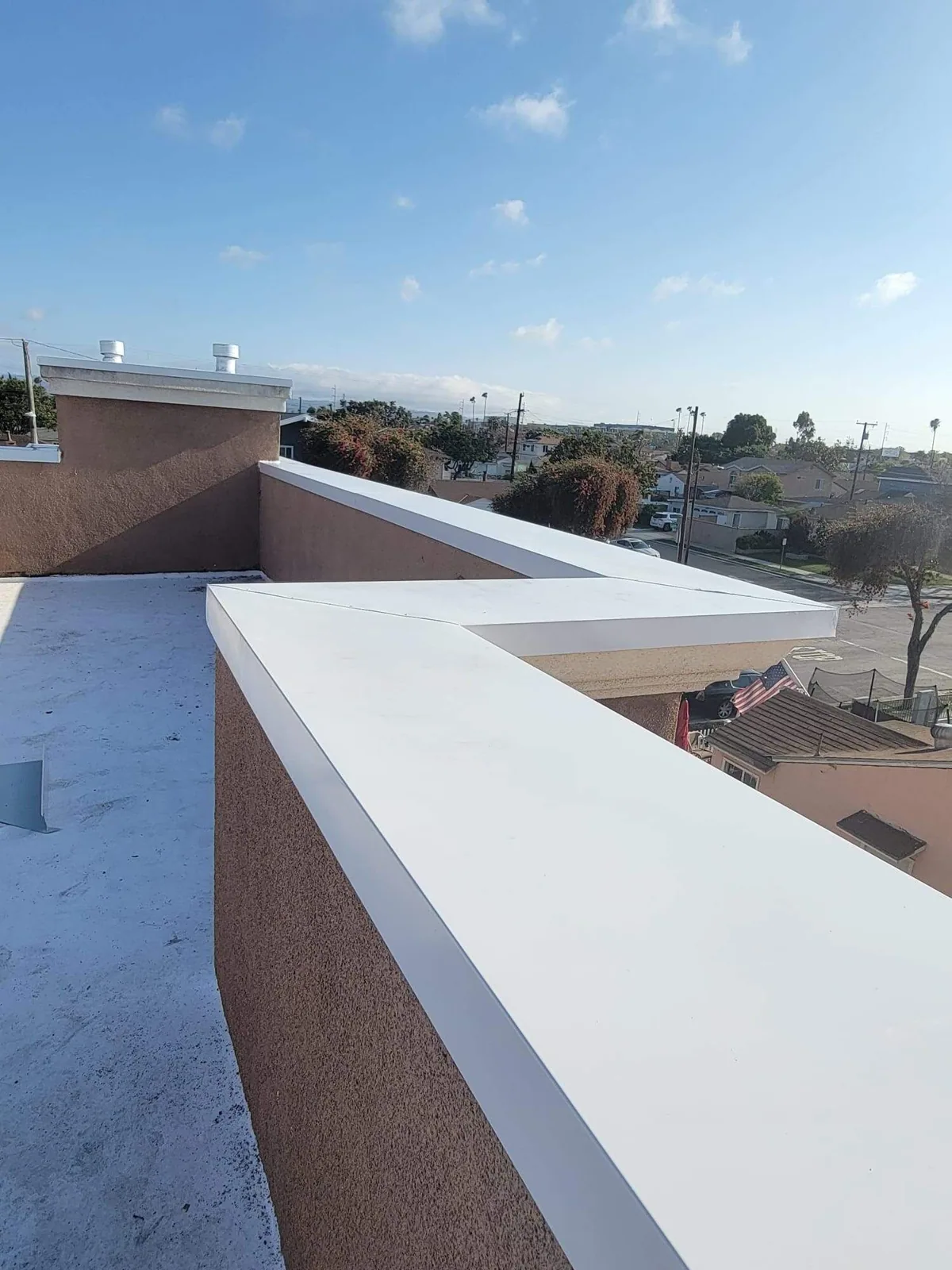
When edge metal lifts, the real question is what it was fastened to. The wood nailer behind the metal can be rotted, split or pulled loose, and the membrane that runs under the edge often tears with it. A new piece of metal screwed into a bad nailer will blow off again in the next storm. If the nailer is damaged, it gets replaced first, then the membrane is reattached, then the new edge goes on. When we can't judge the nailer without pulling the metal, the estimate says so and lists that as a step before we commit to reusing anything.
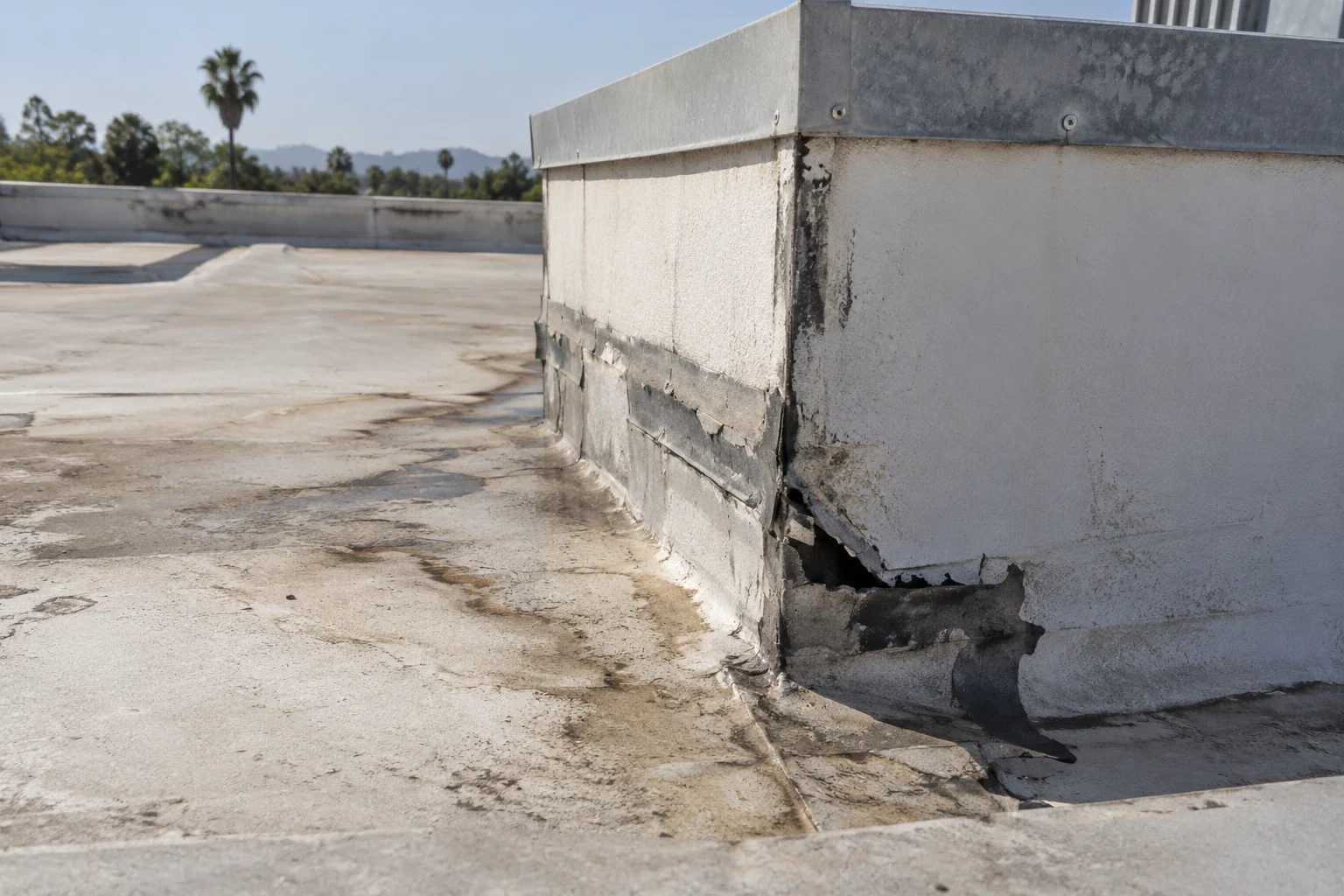
Our edge metal and coping work follows the manufacturer's requirements for the profile being installed. If the building needs an engineer's call on how the edge is attached, that call stays with the engineer. Where the edge meets a wall or a curb, the flashing repair at that spot can have its own backing problem. We price those corners and transitions one by one rather than lumping the whole perimeter into a single line.
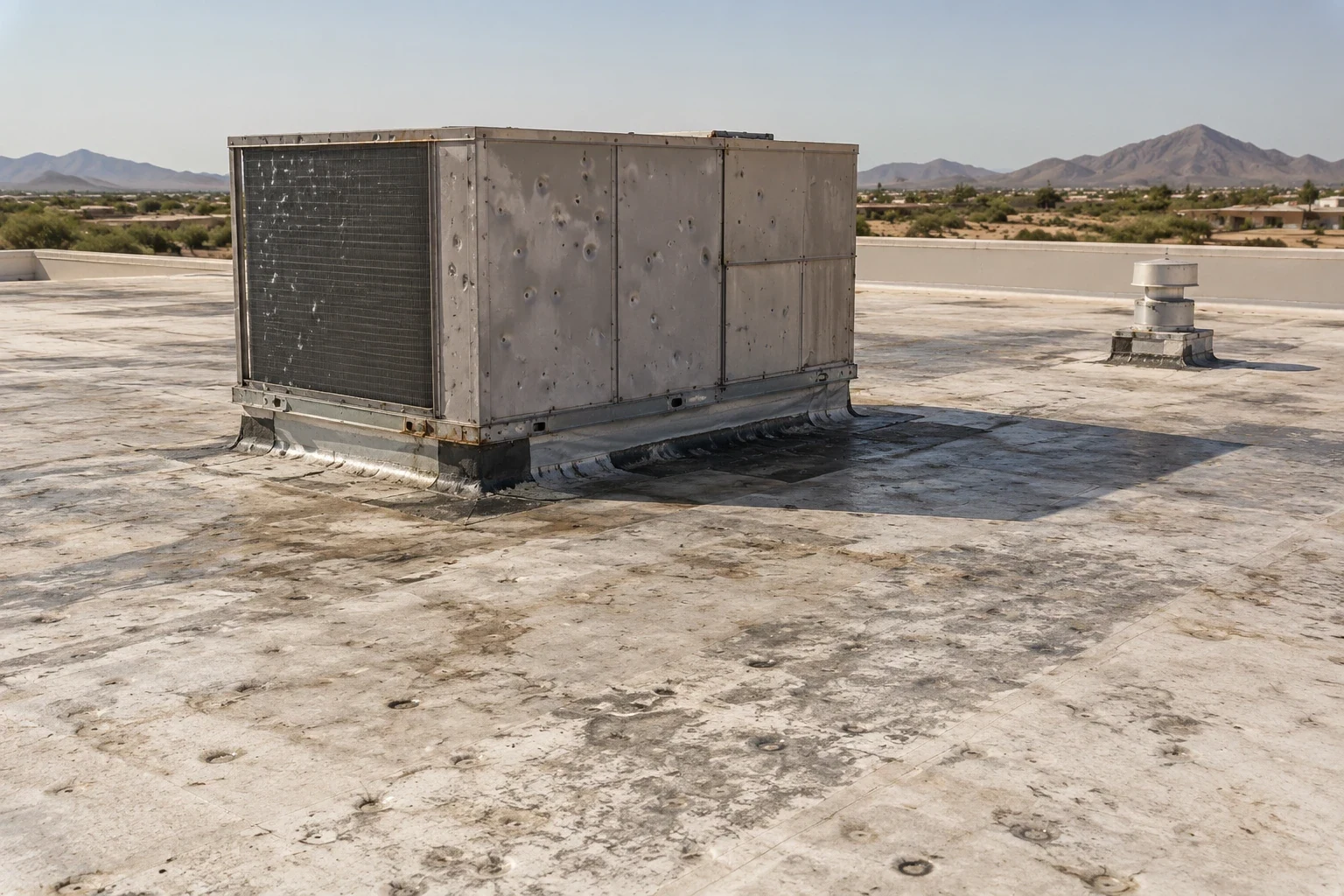
Check the membrane that stays next to the repair
A torn or loose membrane can only be patched into sound membrane. Before we draw the repair line, we confirm what the roof is (TPO, PVC, EPDM or modified bitumen) and look at the edge of the proposed patch for old repairs, dirt, oil and weathering. TPO and PVC seams are heat-welded. EPDM uses tape and primer. Mod bit is torched or set in adhesive. Each needs a clean, solid surface to bond to, and years of Arizona sun can leave the surrounding sheet too brittle to take a good seam. When that happens the patch has to grow, or a larger section gets replaced, and we explain why.
A seam failure repair is a different problem from a sheet that blew loose in the field, and we track them separately. One open seam is a spot fix. A dozen open seams across the roof point to a wider problem with the membrane or how it was attached. Knowing which you have lets you weigh a few targeted repairs against a larger section. A neighbor's repair on the same brand of roof does not prove your sheet is still good.
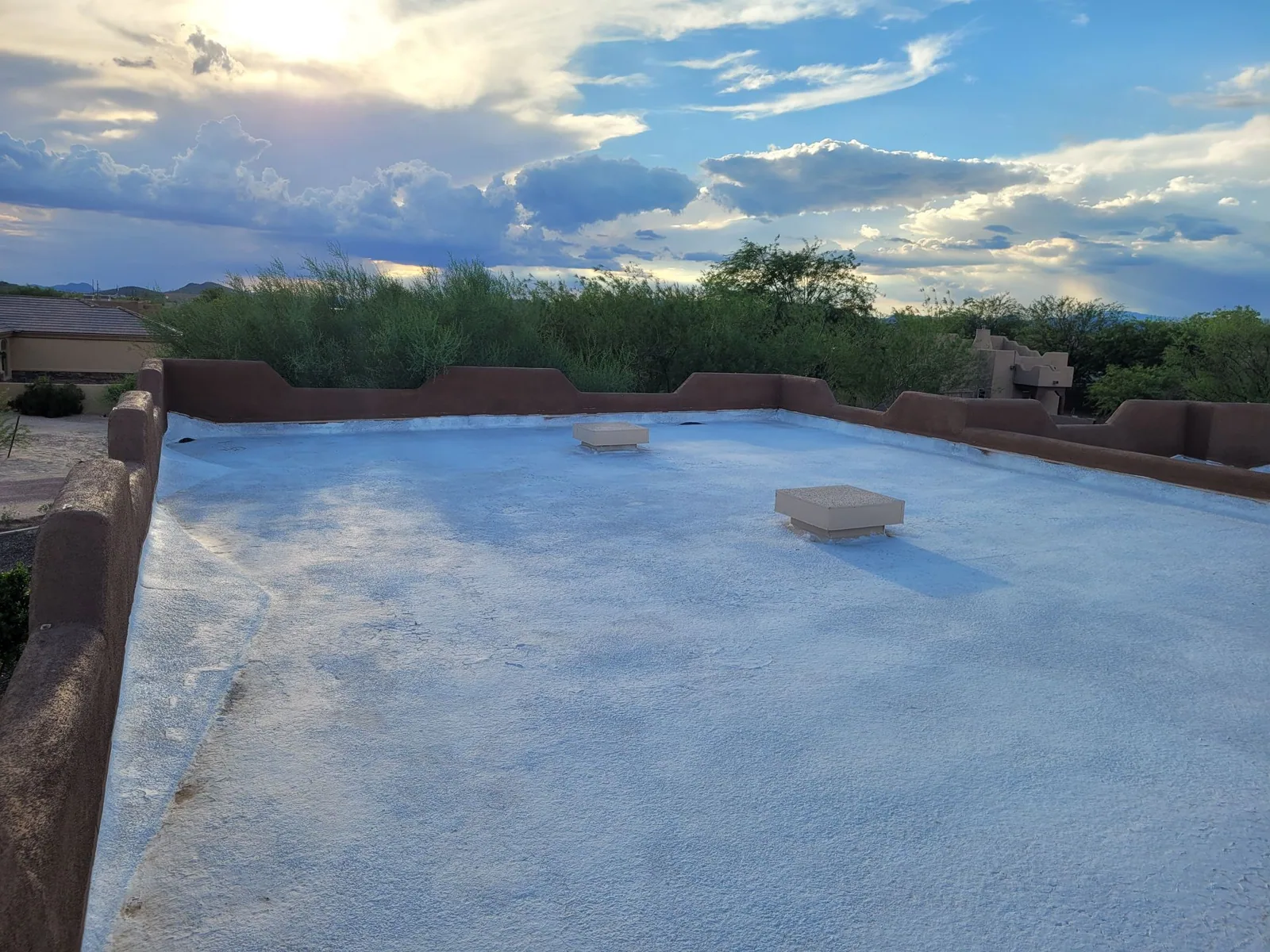
Check the insulation before the roof is closed up
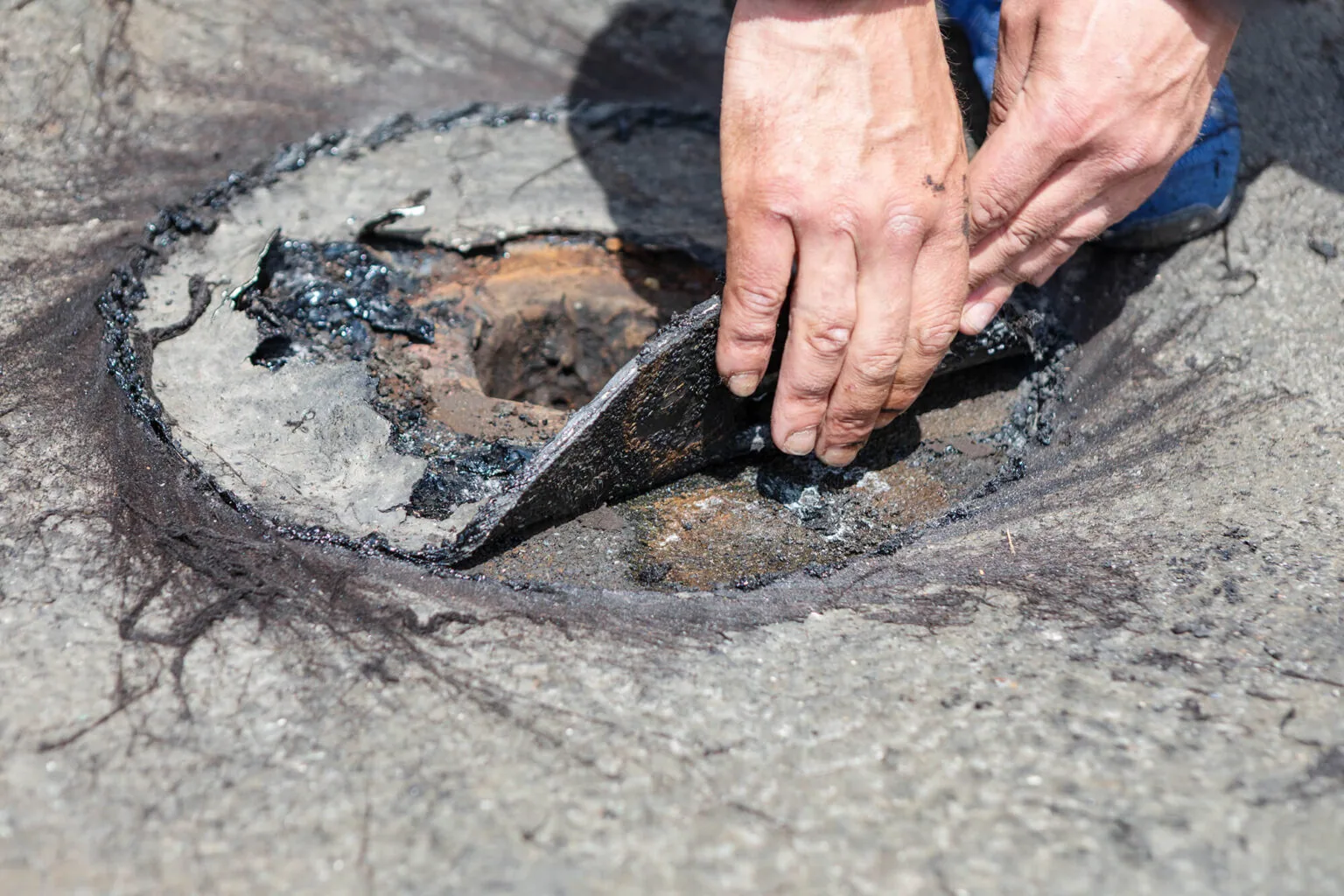
Once wind lifts the membrane, dust and rain can get into the insulation below. We note any wet or crushed board we actually find and mark the areas we suspect but have not confirmed. An infrared moisture survey can point to wet spots across a large roof, but it is a map of likely problems, not proof. Readings depend on the roof assembly and the conditions the night of the scan. Core cuts at a few locations tell us what is really in there before anyone commits to a tear-off quantity.
Every core cut gets patched the same day, and that patch is in the price. We photograph what we find before new material goes over it. If the wet area is bigger than the estimate assumed, we show the building owner where and how much before the crew keeps going, so the extra work is approved while the reason is still visible. Deck or structural concerns go to an engineer, and mechanical issues go to the HVAC contractor. New roofing goes down on a dry, sound base, and any change in quantity ties back to what we found.
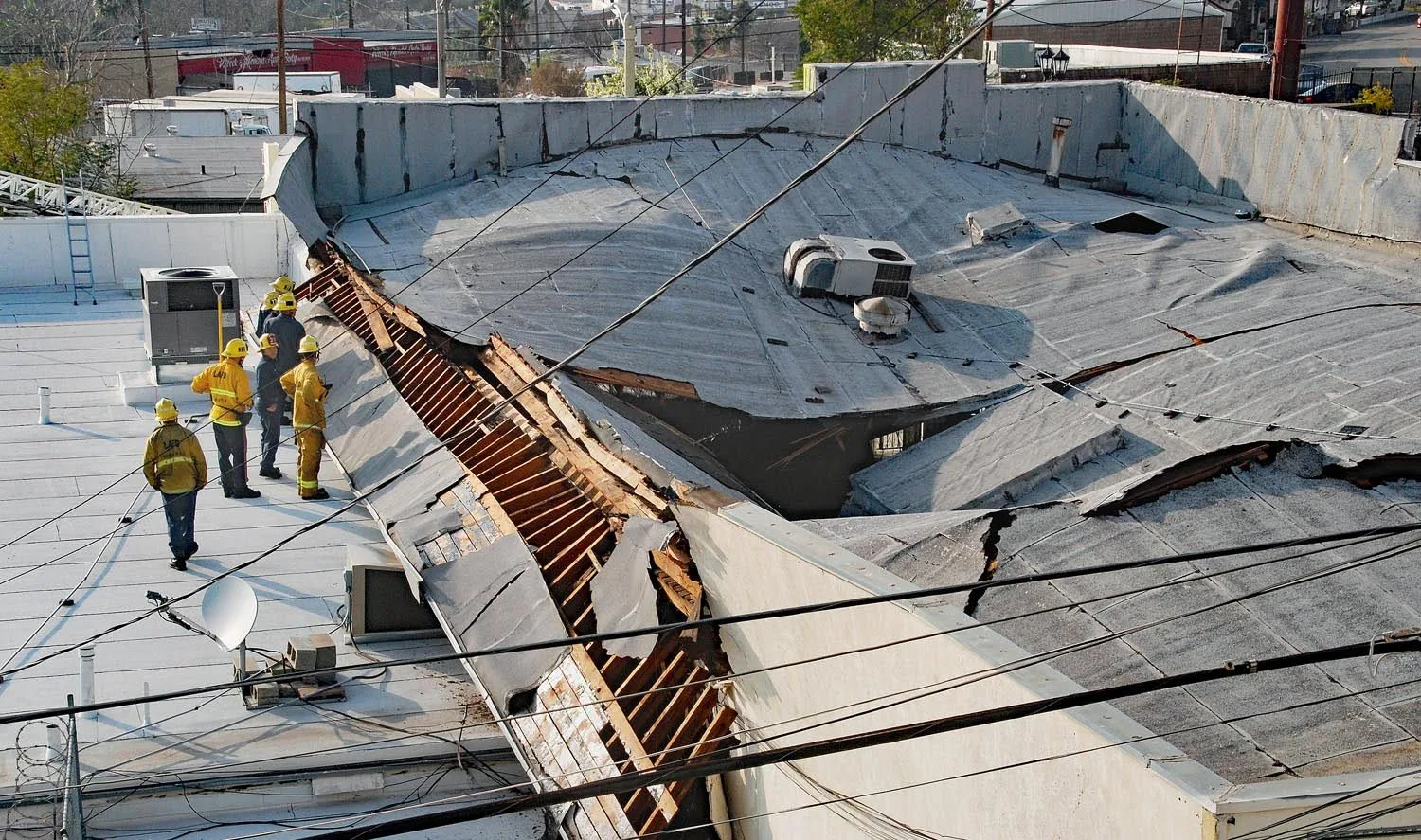
Keep the roof dry between work days
A damaged area often needs a temporary fix before the permanent repair can happen, especially when new edge metal or nailers are on order. We tell you where the temporary patch is, what it is for, and what still has to be done there. At the end of each visit you know which spots are finished and which are only protected, and who to call if something new shows up. We answer roof calls overnight, on weekends and on holidays when a leak or a loose sheet can't wait. A temporary patch is never described as the final repair.
On an office building roof, we go over hoist location, the path to the roof and material staging with the property manager before work starts, and we follow the building's rules for tenant areas. If another trade has to finish something before we can close a section, that goes on the schedule. How much roof we open at once depends on how well we can protect it overnight with storms possible. If opening the roof turns up more damage, we revisit that plan with you.
More on Wind Damage Roof Repair
Keep a record of what was repaired
When the job is done, you should be able to point to each repair on a roof plan and see what was done there. We keep the before photos, the condition of the nailer or insulation once it was exposed, prep photos and the finished details together. If an edge was rebuilt, the record shows the new nailer and the metal that went over it. Approved change orders sit next to the condition that caused them. The storm report stays in its own file, apart from what we found and what we fixed.
For Arrowhead buildings with wind damage, each building keeps its own file through closeout. Open questions, like a nailer we could not check or an area left out of the scope, are listed with what should happen next. A finished repair does not mean the rest of the roof is sound, and it does not settle any question about the storm itself. You get a plain account of the permanent repairs and any temporary patches still in place, so you and your contractor can plan what is left.
Commercial Roofing Questions
Does a storm report tell us how much roof needs repair?
No. The report says the storm happened; the inspection shows what it did. We price what we find on the roof and flag anything, like pulled fasteners or wet insulation, that needs a closer look.
What does an edge metal repair include?
More than the metal. We check the wood nailer it fastens to and the membrane underneath. If the nailer is damaged, replacing it is its own line on the estimate, so new metal isn't screwed into rotten wood.
What happens if the insulation is wet?
Wet insulation has to come out, so the repair gets bigger. We confirm it with core cuts, show you where and how much, and keep the area protected until you approve the change.
What records do we get when the repair is finished?
Before, during and after photos of each repair, tied to a roof plan. Anything left open, such as an unchecked area or work by another trade, is listed separately with the next step.
Get the wind damage checked
Send us the building address and what you're seeing on the roof. We'll inspect the damage, explain what needs fixing and what needs protecting now, and give you a clear estimate.
Next steps for your building:
Related Roofing Work
More commercial roofing work for Glendale and West Valley properties.