Thunderbird Medical Corridor Commercial Roof Repairs
Home / Service Areas / Thunderbird Medical Corridor
Request A
Roof Assessment
Tell us about the building and the roof. We reply with the next practical step for your property.
Plan Thunderbird-area commercial roof work in Glendale with facility-provided instructions, defined opening limits and an explained return of each roofing area.
A roof opening near an occupied medical space needs a monsoon closure plan and the facility's work instructions reviewed together. The regional June 15 through September 30 season makes an interrupted operation a practical issue for the roof package. Commercial Roof Repair Glendale examines the roofing concern and explains the proposed method to the general contractor. The authorized facility contacts supply requirements for the spaces affected, so the work arrangement can be assessed before removal starts.
Thunderbird Road is a broader medical and commercial corridor with multiple clinics, offices and support businesses. Banner Thunderbird Medical Center is one area institution, not the service target for every nearby building. The facilities contact identifies the assigned property, sensitive rooms, roof access and any equipment shutdown approval. We inspect the reported zone, distinguish roofing evidence from possible condensate or plumbing issues and state what work can proceed. For occupied clinical spaces, protection and work timing are set with the operator before material is moved overhead.
Explain the operation before requesting the facility review
A cleaning task, an adhesive application and removal above occupied space have different practical effects. Describe the intended roofing activity to the facility representative so that person can provide the relevant building instructions. Ask whether infection-control review, dust containment, air intakes or odors require attention for this operation. We discuss the method against the directions supplied. If another approval or component task is needed, identify the responsible contact and arrange it before the roof detail is opened.
Occupied building reroofing should make the work boundary and protection understandable to both the general contractor and facility contact. Review which area is released, where material handling occurs and the closure at each phase. Do not let a short planned work period stand in for the actual construction being proposed. The facility representative needs enough detail to evaluate the operation and explain the instructions applicable to the space below.
Investigate the reported area with a defined roofing purpose
A water concern above a room may involve a membrane connection, penetration or outlet, as well as a separate wall or equipment question. Provide the observed location, timing and relevant work history. We examine accessible details that help establish the route. The findings should state what roofing correction is supported and what still requires another investigation. That gives the general contractor a usable division of tasks rather than a general request to treat the surface over the affected room.
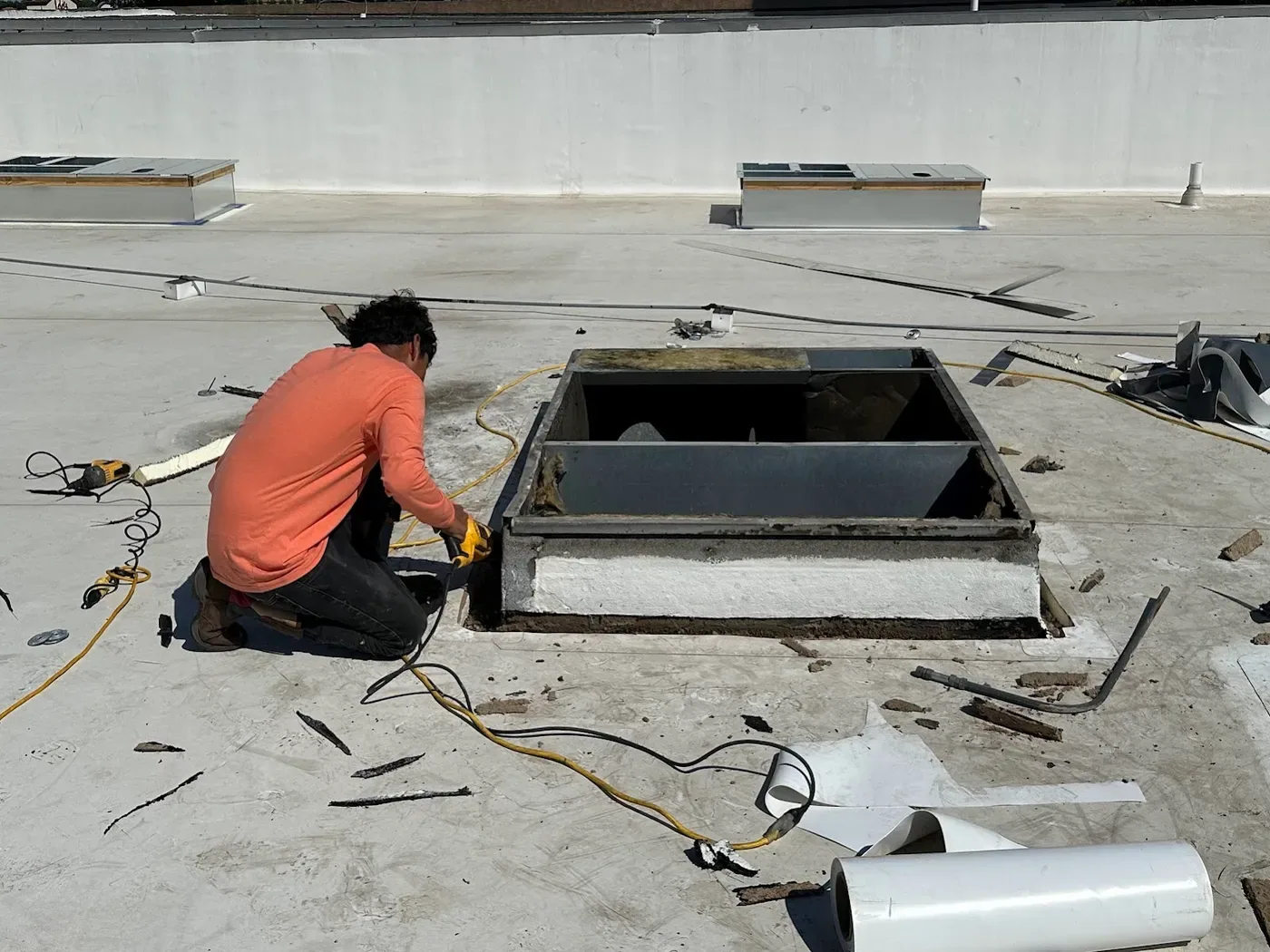
Commercial roof leak repair uses a method suited to the examined defect. A separated membrane joint needs appropriate preparation and reconstruction. A patch at a puncture requires suitable surrounding covering and support. A failed curb transition needs work at its connection and termination. We explain that material boundary and a separate component question where applicable, so the facility contact understands which part of the concern the roofing approval addresses.

Keep a component task from delaying the roof closure
Equipment can obstruct the detail that needs correction. Before dismantling it, identify the representative responsible for any necessary movement, isolation or service. Explain the condition needed for the roofing connection to be completed. We discuss the flashing method and the interim closure if that component operation is delayed. The general contractor can coordinate the required handoff while the facility contact understands the roof state above the occupied area during the interruption.
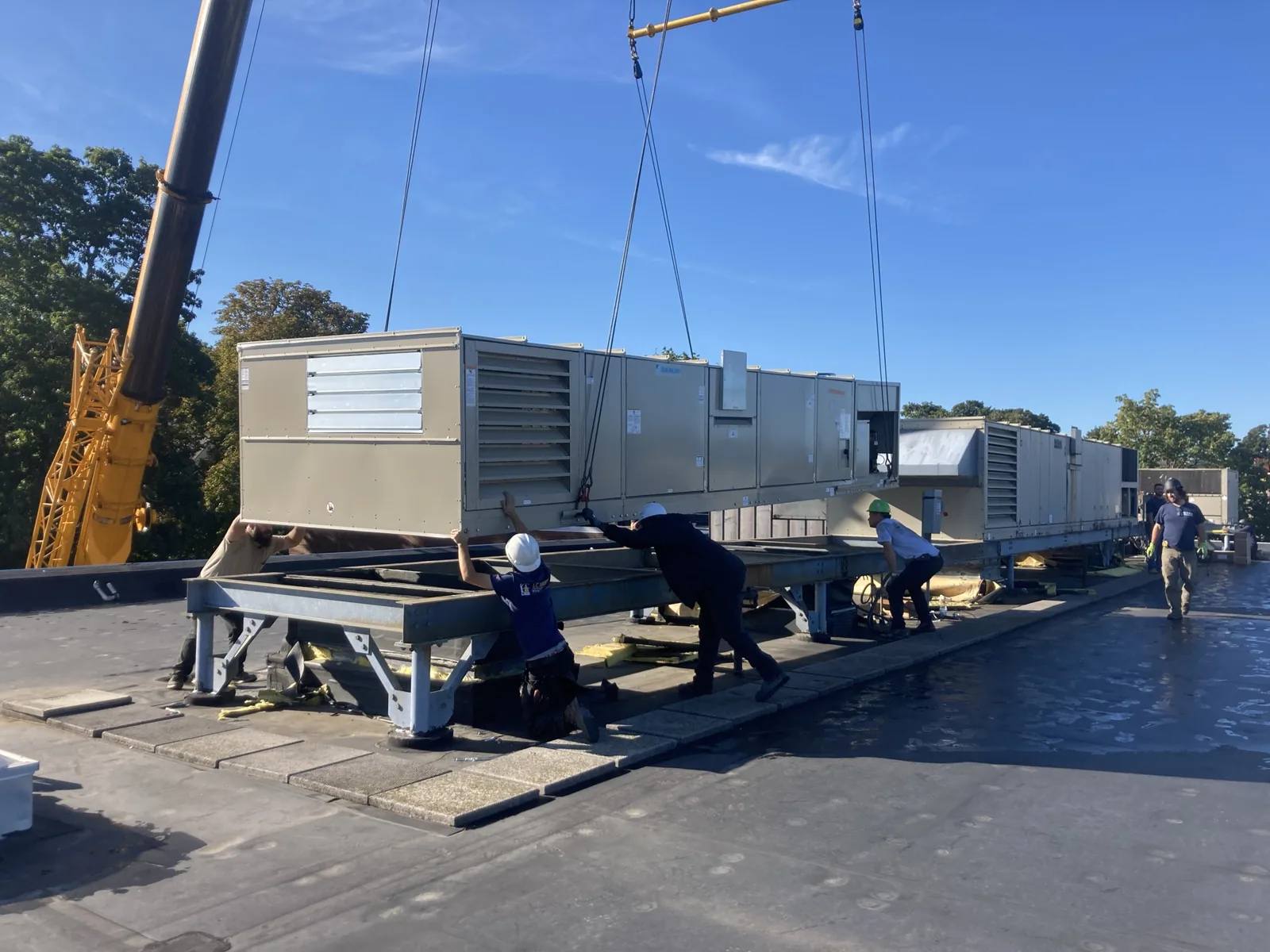
With rooftop equipment curbs and supports, keep the component operation distinct from our roofing reconstruction. A necessary task should have a responsible representative and a clear place in the sequence. If its return changes the work period, communicate the adjustment to the contacts reviewing the occupied-space arrangement. Explain the practical construction left in place rather than leave the next person to infer it from the fact that the roofing crew has departed.
Let the material condition establish the removal boundary
A localized visible defect may sit above uncertain layers. We explain the examination needed if moisture, deteriorated insulation or support affects whether the construction can remain. Show how the findings change removal and the connection to serviceable material. The general contractor needs that condition in the roof package, and the facility contact needs the practical effect on the opening. A surface-only appearance should not settle an unresolved concern below the intended correction.
For wider deterioration, compare appropriate repair, recover and replacement choices. Explain retained layers, attachment, drainage and the removal the option requires. A larger project may need another phase arrangement and facility review. We describe the roofing basis for considering it, keeping further investigation separate from a correction ready to proceed. The owner can then examine the choices with an understanding of both their material assumptions and the work arrangement the facility must assess.
Plan the return condition at the end of active work
Review the opening and its suitable closure before removal starts. The stopping boundary may follow the planned work period, a weather change or a finding that needs owner approval. We explain the roof condition returned at that point. If hidden damage expands the task, document it with the proposed additional correction, amount and sequence effect. The interim closure and the facility's provided instructions remain relevant while the decision is arranged, rather than wait until the permanent finish is complete.
Roof condition reports can retain the findings behind the project decision. Keep each unresolved material question visible alongside the proposed correction. A building near Arrowhead may need a separate work-area release and roof sequence. The general contractor can coordinate approval timing while keeping each property's findings and provided instructions with its own roofing operation. A shared review should not obscure what remains open at either building.
More on Thunderbird Medical Corridor
Make turnover useful to the receiving contact
Compare preparation, reconstructed details, replaced layers, access equipment and protection in the quoted work. Explain the separate component task and any examination still needed. We connect the amount to the operation so the owner can understand a narrower scope versus a different price for equivalent work. A change found during removal should preserve that clarity, with the condition, correction and practical effect shown to the person authorized to approve it.
The completed roofing record should locate the correction and explain relevant concealed construction through useful photographs. Include approved adjustments and applicable written warranty information. Identify an outstanding wall or component concern separately from the finished roof task. Discuss the roofing state being returned to the facility contact and any arranged follow-through. The next representative can then act on the remaining coordination with a clear account of what the roofing operation completed. For a second Glendale property, compare its access plan with the separate needs in Historic Downtown Glendale rather than carrying medical-space controls into a different occupancy.
Commercial Roofing Questions
Which instructions belong in a facility review of the roof task?
The applicable requirements come from the facility representatives. We describe cleaning, preparation, openings and component work so they can provide practical directions for the affected space.
Can an equipment delay change the roof return?
The flashing connection needs a suitable interim condition and an explained component return. Review that adjustment with the contacts responsible for the occupied-area arrangement.
What establishes how much material is removed?
The examined defect and adjoining or underlying condition support the boundary. We discuss further investigation when concealed moisture or deterioration leaves retention uncertain.
Who reviews a larger opening than originally proposed?
The named approval contact receives the documented condition and revised task. The facility representative also needs the practical sequence change affecting the work arrangement.
What should remain clear in the roofing completion record?
Separate the finished correction from an outstanding wall or component concern. Relevant photographs, approved changes and applicable written warranty information support the handback to the receiving contact.
Review the Thunderbird roof operation with the facility contact

Set a pre-roofing meeting with the general contractor and responsible facility representatives. We can explain the correction, phase closure and monsoon contingency against the instructions your building provides.
Next steps for your building:
Related Roofing Work
More commercial roofing work for Glendale and West Valley properties.