Flashing Failure Repair in Glendale, AZ
Home / Roof Damage Repair / Flashing Failure Repair
Request A
Roof Assessment
Tell us about the building and the roof. We reply with the next practical step for your property.
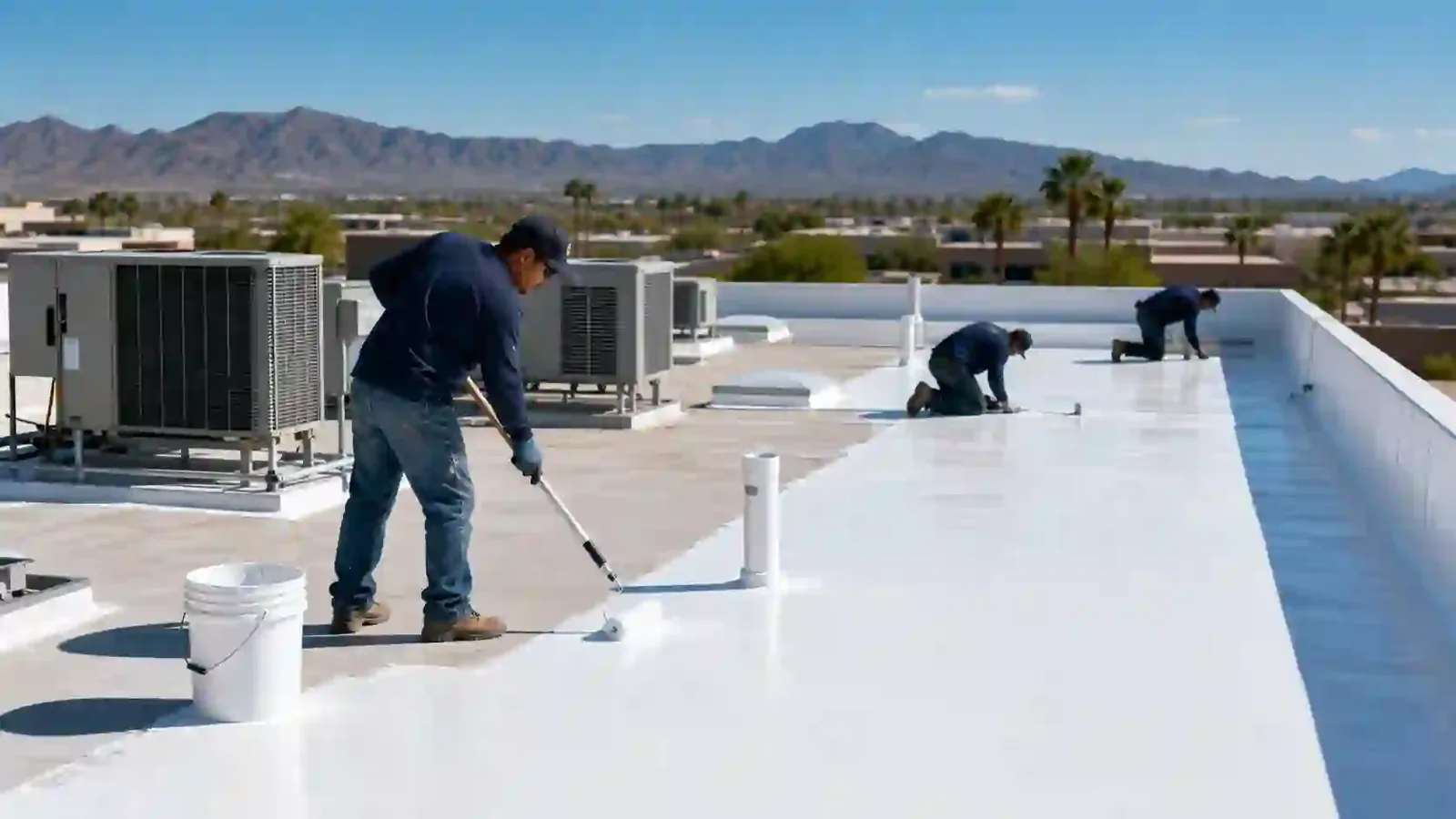
Flashing failure repair in Glendale, AZ for parapet walls, HVAC curbs, scuppers and drains, with the backing checked and other trades' work spelled out.
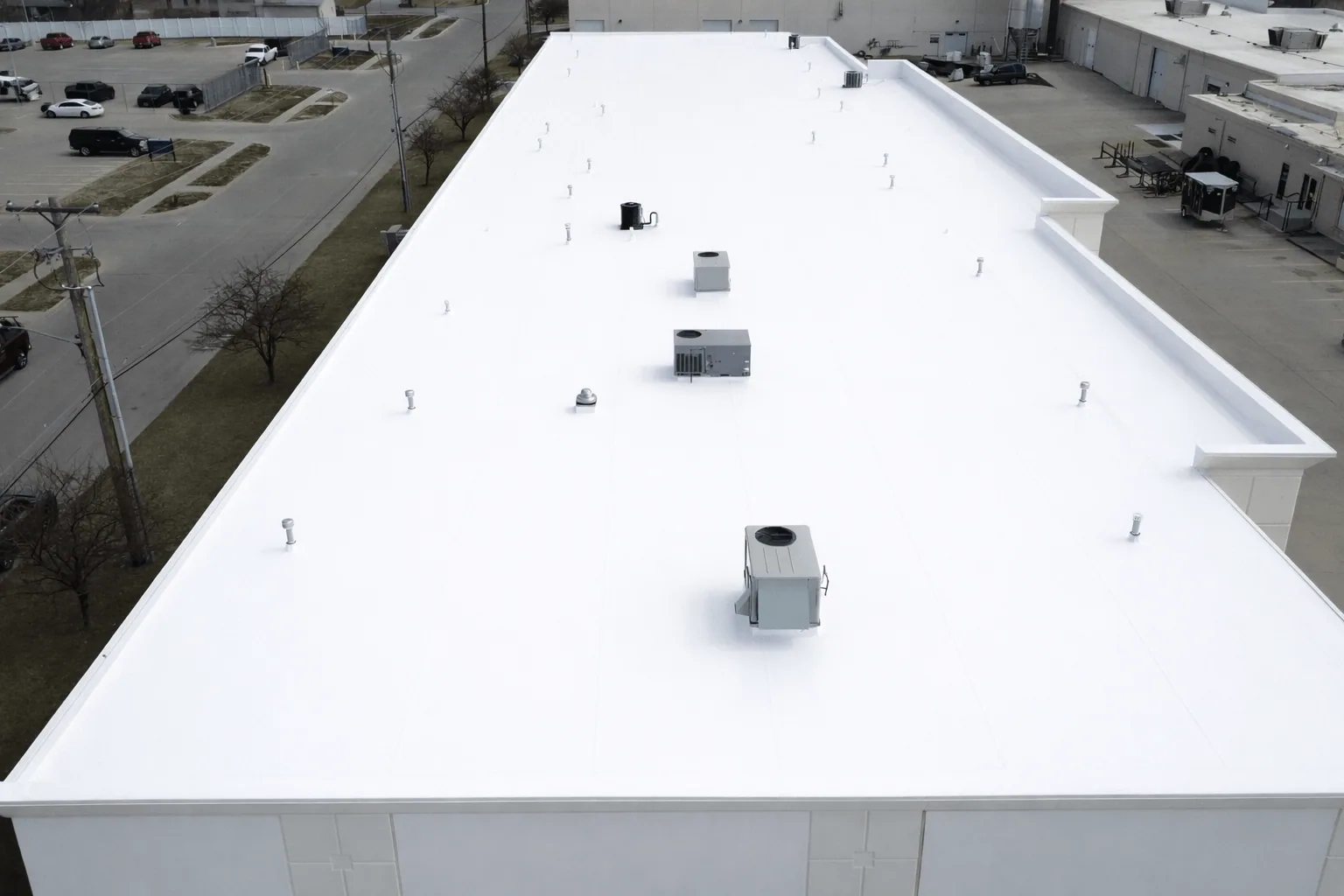
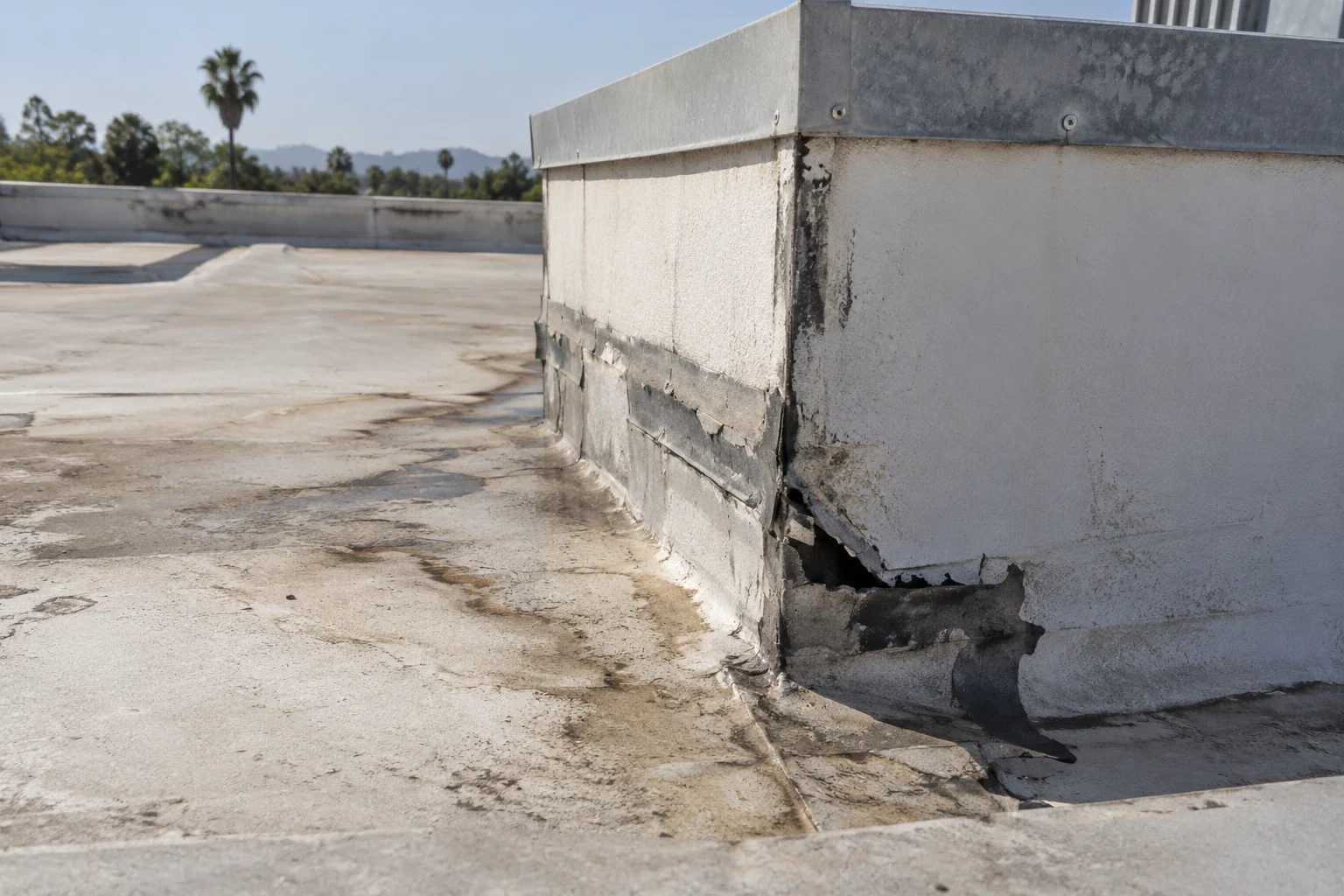
Most commercial roof leaks in Glendale do not start in the middle of the roof. They start at the edges and penetrations: where the membrane turns up a parapet, wraps an HVAC curb or meets a drain. That is flashing, and it takes more abuse than the field sheet. Desert sun bakes the vertical membrane, walls and curbs move differently than the deck, and sealant dries out and pulls away. Monsoon season runs June 15 through September 30, and wind-driven rain finds every gap at a wall. Flashing failure repair in Glendale, AZ means fixing the whole detail, not smearing a new bead of caulk over an old one. Flashing that has pulled loose at the top needs a different fix than flashing that has split at the base of a curb.
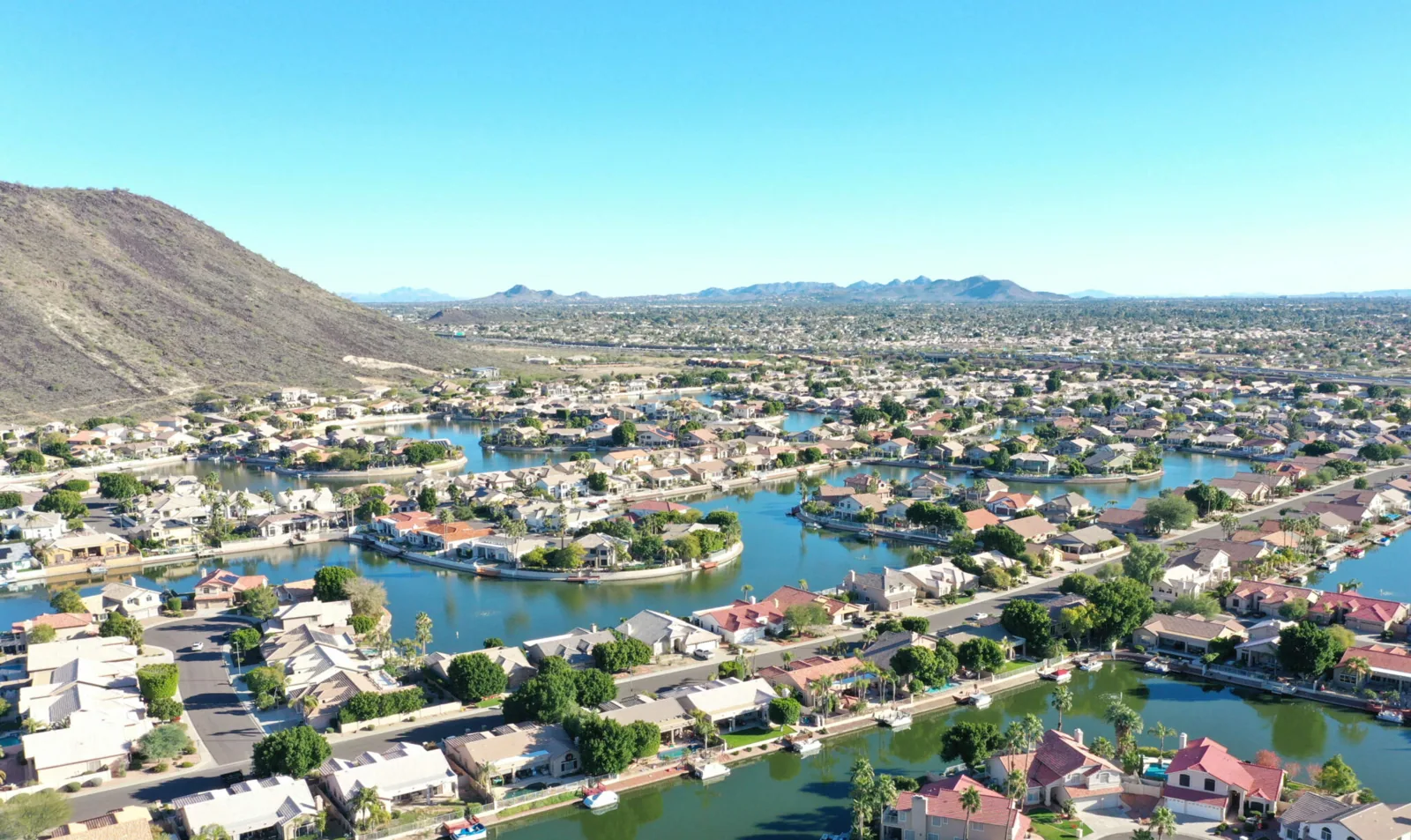
Whether the building sits near State Farm Stadium or down the street from Glendale Main Library, the job starts the same way. We go up, find the failed detail and look at what it is attached to. Drawings and past repair notes help us understand what is there. What we find at the wall or curb sets the scope.
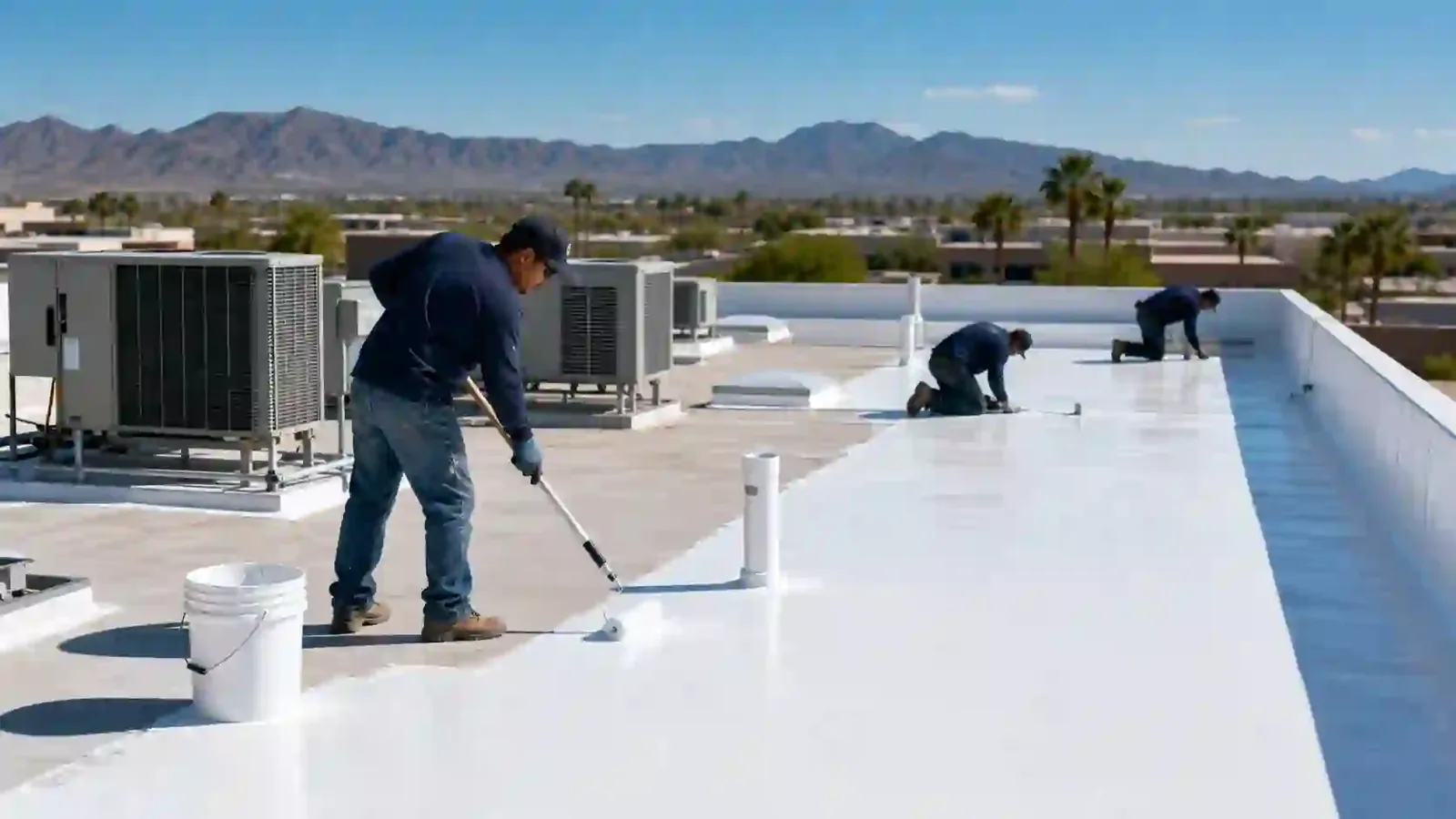
Find which detail failed
A parapet wall, an equipment curb, a pipe boot and a drain each flash differently. The first job is figuring out which one failed and how: did the membrane pull away at the top, tear at a corner or crack at the base where it bends? We photograph each spot with enough of the roof around it that anyone can find it later. We also check whether old repairs, like a smear of mastic or a patch from another system, are hiding the original detail. The estimate spells out whether the fix is membrane, wall backing, sheet metal or a part another trade owns.
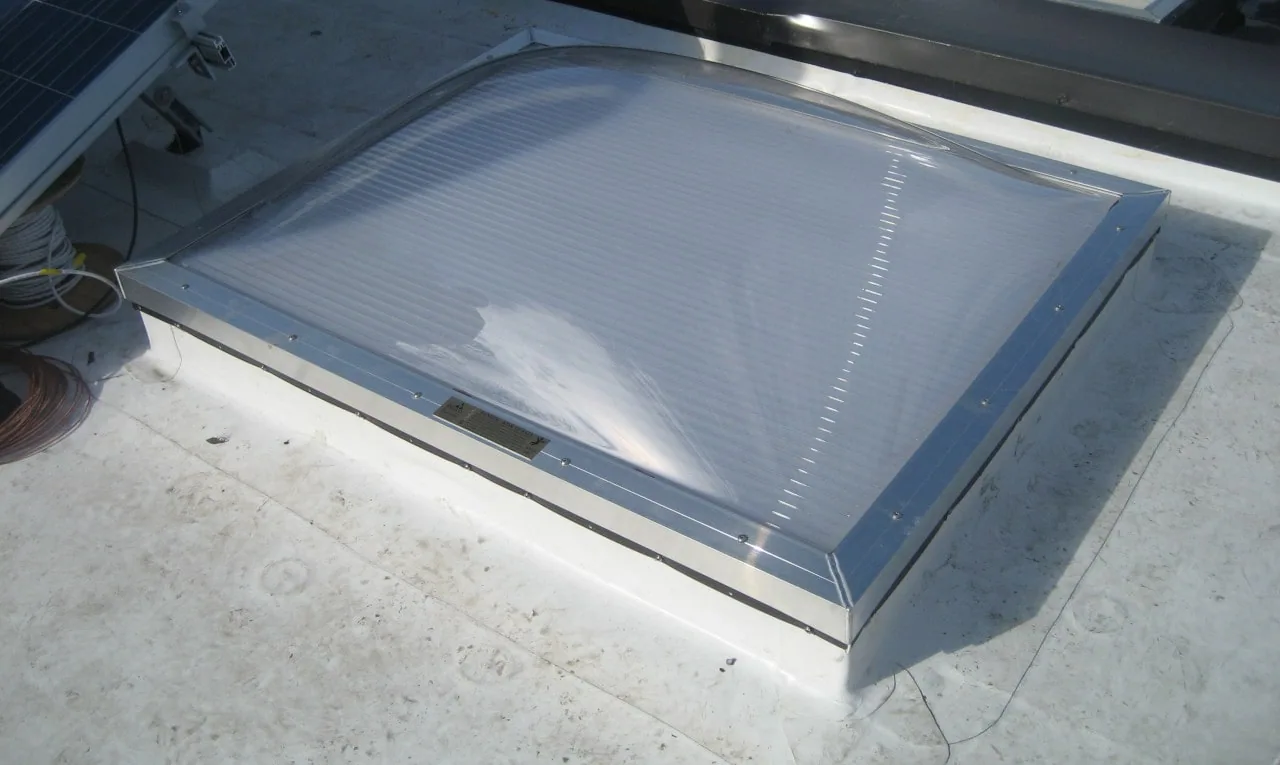
Skylights, vents and pipes are their own category; our penetration flashing work handles the boot or curb and the membrane around it together. If a patch hides the original membrane, we cut a small sample to identify it before choosing materials. Interior leak locations go on the report too, but we keep them separate from roof findings. Water can travel a long way inside a roof before it shows up on a ceiling tile.
Check the top edge of the flashing
The top edge of a wall flashing is where water usually gets behind it. If the termination bar is loose, the sealant has cracked or the counterflashing has pulled out of the wall, rain runs down behind the membrane even when the membrane itself looks fine. We check the fasteners, the sealant and the wall above. Cracked stucco or a parapet cap with open joints can feed water behind good flashing, and that may need a mason, a stucco contractor or a sheet metal shop. If so, the estimate says who does what, rather than burying it in a lump-sum flashing line.
Sometimes there is an open seam failure right next to the wall flashing. We price those as two repairs, because welding a field seam does nothing for rotted backing at the wall, and fresh caulk at the top does not mean the attachment behind it is sound. We tell you what we can confirm from the surface and what needs a test cut or another trade to check. The general contractor can then schedule the wall and roofing work in the right order.
Fix the curb before flashing it
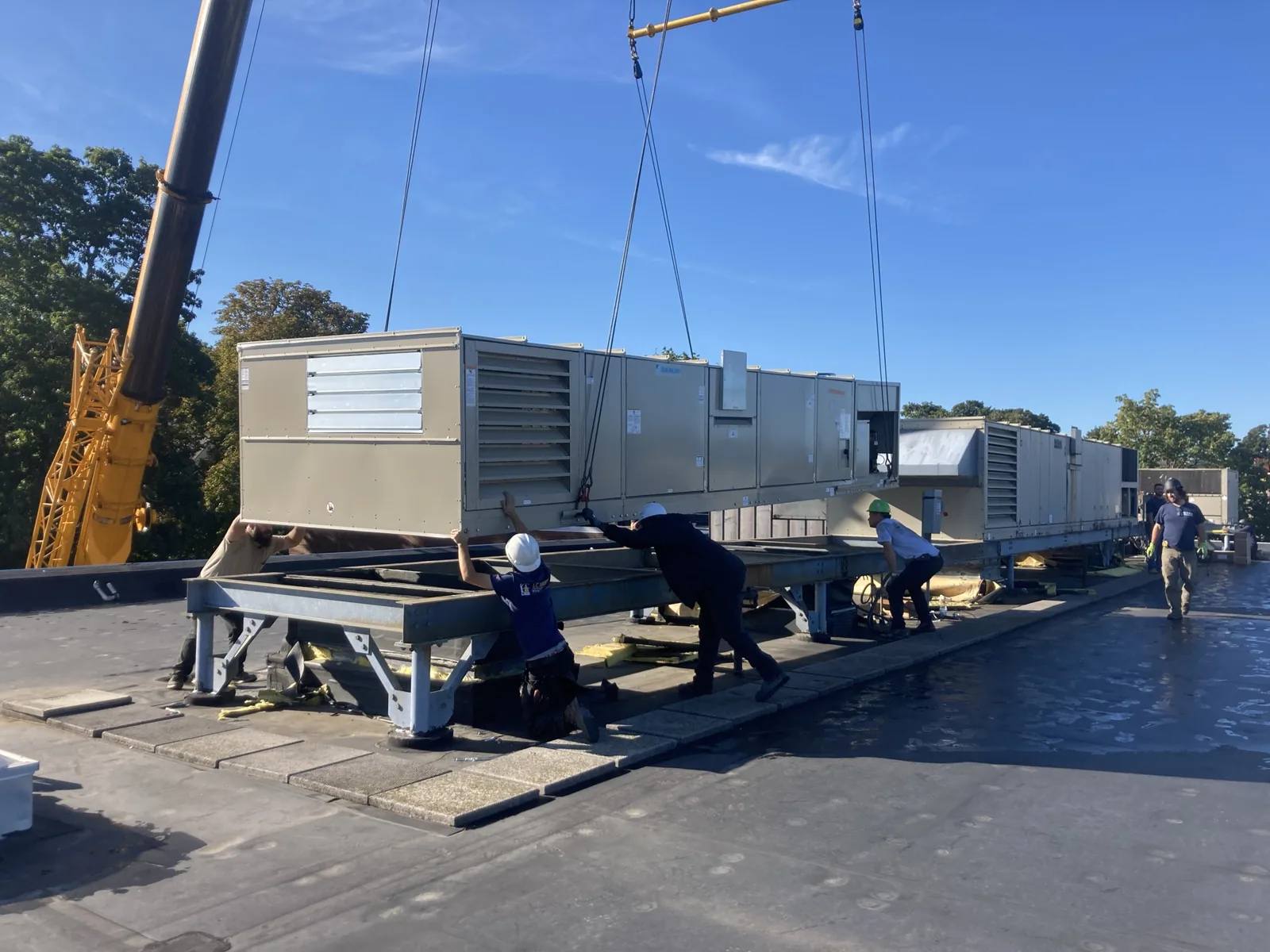
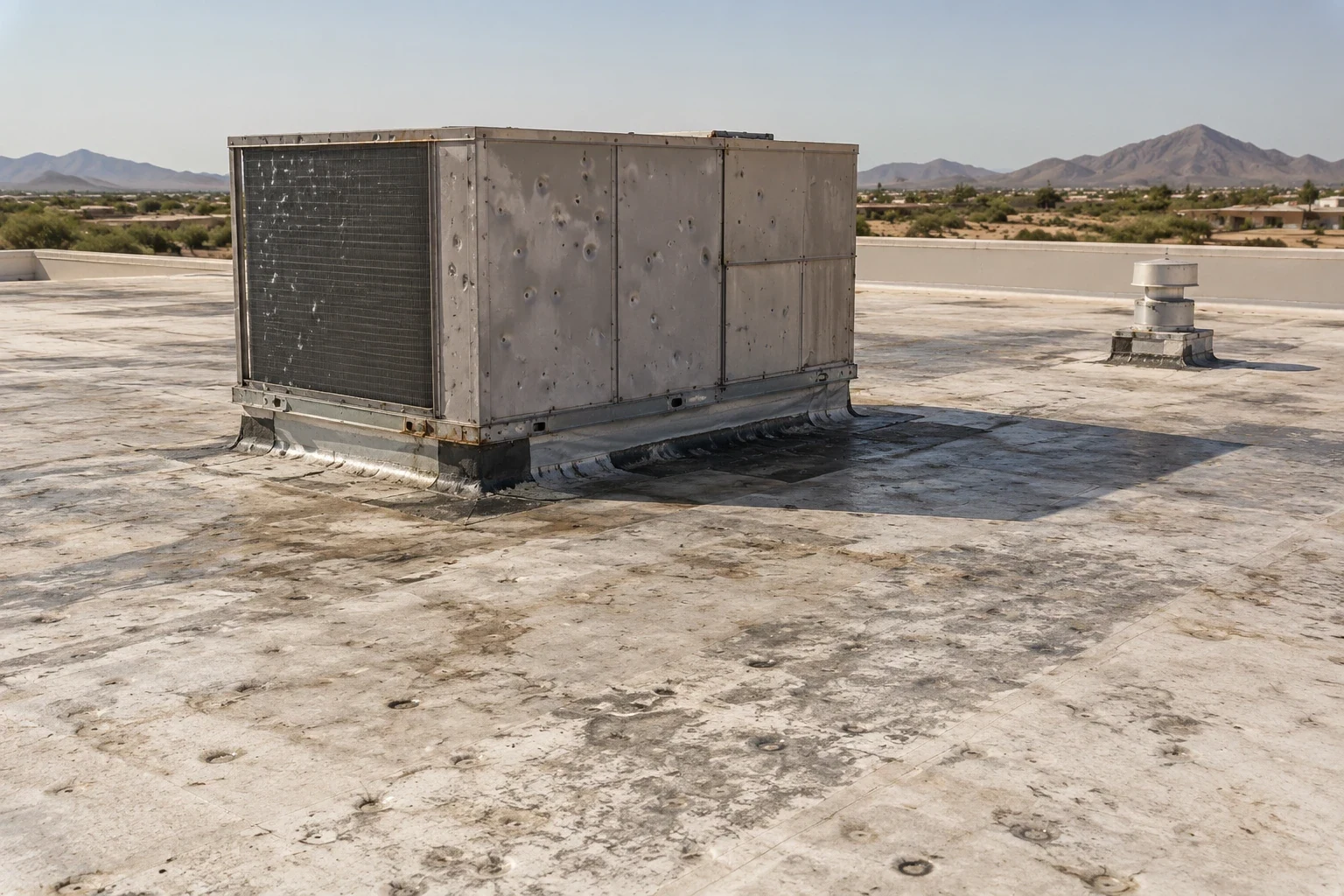
Rooftop units sit on curbs, and curbs fail. Wood nailers rot, metal curbs rust through at the base and old units get swapped for new ones. If the curb needs rebuilding or the mechanical contractor is changing the unit, that has to happen before we flash it. A new unit with a different footprint changes the curb, and the curb dictates how much membrane and flashing the job needs. We confirm the curb size with the mechanical contractor before ordering material, and any added cost goes to the owner for approval before the crew starts.
Our curb and equipment support work handles the roof side of the job. Structural framing and the unit itself stay with the engineer and the mechanical contractor. We photograph the rebuilt curb before it gets wrapped. If the unit is not back in place by the end of the day, the opening gets temporary protection, and you will know exactly what is still open.
Make sure the old membrane will take new flashing
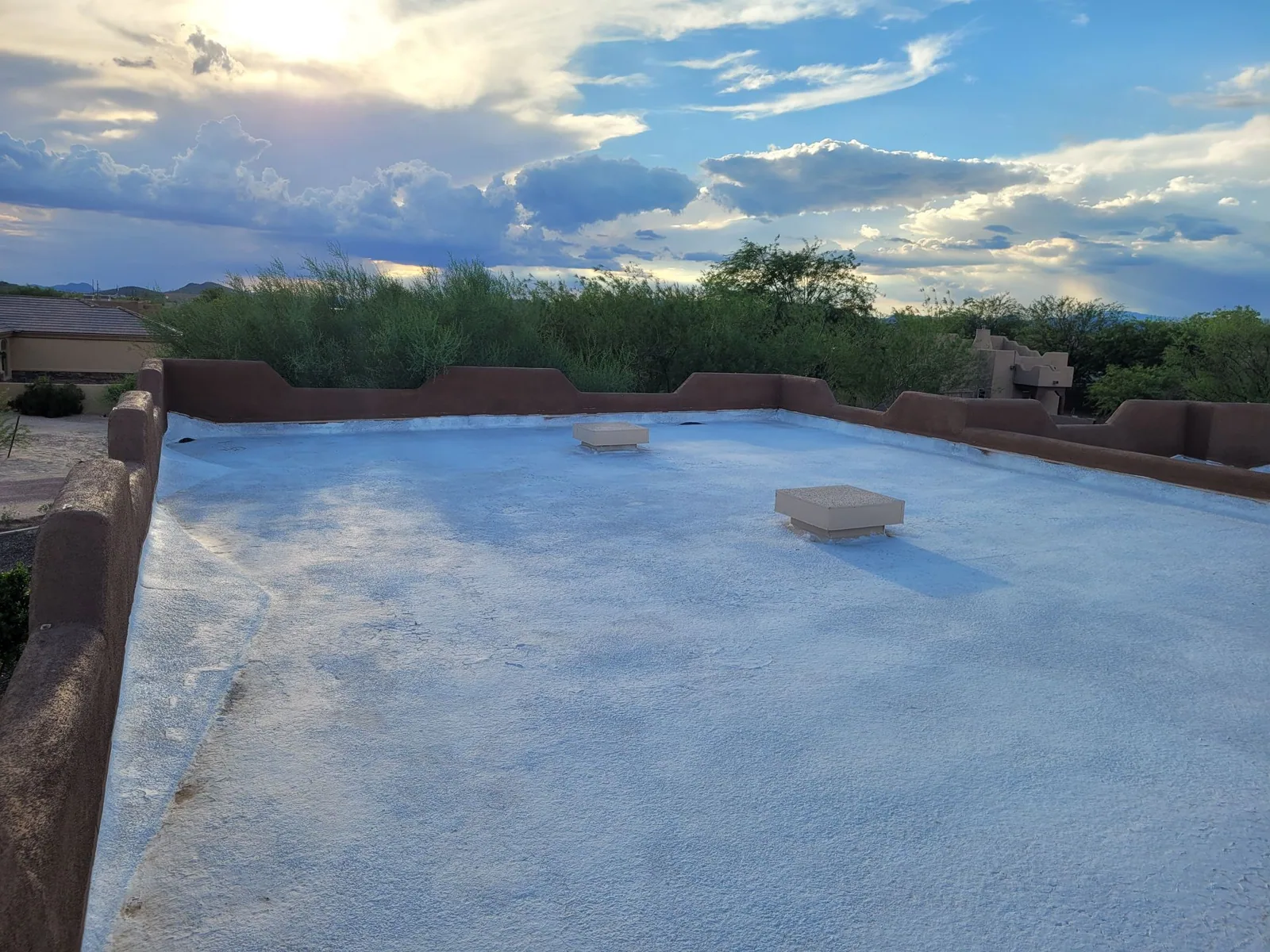
New flashing has to bond to old membrane, and that only works if the old membrane is in decent shape. We check the area where the new detail ties in for brittle sheet, oil, dirt and leftover patches. On TPO roofs, that means scrubbing the old sheet and running a test weld to confirm it will take heat before welding new flashing to it. EPDM needs its own primer and tape; modified bitumen needs compatible base and cap sheets. Sun-damaged TPO near a wall can look fine and still refuse a weld, which is why we test first.
Water that got behind a failed flashing often wets the insulation and the wall backing. You cannot see that from the top. If we suspect it, we make a small test cut, check it and patch it the same day. Rotted backing or soaked insulation gets photographed, and we explain how much needs to come out. That extra work is priced and approved before the new flashing goes on and hides it.
Drain and scupper flashing
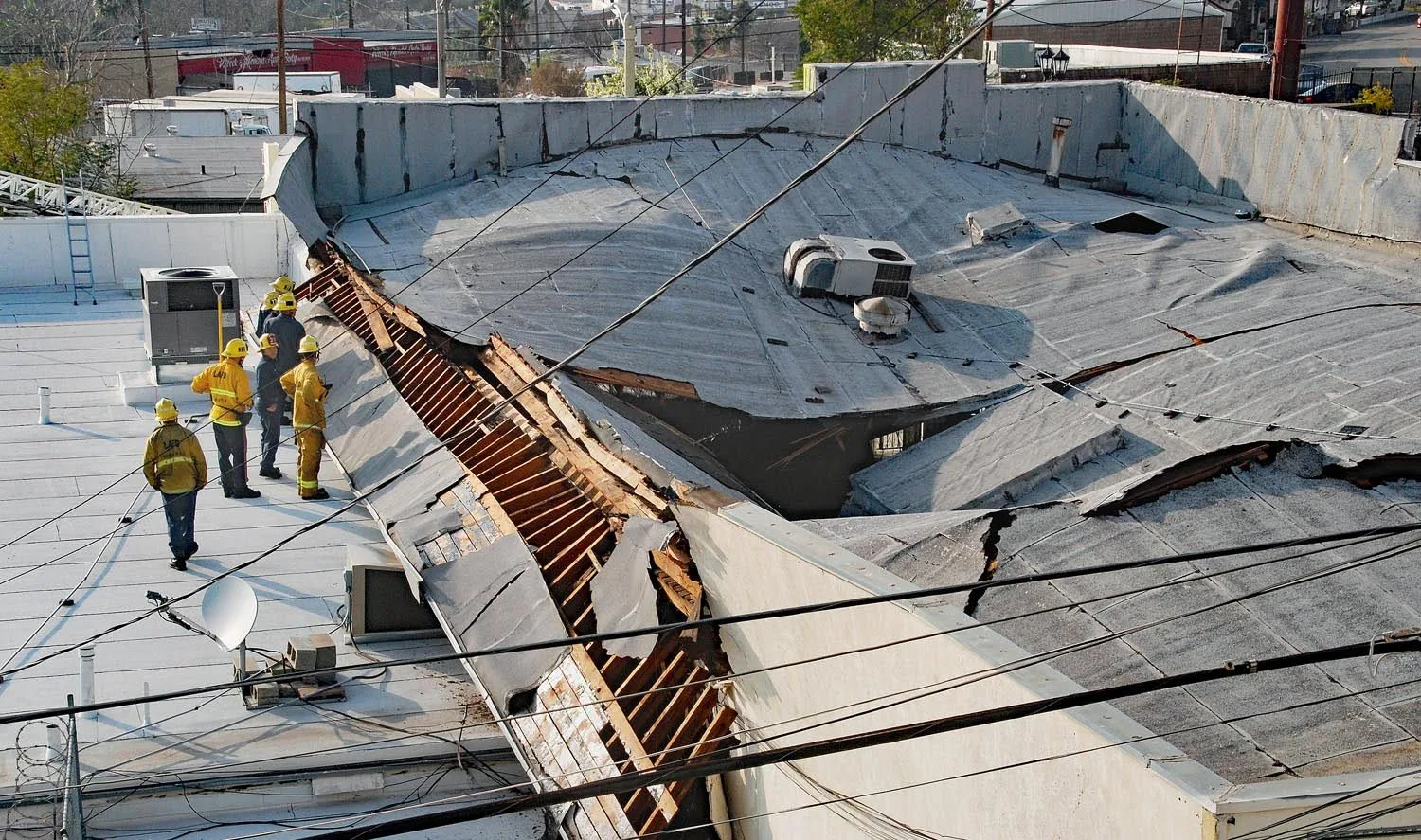
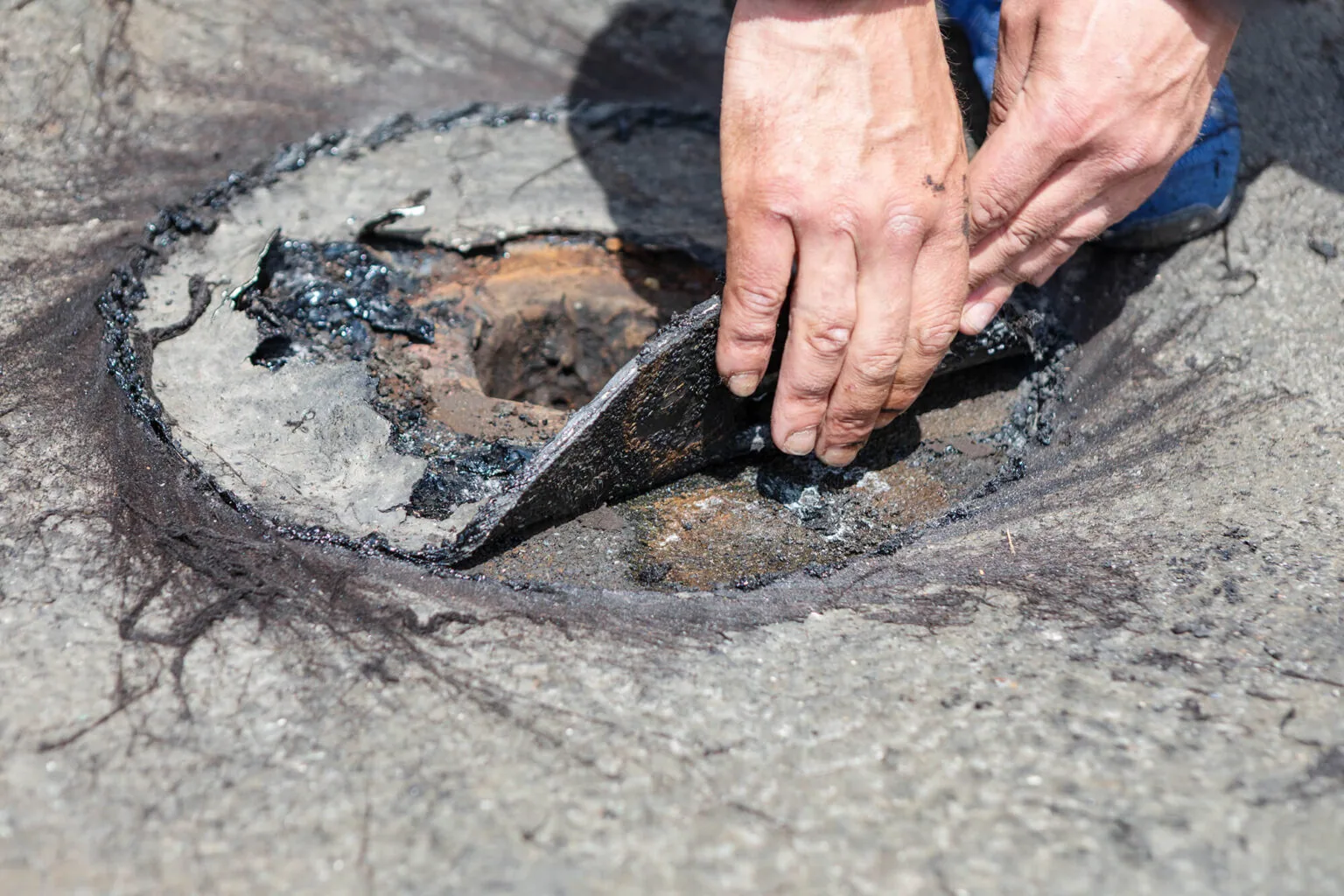
Scuppers and roof drains are flashing details too. The membrane has to seal to the drain bowl or the scupper box, and those joints crack and pull loose like any other. A torn drain flashing is one problem. A drain clogged with dust, leaves and debris from the last storm is another, and a scupper box rusted through is a third. We check the clamping ring, the membrane around the bowl and the metal box at the parapet, and the estimate lists each item. A ponding water repair deals with low spots and slope, which is a separate question from whether the drain flashing is tight.
Leaders, downspouts and interior drain lines may need a plumber before we can finish the roof side, and we tell you that up front. If fixing a drain means changing its height or adding a scupper, that is a design question, and we flag it instead of pretending a patch solves it. You end up with the flashing repair priced as its own line, separate from any wider drainage work. A tight new seal at the drain does not mean every water problem on the roof is gone, and we will not tell you it does.
More on Flashing Failure Repair
End-of-day protection and closeout
Flashing work often means pulling off old metal and membrane, which leaves a wall or curb exposed. Before the crew leaves each day, every open spot gets sealed, and you know which details are finished and which are under temporary protection. We also tell you who to call if water shows up overnight and what work is still scheduled. Our emergency crews respond overnight, on weekends and on holidays.
For flashing repair in Arrowhead, the closeout lists the building and each repaired wall, curb or drain by location. It includes photos of the backing we found, the prepared surfaces and the finished flashing, tied to the approved scope. Our roof condition reports give the next contractor a clear picture of what is under the new flashing. Change orders are listed, and work that belongs to other trades is called out as still open. The owner gets a record of what was fixed at each spot and what still needs scheduling.
Commercial Roofing Questions
What is the difference between a wall repair and a flashing repair?
Flashing is the membrane and metal that seal the roof to the wall. The wall repair is the masonry, stucco or parapet cap behind and above it. If the wall is cracked or the backing is rotten, that gets fixed first so the new flashing has something solid to attach to.
Can new rooftop equipment change the flashing cost?
Yes. A unit with a different footprint means a resized or rebuilt curb, which changes how much membrane and flashing the job needs. We confirm the curb size before pricing and get any added cost approved before work starts.
Why check an old patch before choosing repair material?
Because the patch may not match the roof. Mastic, coatings and patches from other systems will not bond to new flashing. We identify the original membrane, cut back bad material and tie the new flashing into sound sheet.
Does a drain flashing repair fix drainage problems?
Not by itself. It seals the membrane to the drain or scupper. Clogged lines, low spots and slope problems are separate, and we list them separately so a new seal is not mistaken for a fixed drainage system.
Get the failed wall, curb or drain detail checked
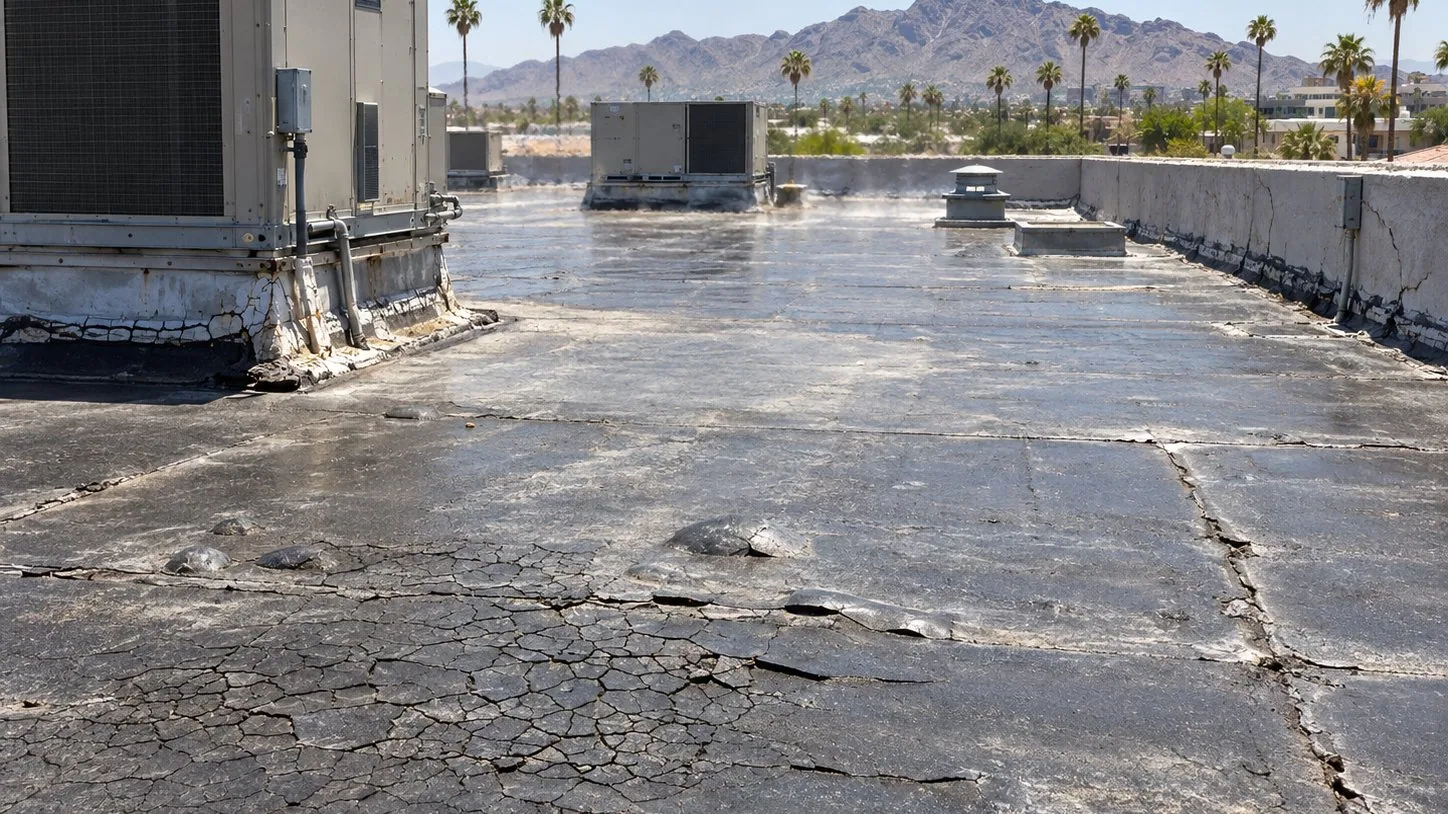
Tell us the building and where the leak shows up. We will find the failed flashing, check what is behind it and give you a written estimate that spells out which trade does what.
Next steps for your building:
Related Roofing Work
More commercial roofing work for Glendale and West Valley properties.