Ponding Water Roof Repair in Glendale, AZ
Home / Roof Damage Repair / Ponding Water Roof Repair
Request A
Roof Assessment
Tell us about the building and the roof. We reply with the next practical step for your property.
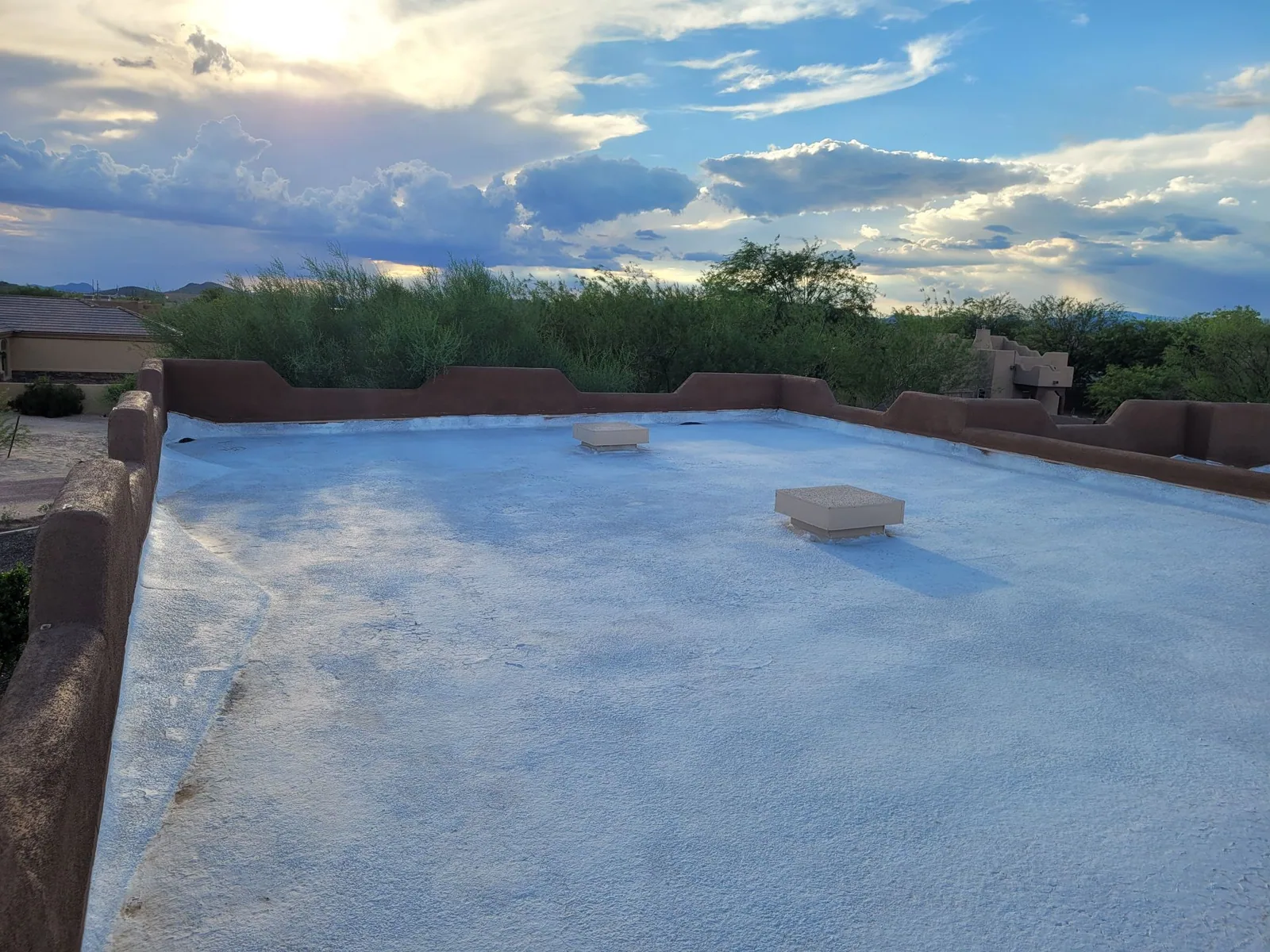
Ponding water roof repair in Glendale, AZ: we find out whether it's a clogged drain, failed drain flashing or a low spot, then quote the right fix.
Monsoon season here runs June 15 through September 30, and one afternoon storm can drop more water on a flat roof than its drains can move in an hour. On a healthy roof that water is gone within a day or two. If it is still sitting there three days later, something is wrong. Ponding water roof repair in Glendale, AZ starts with finding out what. The usual causes are a drain clogged with dust and debris, a drain or scupper whose flashing has failed, or a low spot where insulation has crushed or the deck has sagged. Each has a different fix and a different price, and we tell you which one you have before quoting. If part of the problem is a drain line inside the building or a structural question, we say so and point you to the right trade.
If your building is near State Farm Stadium at 1 Cardinals Drive or Glendale Main Library at 5959 West Brown Street, send us your property's street address, the part of the roof where water collects and a contact for access. A photo taken the day after a storm helps. It shows where the water sits, but not what is underneath. That is what the inspection is for.
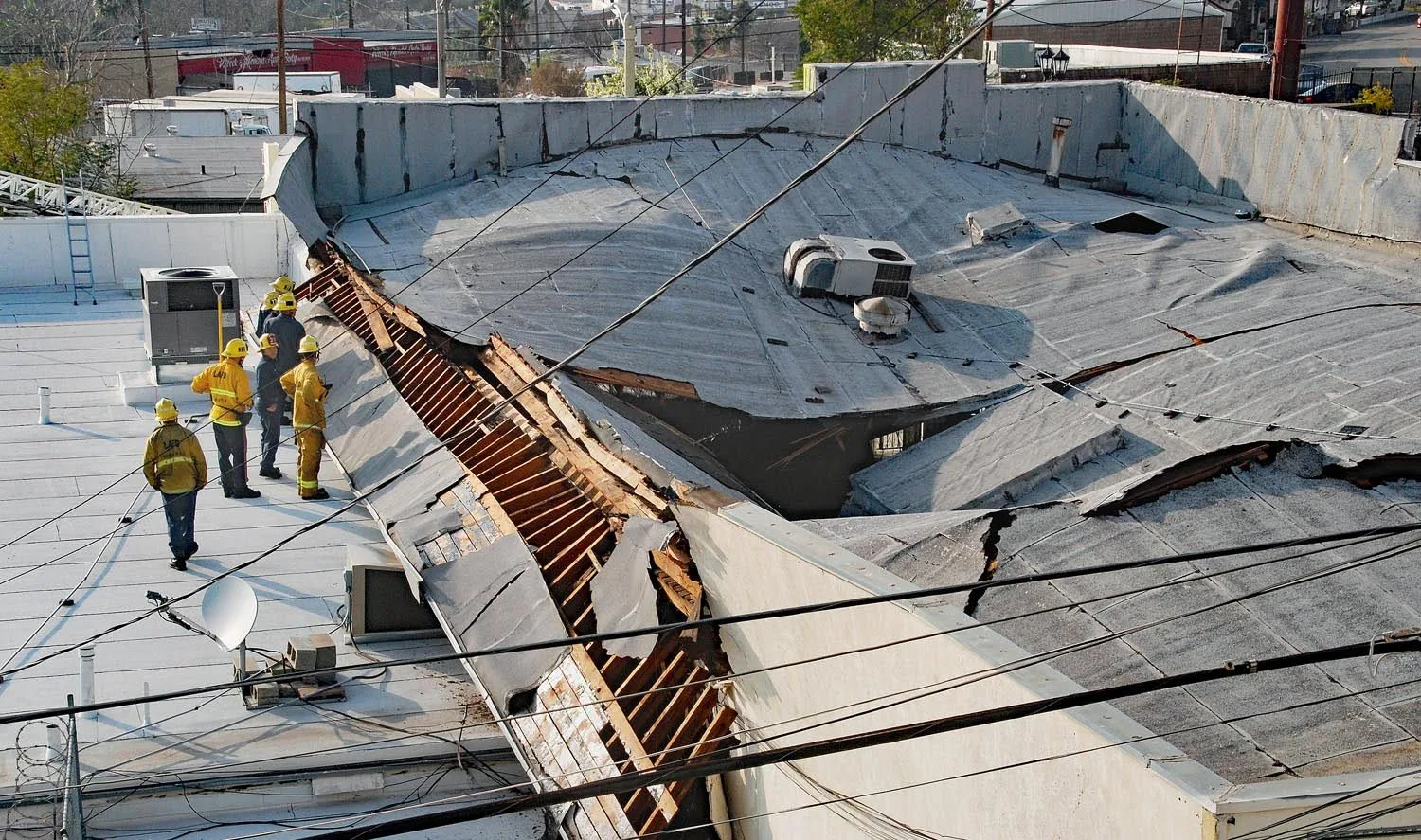
Where the water sits and where it should go
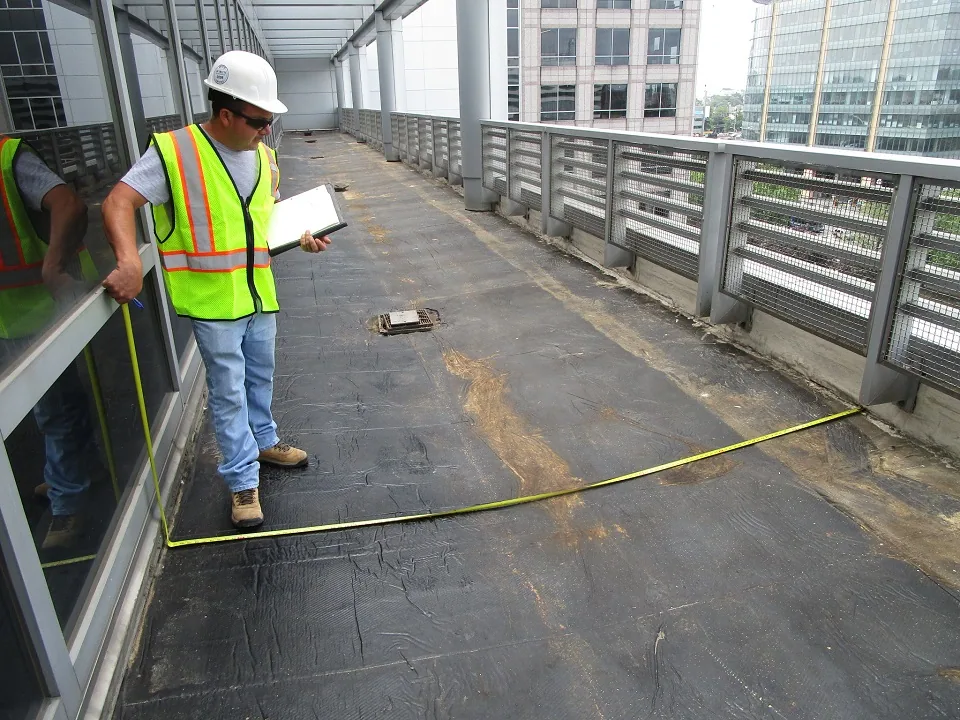
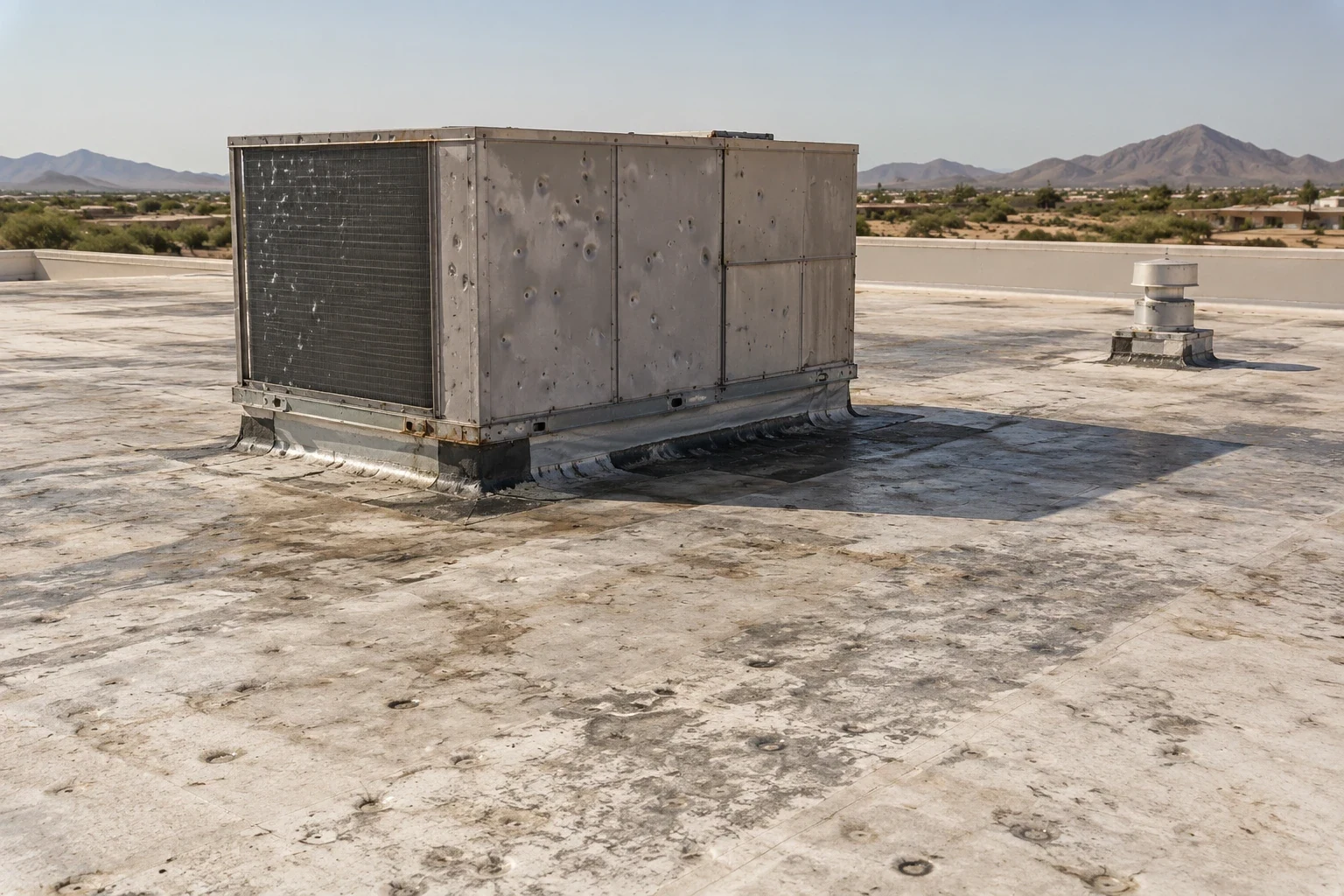
A dried ring of dirt on the membrane tells you where water sat. It does not tell you why the drain did not take it. On the roof we trace the path from the wet area to the nearest drain or scupper and look at everything in between: debris dams, a raised seam or patch acting like a curb, new equipment set across the flow, or a drain sitting higher than the field around it. We ask when the water was seen and whether anything was added to the roof lately. That history goes in the report next to what we saw. One rainy-day photo does not prove the insulation below is wet.
A roof inspection first pins down the roof type, whether TPO, PVC, EPDM, modified bitumen or built-up, because the repair method depends on it. Areas we could not reach, like under a unit or behind a locked hatch, are listed with what it would take to check them. Old drawings help, but we confirm each drain on the plan is actually on the roof and working before anyone prices around it.
Clearing a drain versus repairing it
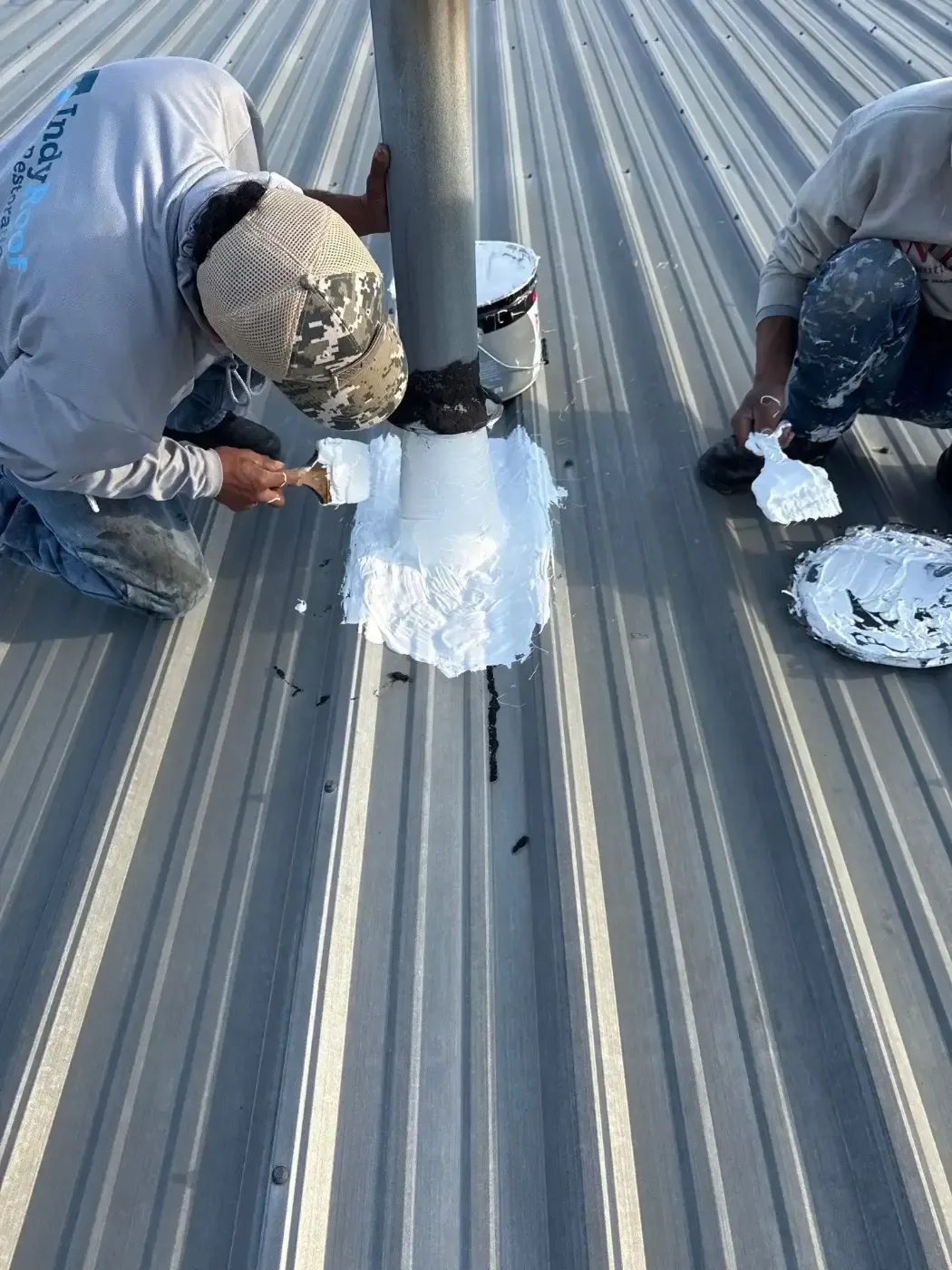
Leaves, dust and a stray plastic bag in a drain basket are a cleanup job. Cracked or split membrane around the drain bowl is a repair job, and emptying the basket will not fix it. We check both every time. If the flashing at the drain has pulled loose or the clamp ring is missing bolts, the fix is to cut out the bad membrane, set a new piece around the bowl and clamp it down properly. Our flashing repair estimate spells out what comes out, what stays and how the new piece ties into the roof around it.
Sometimes the drain on the roof is clear and water still backs up. Then the problem is likely in the pipe inside the building, and that belongs to a plumber. We note the drain location and the symptom so the plumber goes straight to it, and we do not call the job done just because the basket is clean. If the plumber replaces the drain body, our flashing has to fit the new one, so we leave that spot temporarily sealed until their part is in.
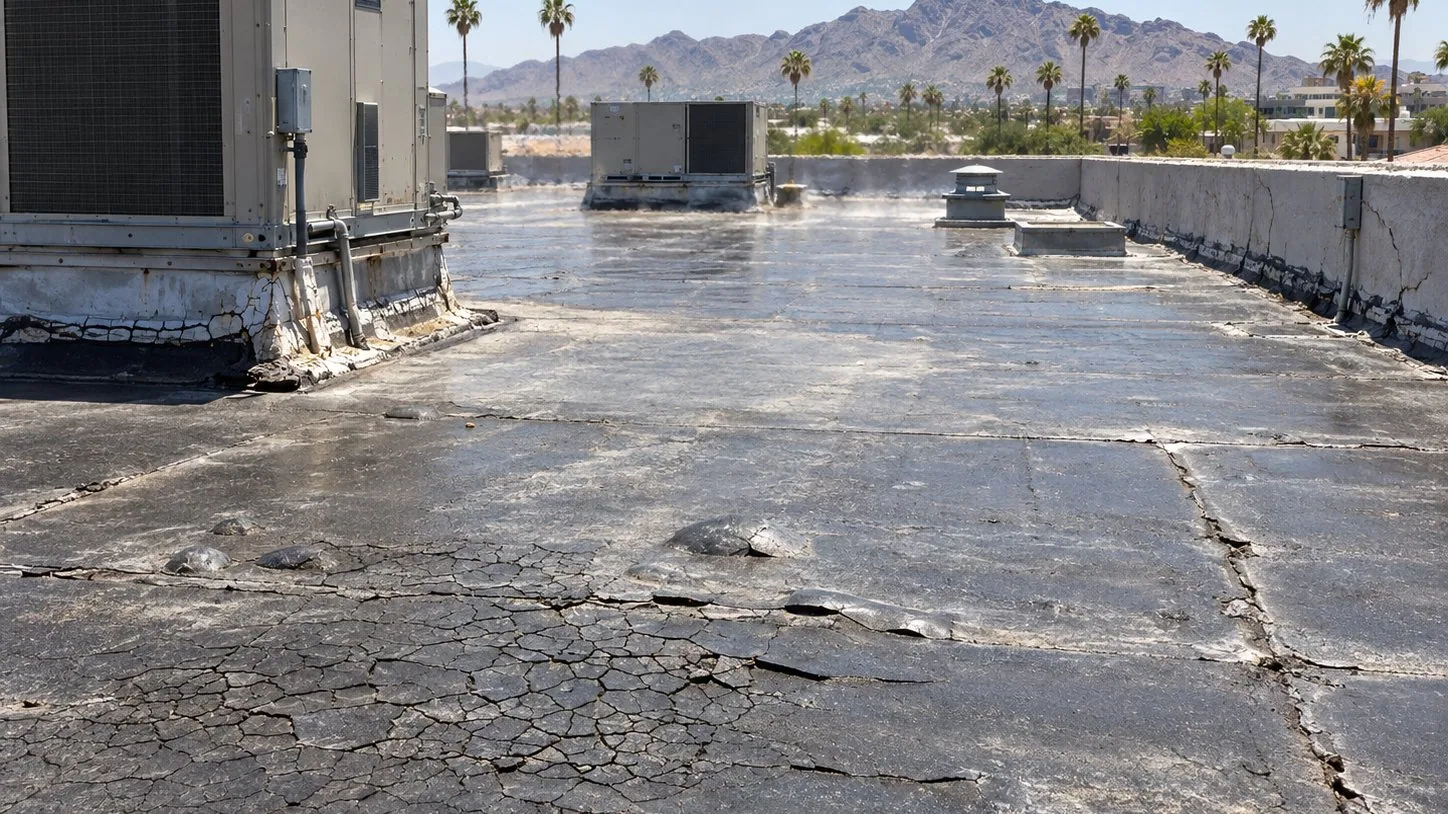
Finding out why a low spot is low
A low spot can come from insulation crushed by foot traffic, a deck that has deflected between joists or an old repair that left the surface uneven. Looking at it from above tells you where it is, not which of those it is. We work that out before recommending anything. An infrared moisture survey on a calm evening can show where insulation is probably wet, but we confirm with core cuts before anyone writes a tear-off quantity from the scan alone.
Fixing a low area usually means adding tapered insulation or crickets to push water toward the drain. That raises the roof surface, which changes the height at curbs, walls and edges, so flashing heights have to be checked against the new surface. If the deck itself has sagged, that is a question for a structural engineer, not a roofer. Our insulation and cover board scope lists what comes out, what goes in and which edges and curbs get rebuilt to suit. It is real construction, not filler poured into a dip.
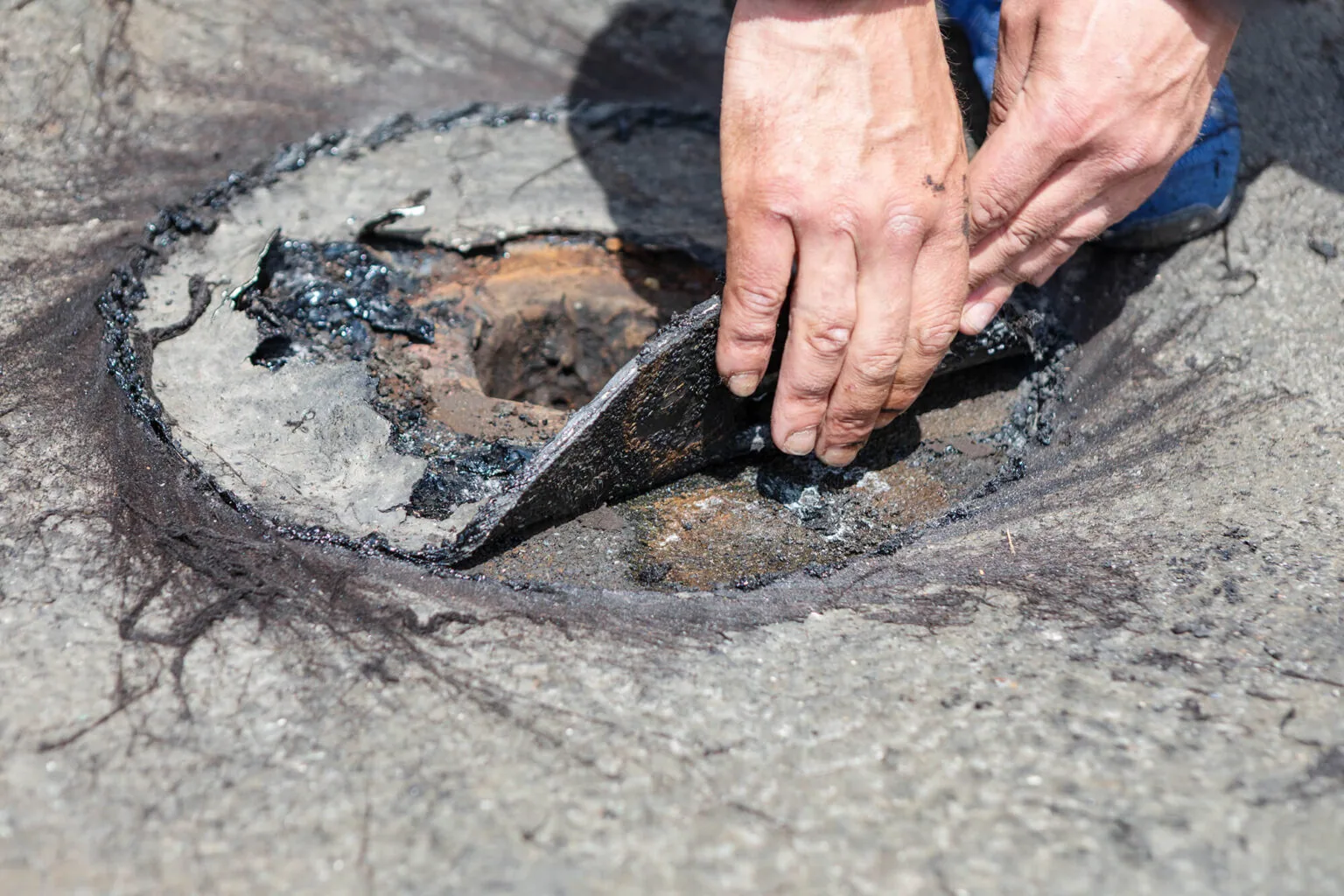
Fixing seams and flashing in the wet area
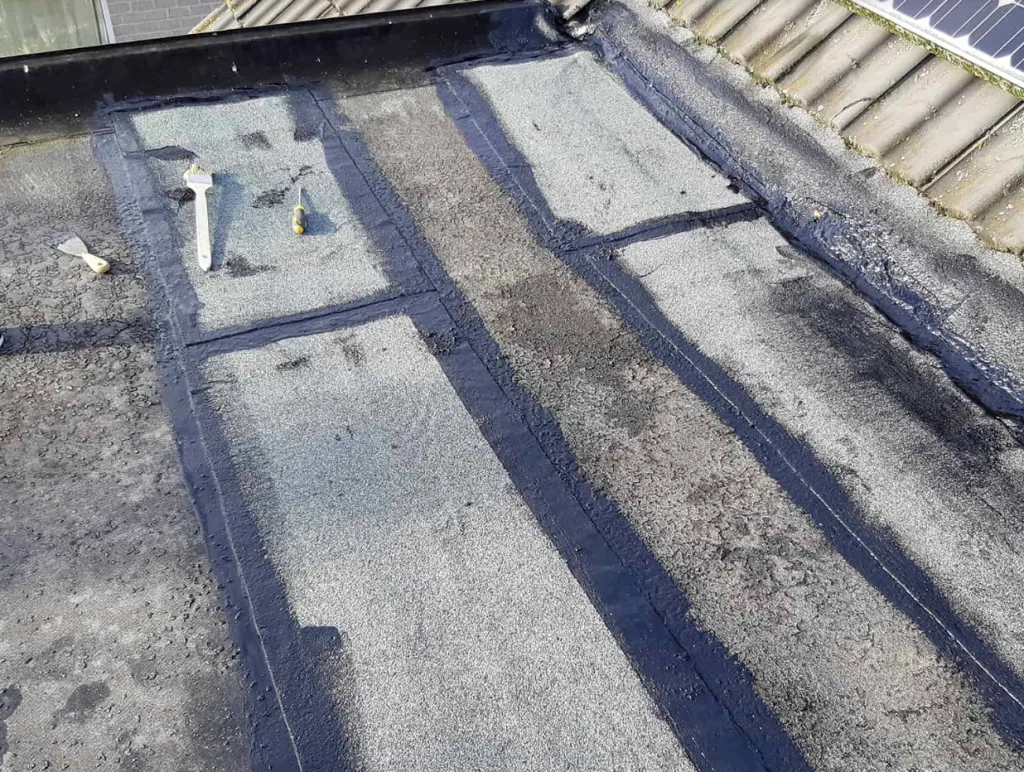
Standing water finds the weak spots. An open seam or lifted flashing in a ponding area can leak while the drainage problem is still being sorted out, so we fix it now. We find the defect and look for good membrane around it to weld or bond the repair to. Old patches are often a different material from the roof, and some cannot be welded to at all. Those get cut out. Cleaning prepares sound membrane for a new seam. It does not mend a tear or replace the solid backing a flashing needs.
A seam repair estimate should state how far each repair runs and what existing roof stays in place. Anything we suspect but have not confirmed is listed on its own. If we open the seam and find wet insulation or a rotted wood nailer, we photograph it, explain how much more needs to come out and get approval before closing it up. You see the reason for the added cost while the roof is still open.
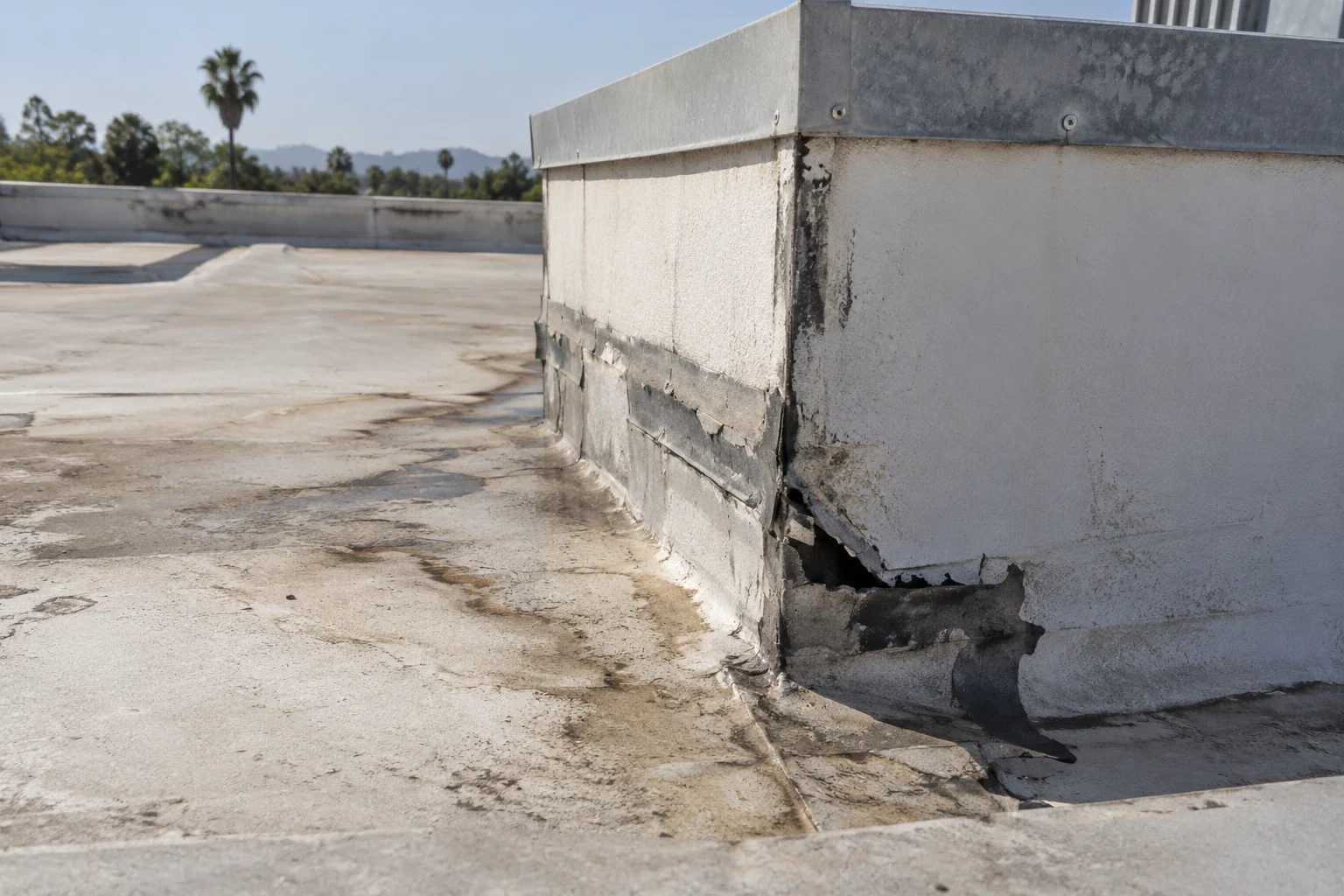
Will a coating fix a ponding roof?
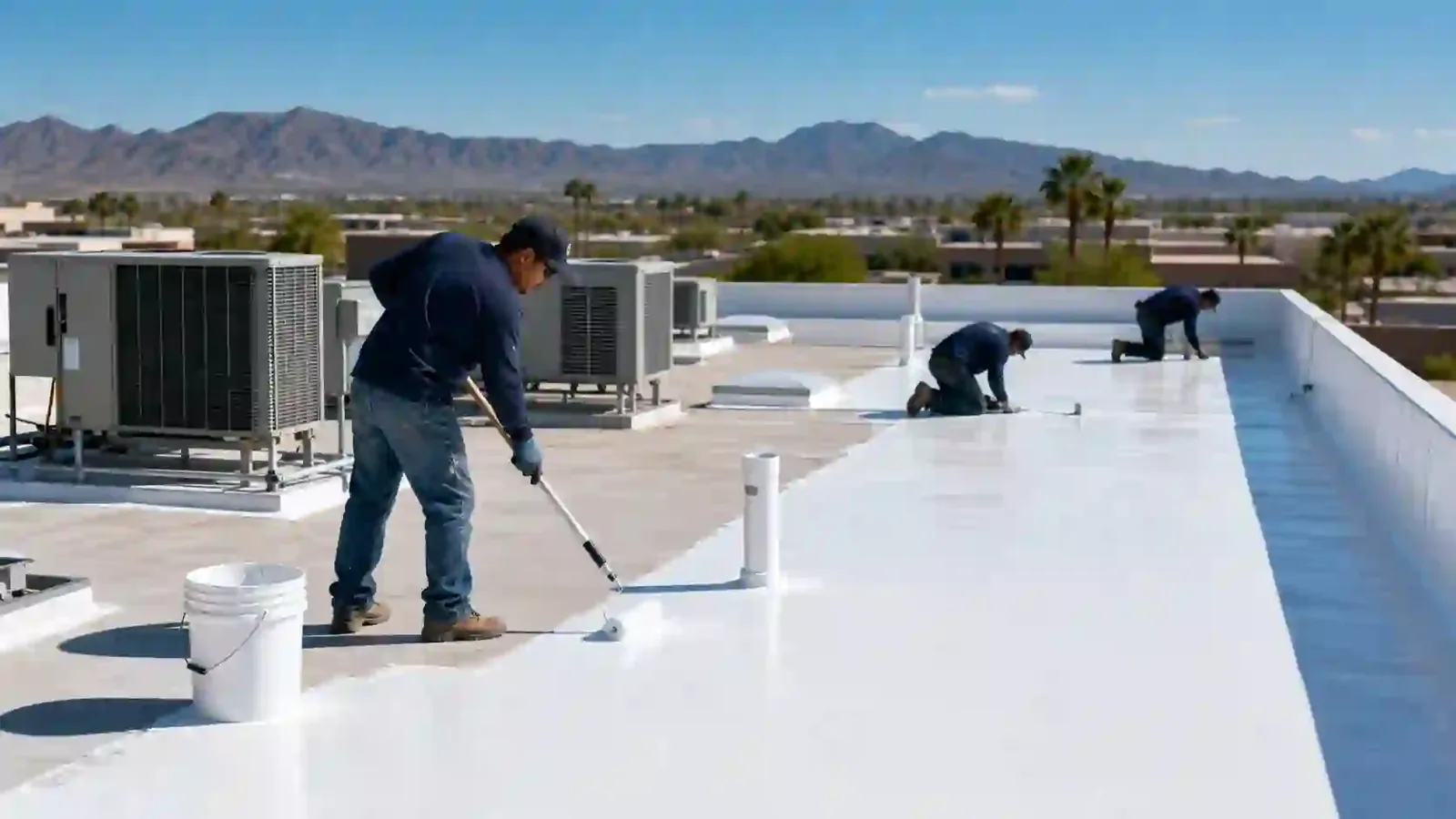
Coatings come up a lot on ponding roofs, and a coating alone will not fix one. It will not clear a blocked drain line or fill a low spot, and a coating that sits under standing water week after week wears out early. So we sort out the drainage and repair the damaged membrane first, then decide if a coating makes sense. A roof coating restoration needs a clean, dry, sound surface and a product that works with the existing membrane. If something on your roof rules it out, we tell you before you spend money on it.
When too much of the roof is wet or worn out, a recover or a full replacement may be the better use of the budget. We lay out what each option keeps, what it tears off and how it handles the drains and low areas, so you compare actual roofs, not just new surfaces. On an office building roof, the building contact also tells us where the lift and dumpster can go, tenant hours and which ceilings need protection, and the schedule is set.
More on Ponding Water Roof Repair
Phased work and the job record
Sometimes a drain repair has to wait on a plumber or a new drain body. In the meantime that spot gets a temporary seal that will hold through a storm, and we tell the property contact exactly where it is and who to call if it leaks. We do not close out the whole job just because the rest of the roof is finished. That open item stays on the list until the permanent flashing goes in. For urgent leaks, we can respond at night, on weekends and on holidays.
For a ponding water repair in Arrowhead, every photo and note carries the building address and the area of the roof. The closeout lists the drain work done, the wet insulation found and replaced and the finished flashing, with photos of each. Any remaining low spots or pipe problems are listed separately with the next step. If water collects again next summer, you can check it against exactly what was fixed, instead of guessing whether it is the same problem.
Commercial Roofing Questions
What is the difference between clearing a drain and repairing it?
Clearing removes debris from the basket and bowl. Repairing fixes the membrane and flashing around the drain or the clamp ring holding it down. Many ponding roofs need both, and a clog in the pipe below is listed for a plumber.
Can a low roof area be fixed by just adding material?
Sometimes, but not blindly. Tapered insulation or a cricket can move water to the drain, but it raises the surface at curbs and walls, so flashing heights must be checked. A sagging deck needs an engineer first.
How does wet insulation affect the repair?
Wet insulation has to come out before new membrane goes over it. We confirm wet areas with core cuts, replace what is proven wet and list any areas we could not check rather than guessing at quantities.
What should the closeout say if plumbing work is still pending?
It should name the drain still waiting on the plumber, describe the temporary seal protecting it and say who finishes the permanent flashing once the pipe work is done. The completed roof work is listed separately.
Find out why water is standing on your roof
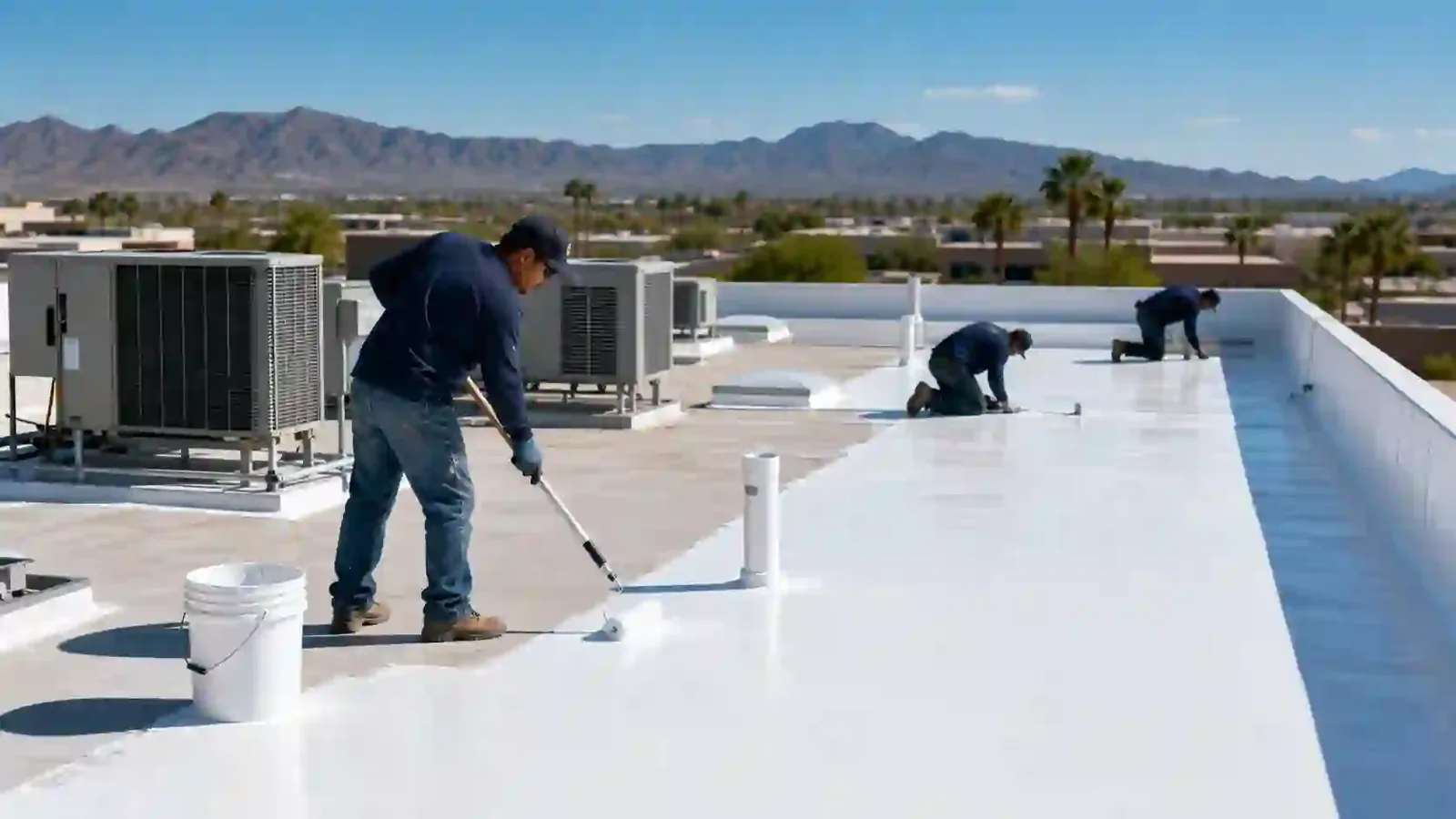
Send the building address and a few photos from after the last storm. We will check the drains, membrane and insulation with your contractor and give you a repair scope before any work starts.
Next steps for your building:
Related Roofing Work
More commercial roofing work for Glendale and West Valley properties.