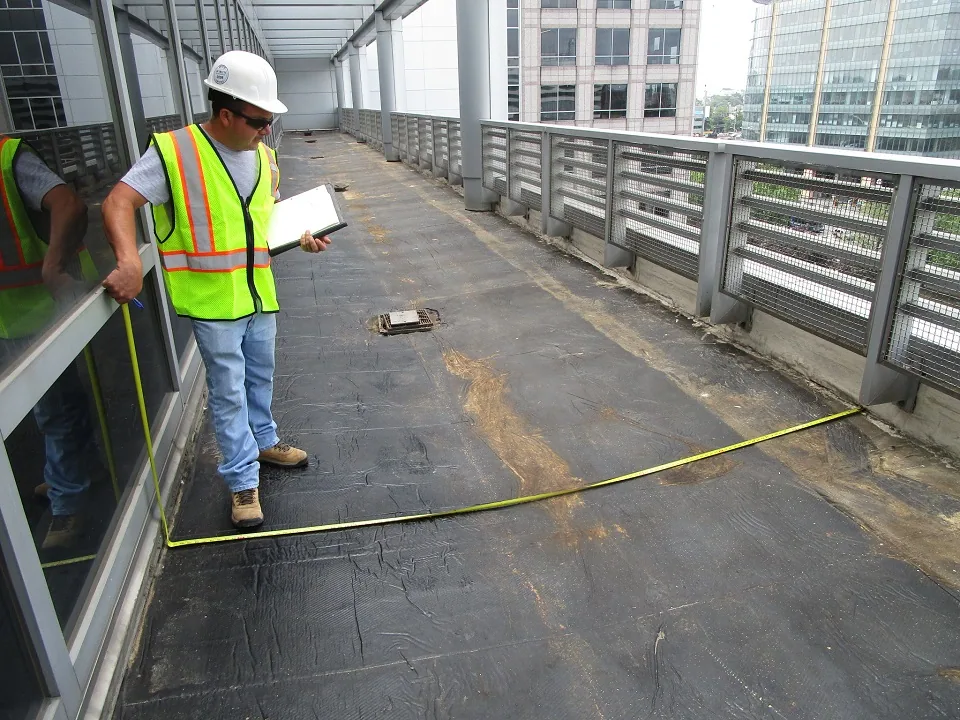
Hail Damage Roof Repair in Glendale, AZ
Home / Roof Damage Repair / Hail Damage Roof Repair
Request A
Roof Assessment
Tell us about the building and the roof. We reply with the next practical step for your property.
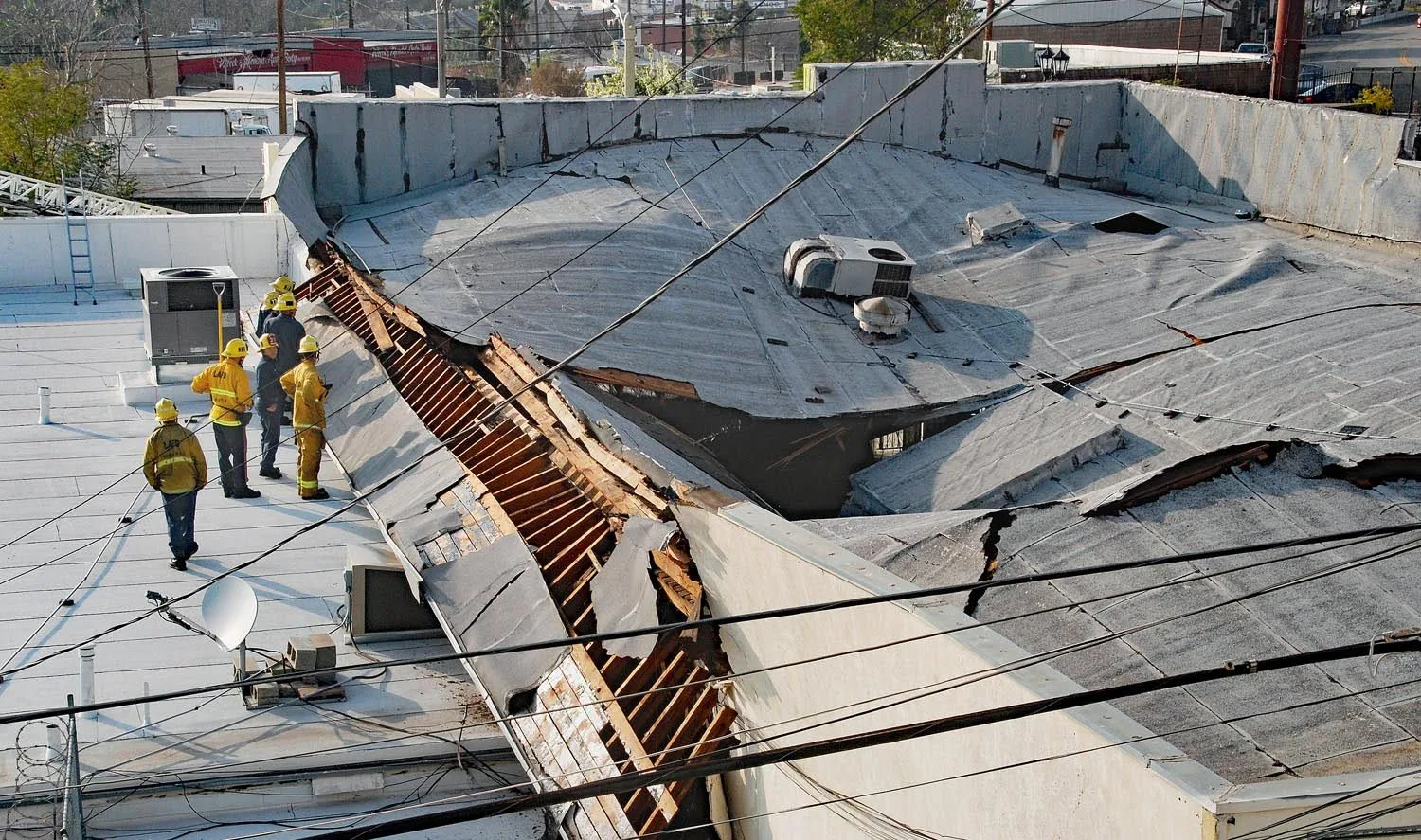
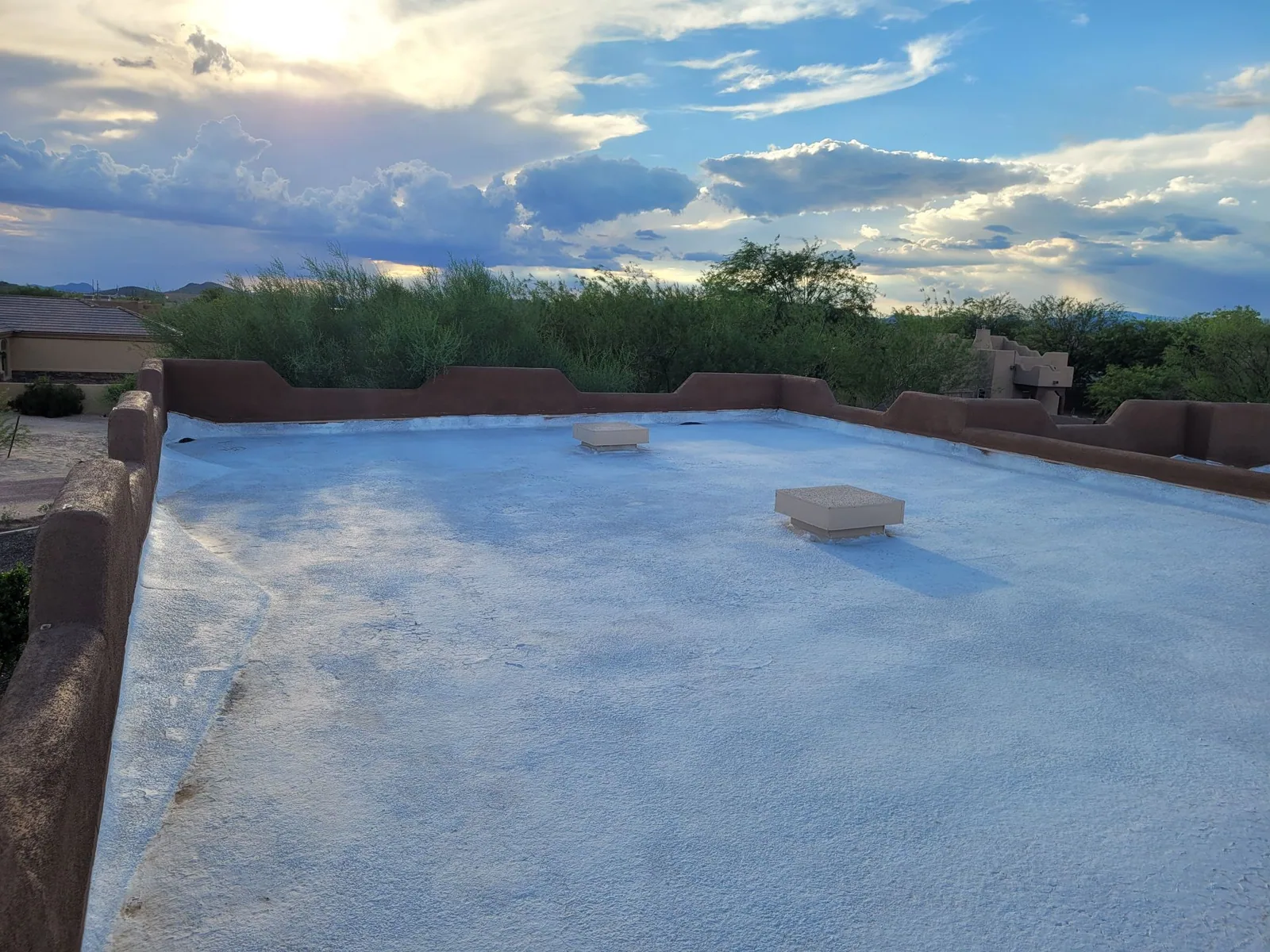
Hail damage roof repair in Glendale, AZ: we separate cosmetic marks from cracked membrane, check for wet insulation and price repairs on real findings.
Hail in Glendale usually arrives with monsoon thunderstorms, and monsoon season here runs June 15 through September 30. When a storm passes over, building owners want to know two things: did it damage the roof, and what will it take to fix it? The honest answer starts on the roof, not in a weather report. Hail damage roof repair in Glendale, AZ means telling a cosmetic mark from real damage: a cracked membrane, a bruised cap sheet, a split seam, or dented flashing or a drain that no longer seals. We mark what we find and tell you what each finding means for the roof.
We look at roofs across the city, from commercial blocks near State Farm Stadium to buildings by Glendale Main Library on West Brown Street. Two buildings on the same street can take very different hits depending on the roof system, its age and which way the storm came in. Send photos and the date you first noticed a problem. That points us to the right areas. From there, the estimate calls for temporary protection, local repairs or more testing, depending on what the roof actually shows, instead of assuming every mark means a new roof.
Cosmetic marks vs. real damage
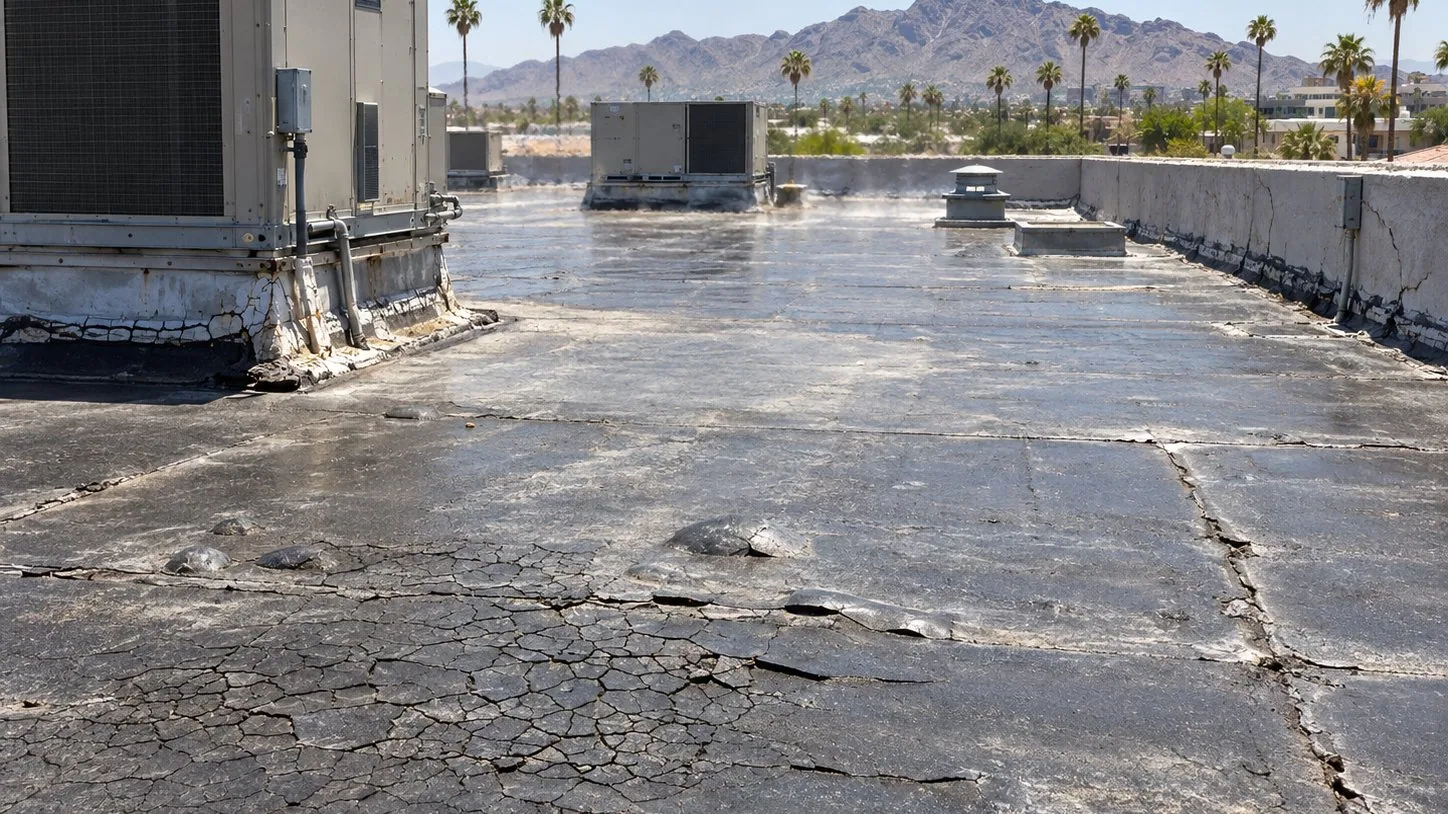
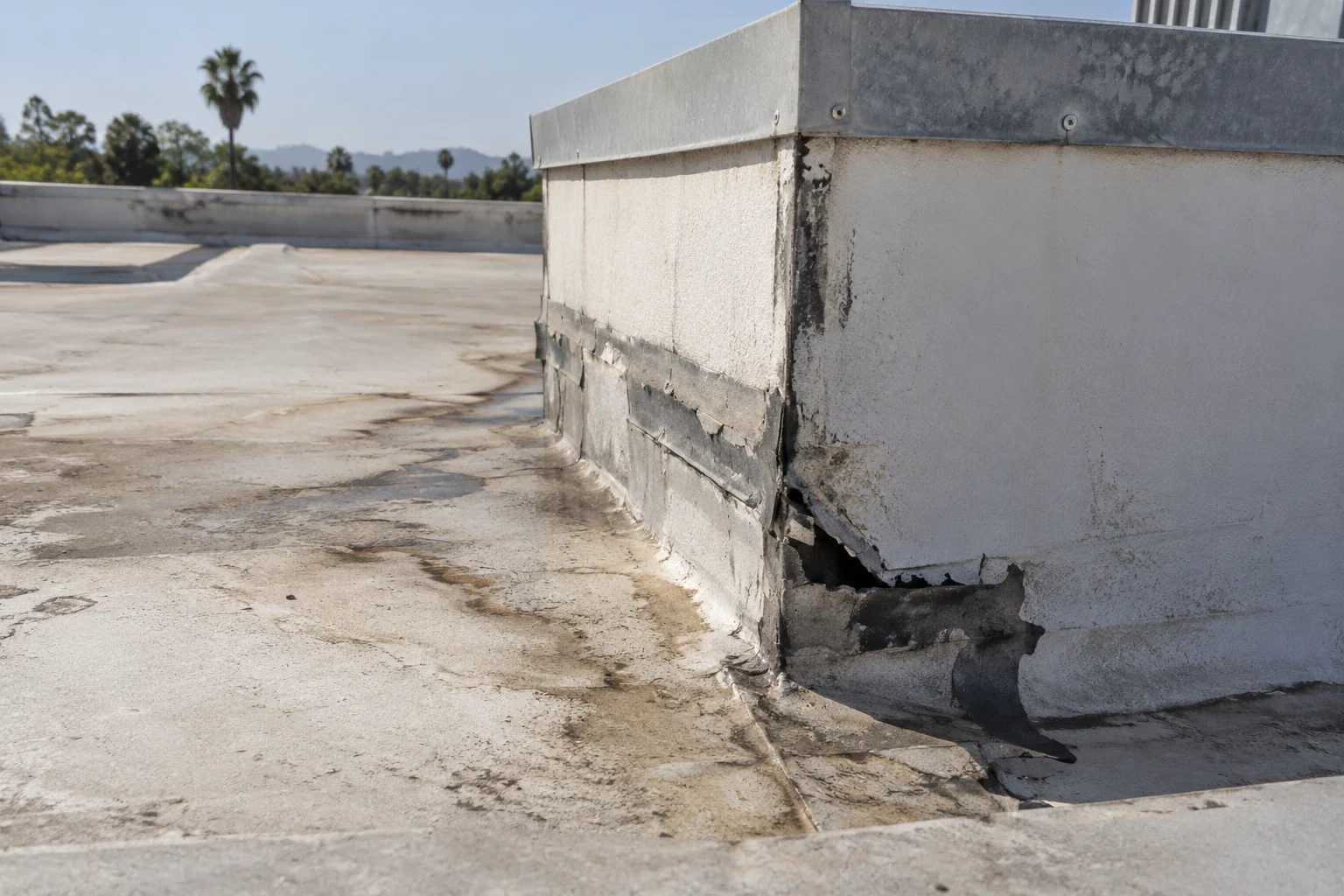
Hail leaves different marks on different roofs. A dent in a metal coping cap or an HVAC fin is one thing. A fracture through a modified bitumen cap sheet, or a crack in the reinforcement under a TPO sheet, is another. Displaced granules or a scuffed coating may be purely cosmetic. We check the membrane and the seams at each mark, pressing on suspect spots to feel for bruising or a soft layer beneath. Cracks, punctures and loosened fasteners or plates affect how the roof performs. A cosmetic mark usually does not, and we say so plainly.
A roof inspection after a storm records each finding with a photo wide enough to show its location. If you have older photos or repair records, we use them to see what changed, keeping track of when each was taken. One kind of mark does not prove what is happening under the membrane. When the surface leaves real doubt about whether the roof is damaged or leaking, we explain what testing would answer the question before recommending a permanent repair. You should be able to follow why each repair is on the estimate.
Membrane, metal and equipment
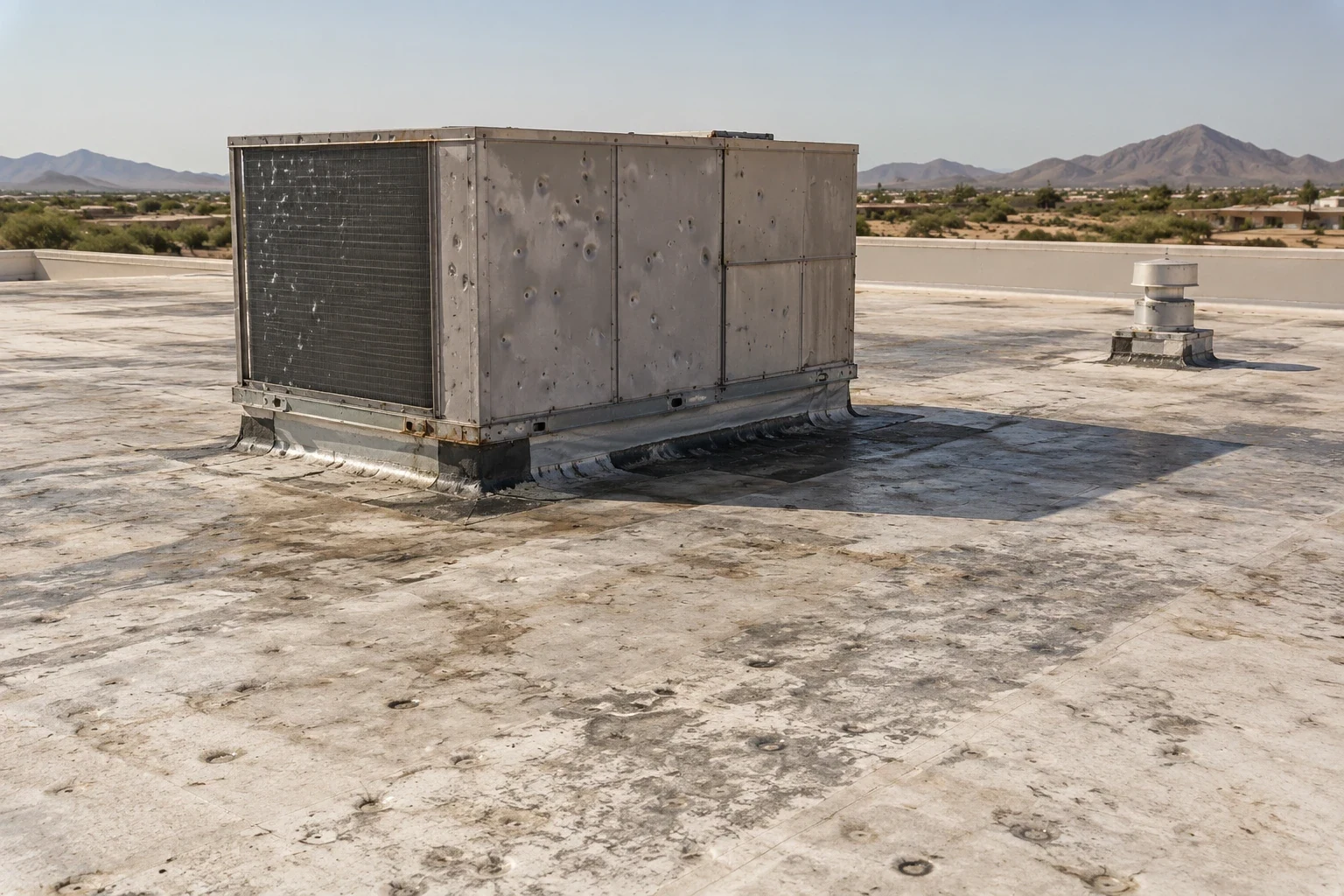
Hail hits more than the membrane. Metal edge, coping, vents, skylights and rooftop units all take impacts, and each has its own attachment to check. A dented gutter or coping cap may still be tight; a cracked skylight or a crushed vent hood is not. We list membrane repairs and metal or equipment repairs separately, and anything that belongs to the mechanical contractor or an engineer goes to them. That keeps a mixed list of storm marks from turning into one vague tear-off number.
Hail can also crack flashing at walls and curbs, where the membrane is stiffer and already stressed by heat. We check the top termination and the backing behind it, not just the face of the sheet. A membrane puncture out in the field needs its own patch, matched to the roof system. If a curb or unit has to be repaired before we can close the roof around it, the estimate says what has to be done first and by whom.
Check for wet insulation
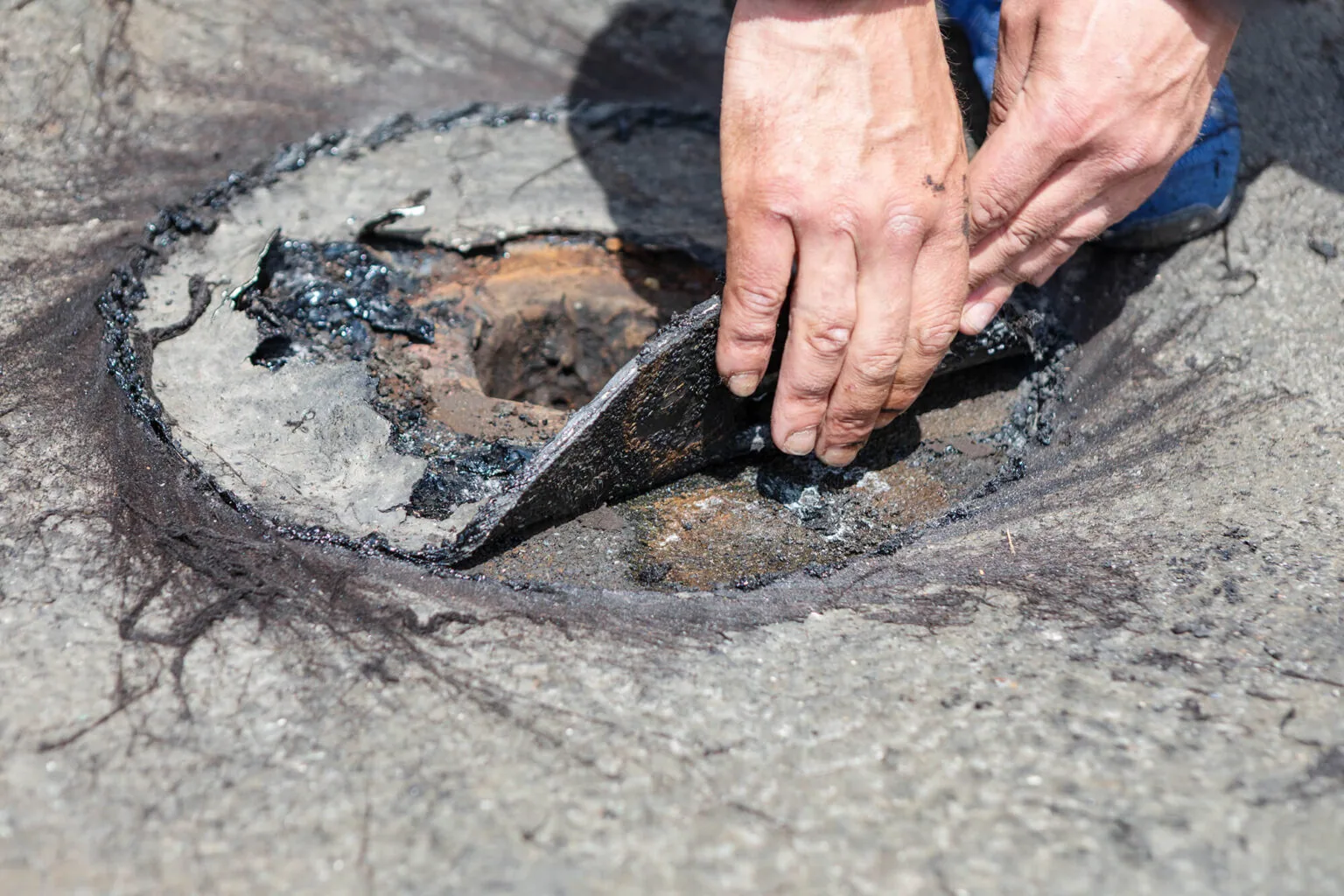
A cracked or punctured membrane lets water into the insulation, and wet insulation under a roof that looks fine can rot the deck over a few seasons. Before anyone decides how much of the roof can stay, we check what is underneath. An infrared moisture survey shows where wet insulation is likely, but the image depends on the roof build-up and the conditions the night it was shot. We confirm suspect areas with core cuts and mark each result on a roof plan, so an infrared outline does not turn into a removal number without proof.
Every test cut gets patched the same day, and that repair is part of the job. We photograph the insulation and deck at each opening before anything is closed back up. If the findings call for tearing out and replacing a section, we show you where and why. Deck or structural questions go to an engineer when needed. You can then tell which repairs are ready to price and which areas still need testing. Changes go through the owner or general contractor in writing, and nothing gets called hail damage unless the roof shows it.
Spot repairs or a new roof
If the damage is limited to a few spots and the membrane around them is still sound, local repairs make sense. If the roof is cracked across a wide area, or the membrane is old and brittle enough that patches will not bond, a recover or replacement may be the better choice. We price each option against what we found and spell out what it keeps and what it removes. The membrane type decides the repair materials. Each patch has to reach sound sheet, and related fixes at flashing or seams belong in the same package. The size of a hail mark does not decide that on its own.
Our roof condition report lays out local repairs next to a wider replacement for the preconstruction meeting. On an office building roof, we also follow the building's rules for tenant areas, entrances and work hours, and we map the work area before crane or hoist access is set. A tear-off brings more dumpsters, more debris handling and more protection for occupants than a repair. The estimate lists those differences next to the roofing itself.
Temporary protection and closeout records
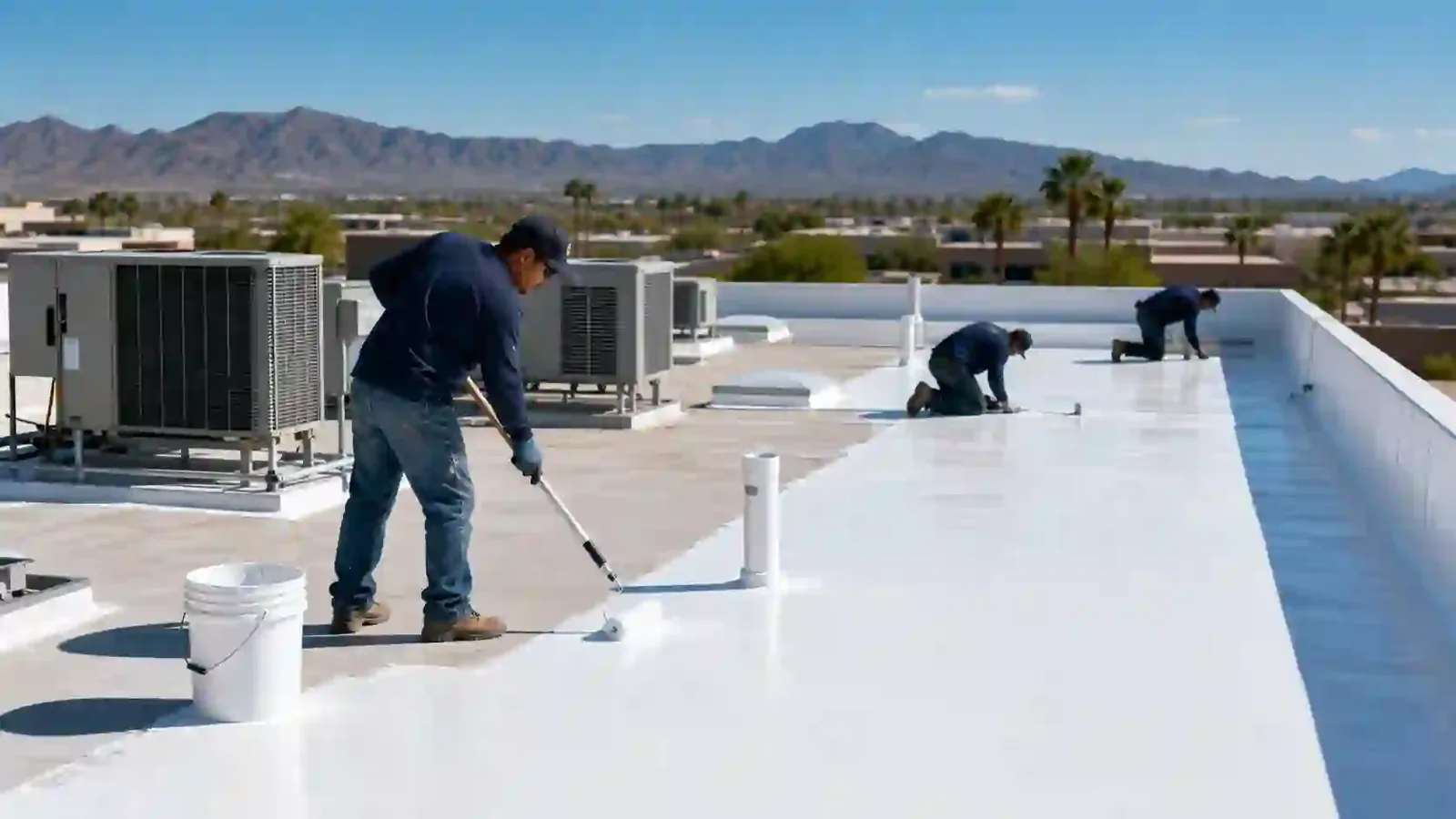
A cracked membrane or an open repair may need temporary protection while testing finishes or another trade does its part. We tell you what was installed, where it is and what permanent repair is still needed. At the end of each work day, you know what condition the roof is in. Our emergency crews respond overnight, on weekends and on holidays when new damage turns up. A temporary patch is a stopgap, and we keep it labeled as one while the owner weighs the permanent repair and the general contractor schedules the work ahead of it.
For hail damage in Arrowhead, the closeout keeps each building and roof area labeled the same way from inspection to completion. It includes the first inspection photos, what we found under the membrane, the prepared surfaces and the finished repairs, tied to the approved scope. A final photo shows where the repair is; the earlier photos show what is under it. Anything left out of the scope stays on the list with its next step, so a reviewer can see what was repaired without assuming every storm mark was addressed.
More on Hail Damage Roof Repair
Commercial Roofing Questions
Does a hail dent mean the roof needs repair?
Not always. A dent in metal trim can be cosmetic, while a crack in the membrane under a mark lets water in. We check the membrane and seams at each mark before calling it damage.
How do you decide how much wet insulation comes out?
With core cuts. An infrared survey shows likely wet areas, and we confirm them by cutting into the roof at marked spots. The removal area is based on those results, and untested areas are listed as still open.
How do you compare spot repairs with a new roof?
We price both against the same findings. The estimate shows what each option keeps and removes, the flashing and seam work included, and the extra protection and debris handling a tear-off needs.
What goes in the closeout report after hail repairs?
The first inspection photos, what we found under the membrane and photos of the finished work, all tied to the approved scope. Areas left out or still being tested are listed separately so nobody assumes they were fixed.
Find out what the hail actually did to the roof
Send the property address and any photos of the damage. We will inspect the membrane, flashing and metal, check for wet insulation and explain your repair options in writing.
Next steps for your building:
Related Roofing Work
More commercial roofing work for Glendale and West Valley properties.