Membrane Puncture Repair in Glendale, AZ
Home / Roof Damage Repair / Membrane Puncture Repair
Request A
Roof Assessment
Tell us about the building and the roof. We reply with the next practical step for your property.
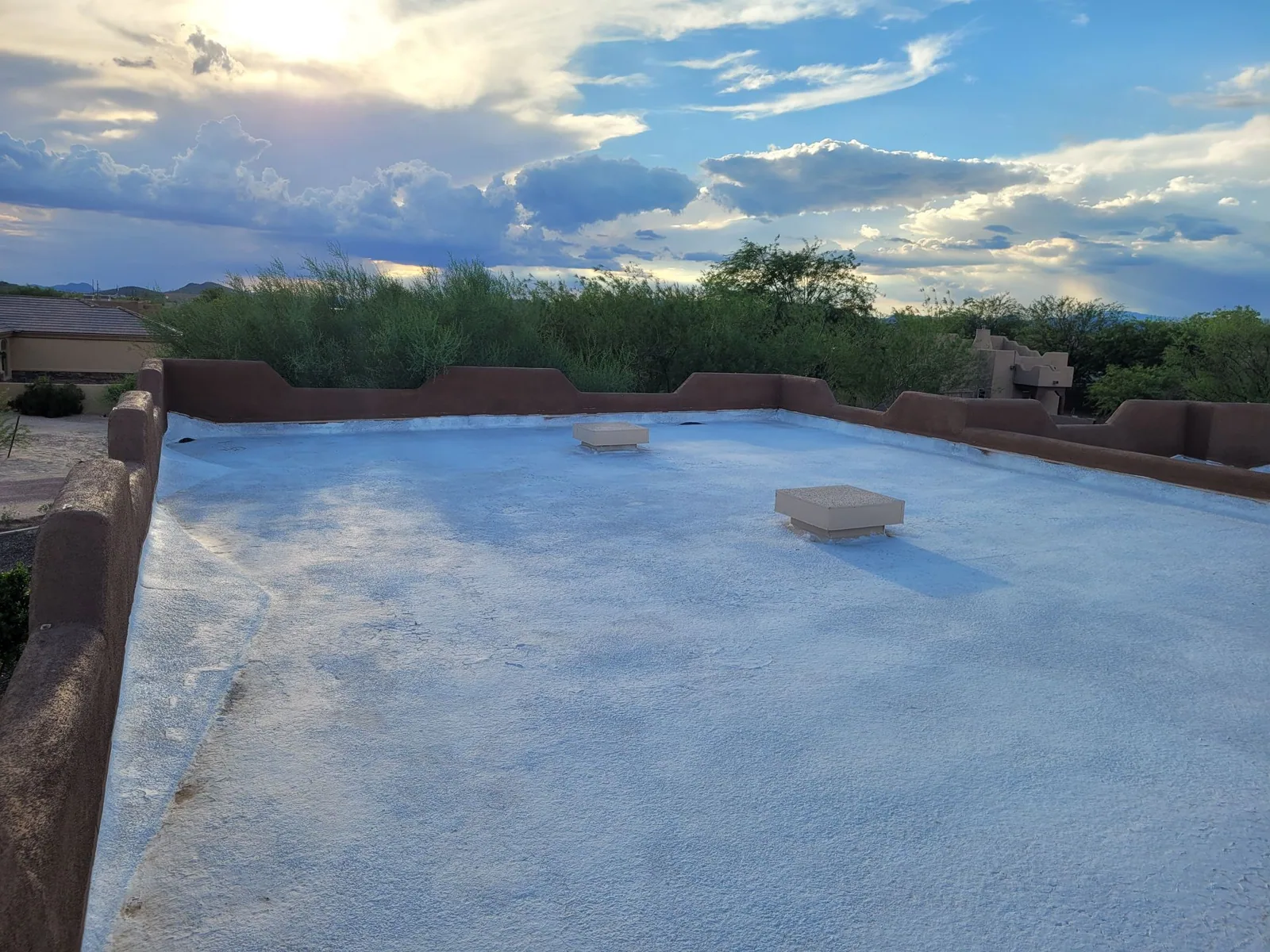
Membrane puncture repair in Glendale, AZ: we find the hole, match the patch to your TPO, PVC or EPDM roof and check the insulation underneath for water.
A puncture is a hole straight through the roof, and it needs to be sealed before the next storm finds it. Monsoon season in Glendale runs June 15 through September 30, and a hole that drips a little in a spring shower can pour during a monsoon downpour. Membrane puncture repair in Glendale, AZ takes in the damaged membrane and the sound sheet around it that the patch has to bond to. We find the hole, check the membrane around it and tell you whether a local patch will do. If water has soaked the insulation or the deck is damaged, the job grows. The general contractor should hear about that possibility before a small hole gets priced as a quick patch.
Whether the building is a few blocks from State Farm Stadium on Cardinals Drive or near Glendale Main Library on West Brown Street, we need the actual property and someone who can get us on the roof. We do not guess the roof system from the neighborhood. Send any photos you have and tell us about recent rooftop work. That history helps us look in the right places, and what we find on the roof decides the repair.
Find the hole and check around it
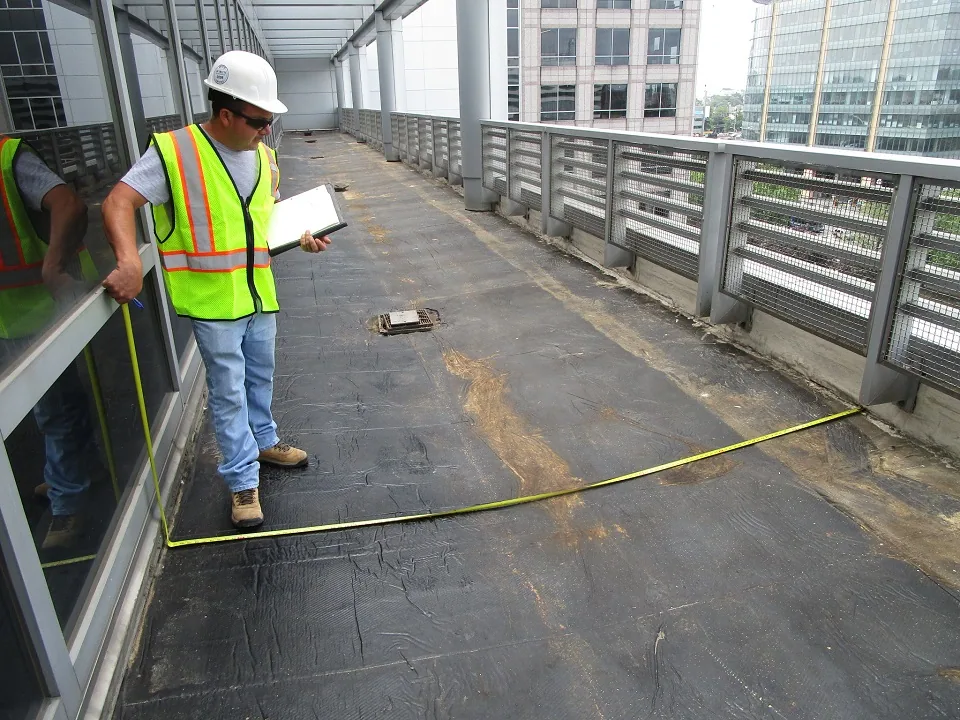
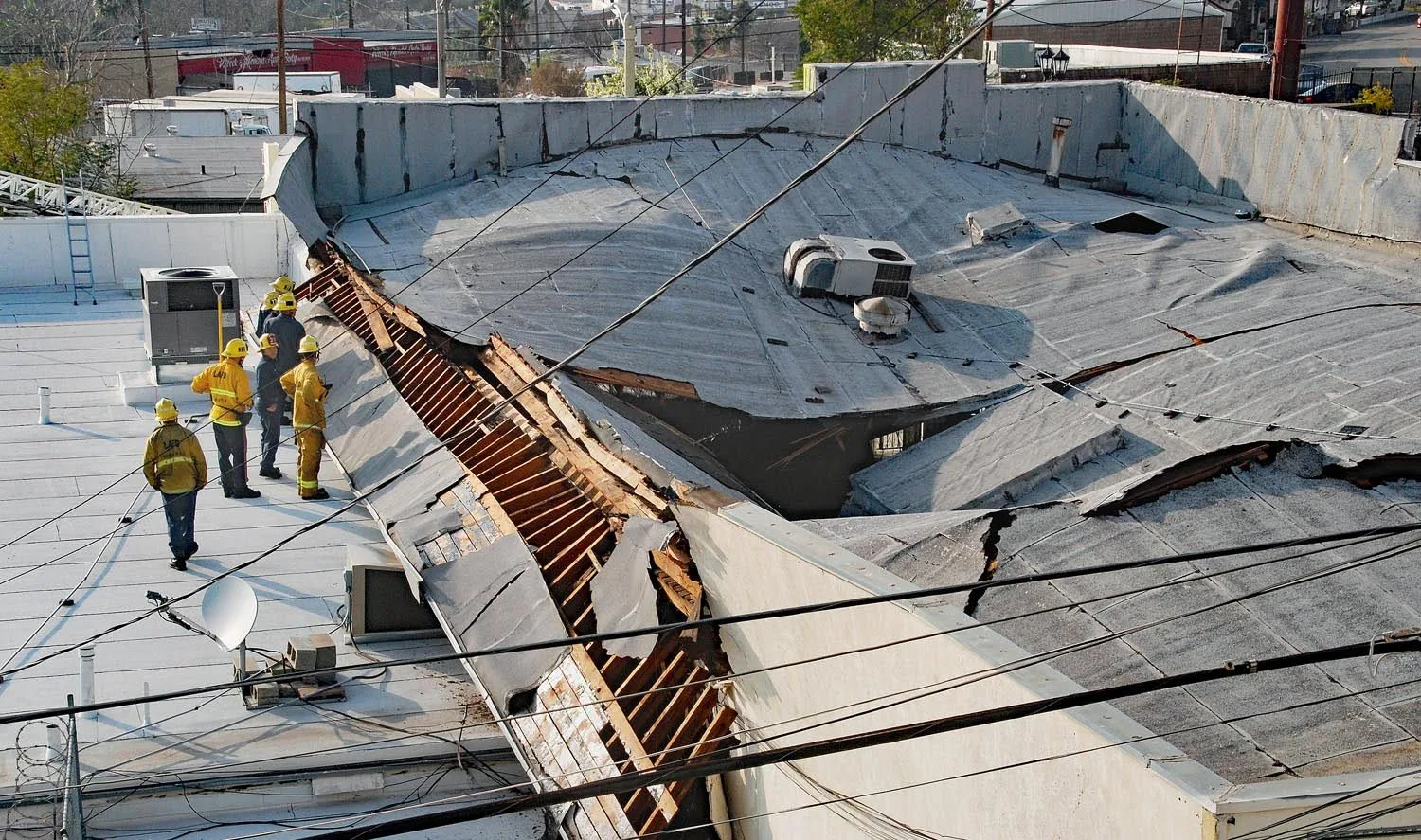
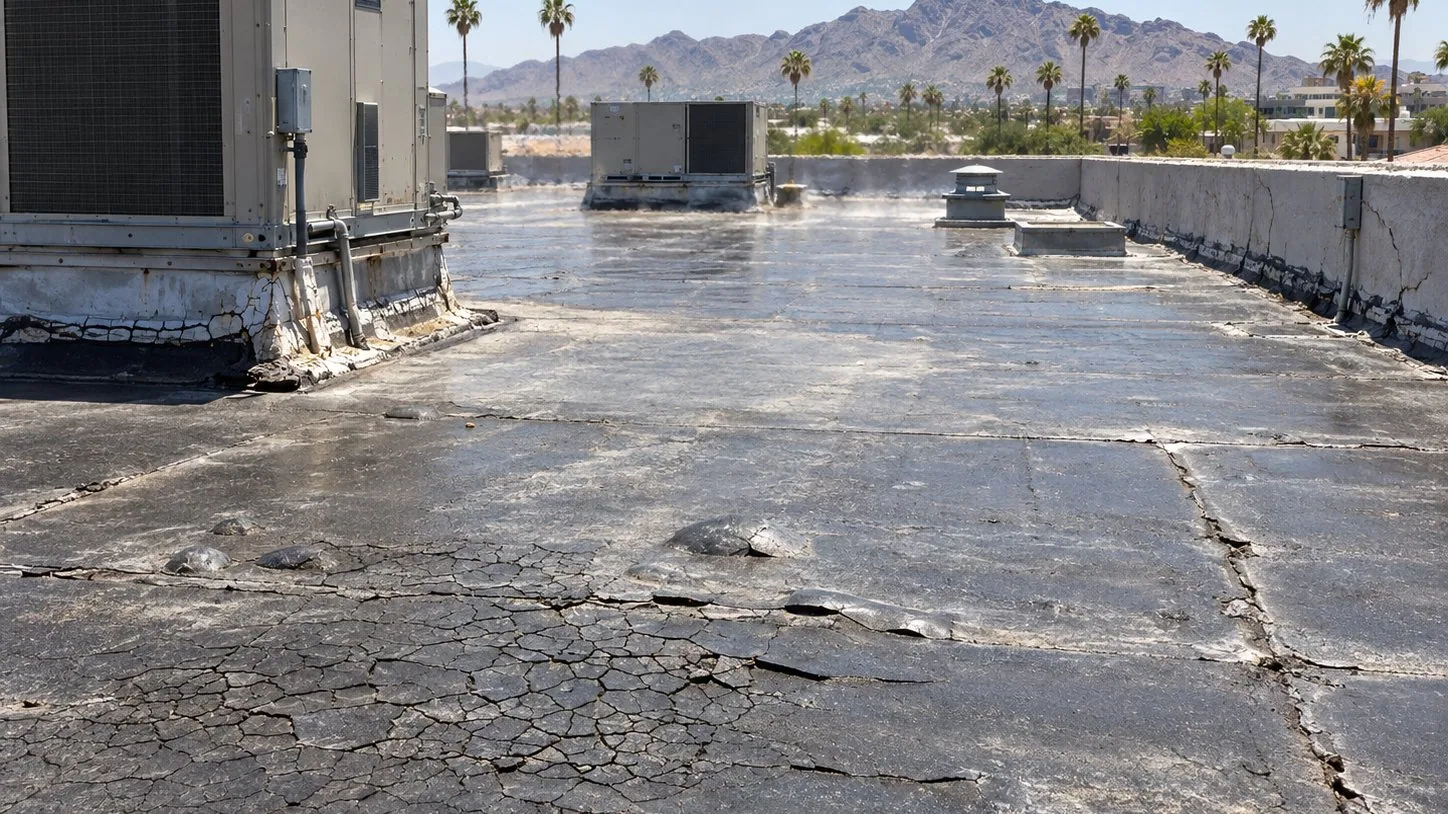
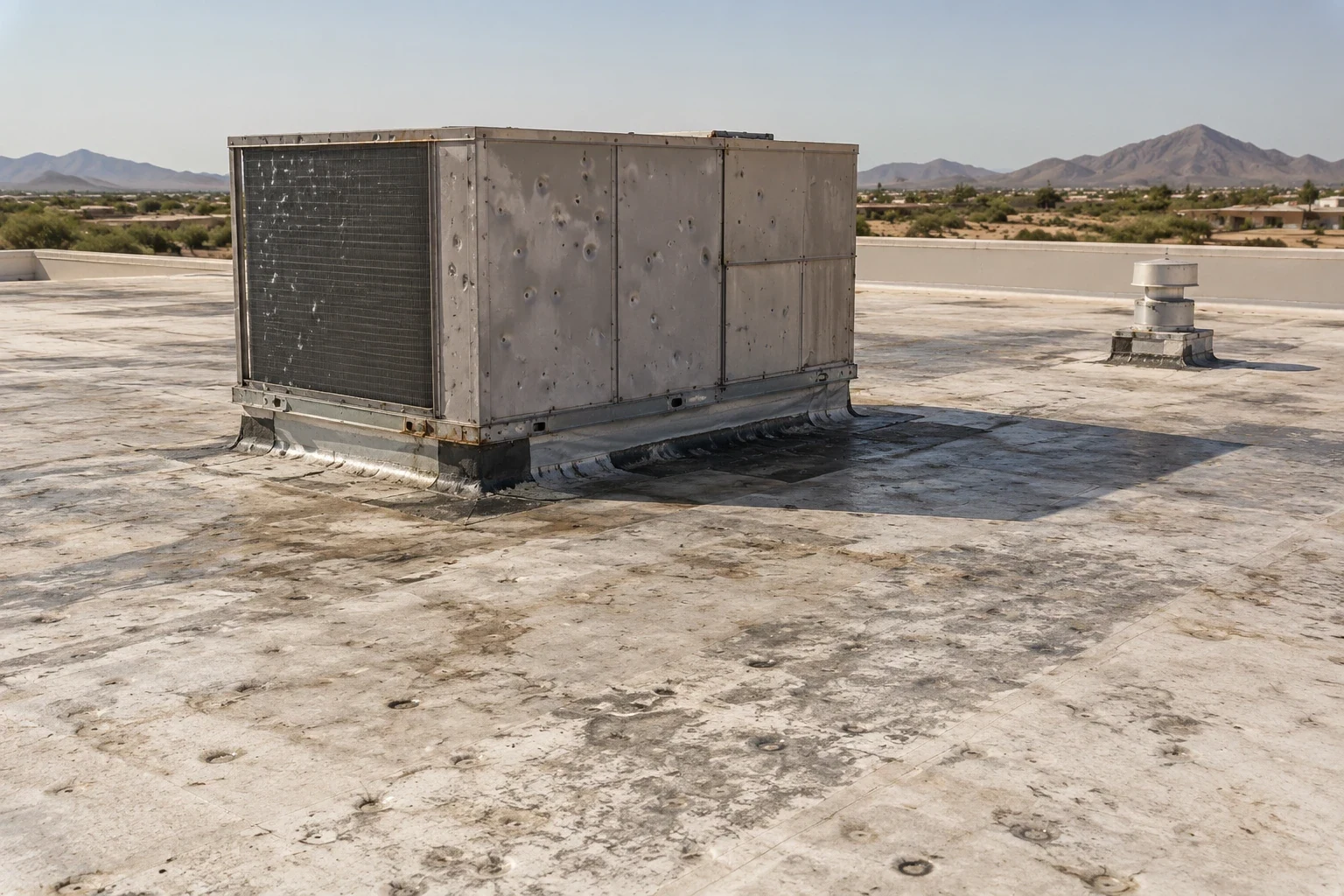
A puncture is a hole through the field membrane. It is a different repair from a seam that has opened or a wall flashing that has pulled away. We photograph the hole with enough of the roof around it that anyone can find it again. Then we check the membrane nearby for cuts, cracks, oil, dirt and old patches that would affect where the new patch can end. We confirm the membrane type before choosing a repair method. If the hole exposes insulation or a cover board, we look closer, because the top of the roof does not show what is wet underneath.
We ask when the damage was first noticed and who has been on the roof. A dropped tool, a loose screw or a technician's foot traffic around a rooftop unit is useful to know, but it does not prove what made this hole. Our roof inspection notes the puncture and the conditions around it, kept apart from what we were told. If there is an interior leak, we mark that too. Water travels inside the roof, so the stain on the ceiling may be well away from the hole above.
Match the patch to the membrane
A patch needs sound membrane to bond to on every side. We identify the roof system and check the sheet where the patch will go before choosing materials. TPO and PVC patches are heat-welded, following the manufacturer's instructions for that membrane. EPDM needs compatible primer and seam tape. Old coating, dust and earlier patches from a different product can keep a new patch from bonding. A white roof is not automatically TPO, and a black one is not automatically EPDM, so we check rather than guess.
On PVC roofs, we look for brittle or shrunken sheet and old repairs that would block a good weld. If a small patch would end on bad membrane, the repair has to get bigger, sometimes to a full section, and we show you why. Every patch has to reach sound sheet, and we probe the welds or check the tape bond once it is done. The size of the hole alone does not tell you whether insulation needs to come out, the deck needs work or more testing is needed first.
Check for water under the hole
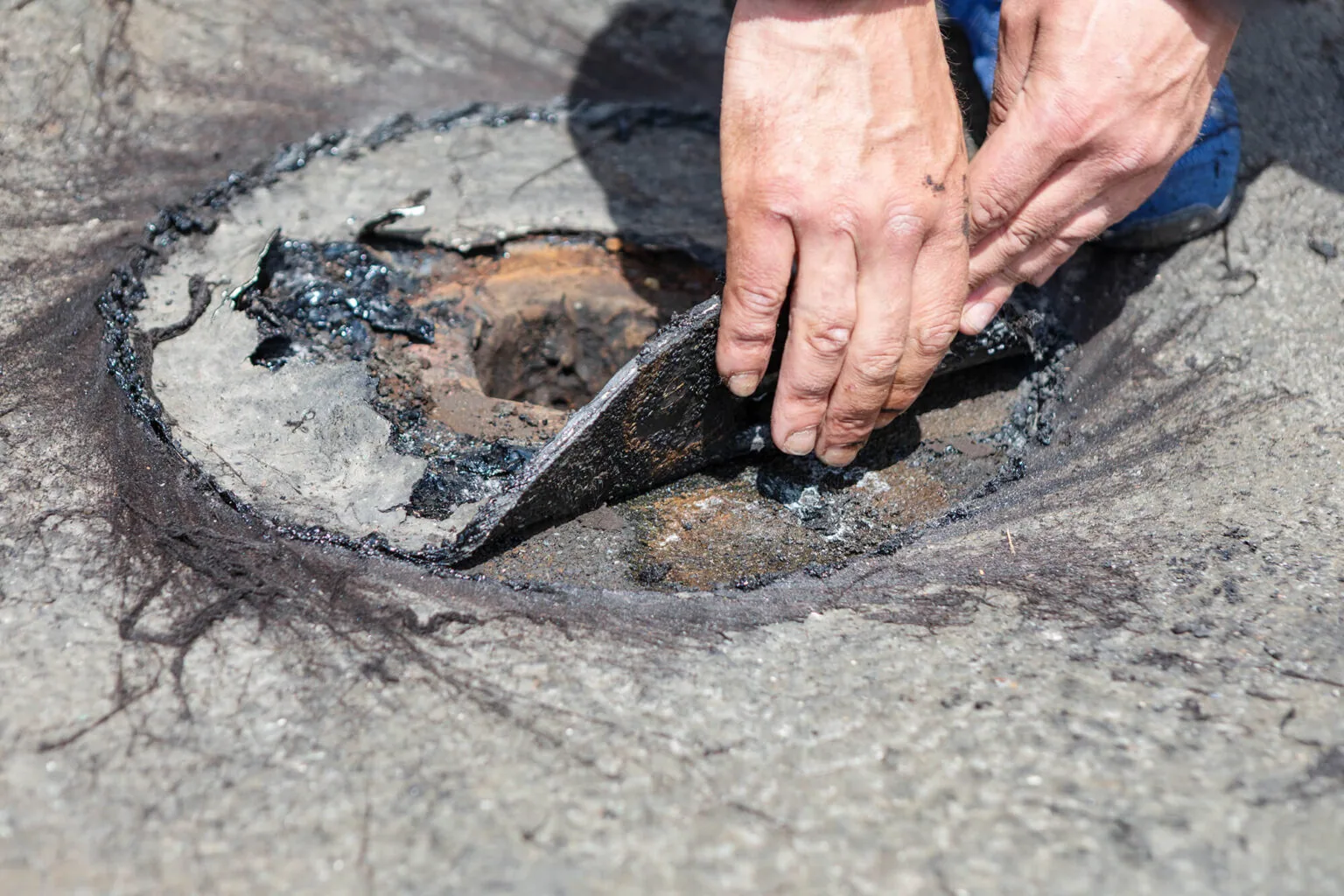
Water that gets through a puncture soaks into the insulation, and the size of the hole tells you nothing about how far that water spread. An infrared moisture survey shows likely wet areas, but the reading depends on the roof build-up and the weather the night it was shot. Core cuts confirm what is actually there. We mark each core on a roof plan, wet or dry, and keep untested areas listed as unknown until they are checked. That way the removal area on the estimate is based on what the cores showed, not on a guess from an image.
Every test opening gets patched as part of the job. We photograph the insulation and deck at each one and note any rot, rust or wet board we find. If the insulation cannot stay, we explain what comes out and what goes back before the new membrane goes over it. Deck or structural concerns go to an engineer when needed. The general contractor can schedule that work once its location and scope are clear. A dry-looking membrane is no substitute for a core, and one wet core does not mean the whole roof is wet.
Seams and flashing near the puncture
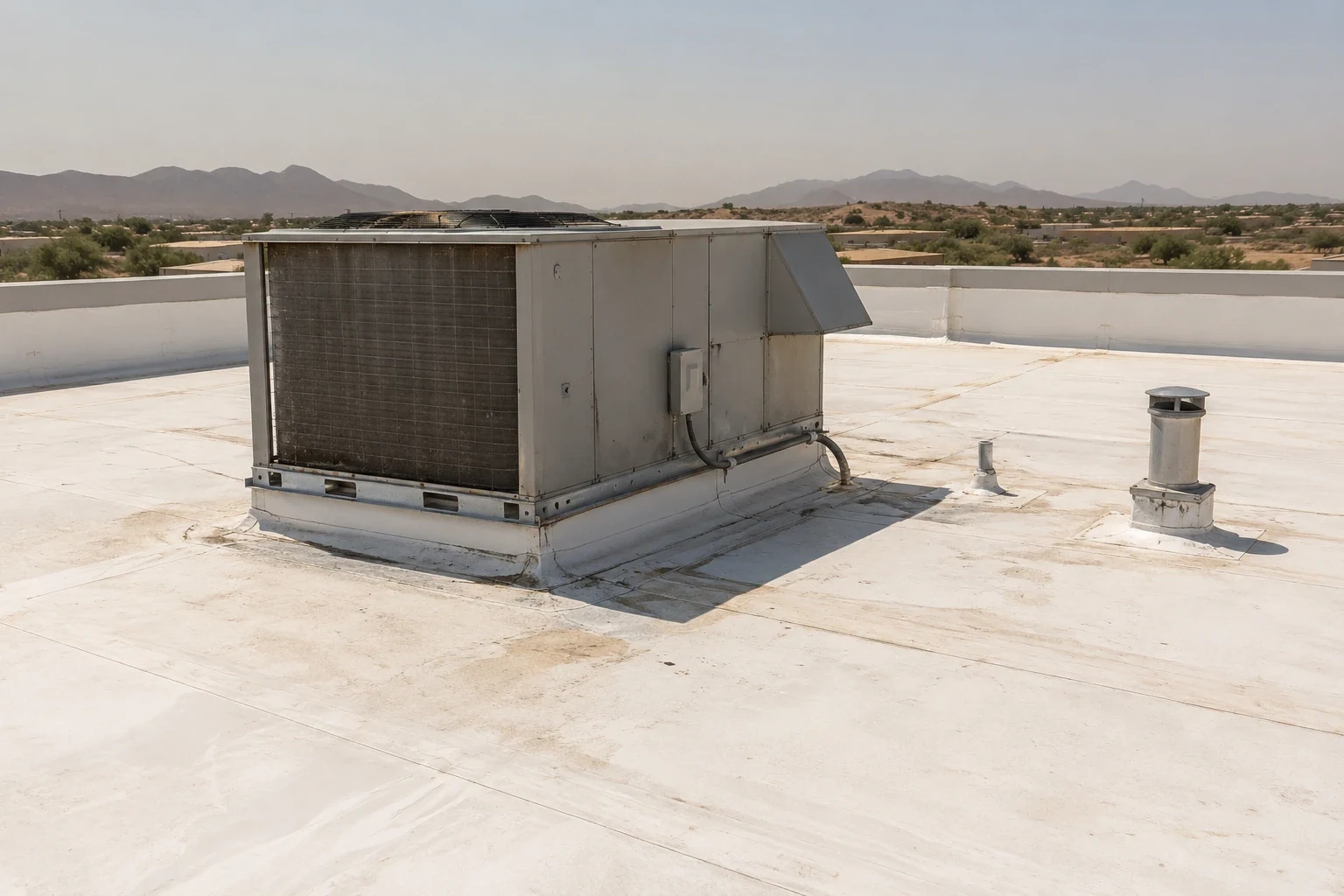
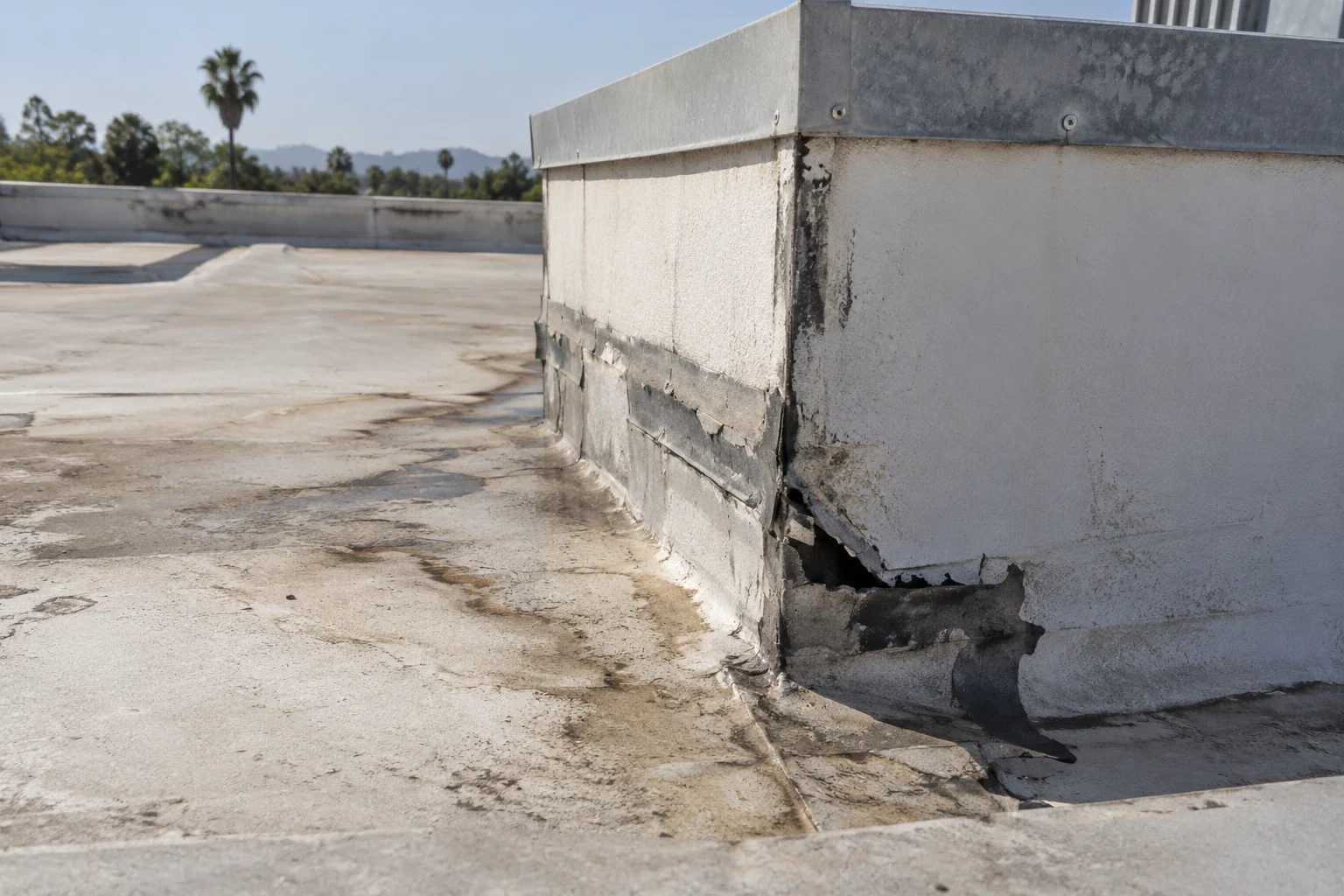
A puncture near a rooftop unit often has company: an open seam nearby or flashing that has pulled away at the curb. We locate each one and price each repair on its own. A seam failure repair needs its own weld or tape, even when it is a foot from the puncture. The two jobs may share prep work and a work area, but they are different repairs. The owner should see which defects are in the scope and which are not, especially when a curb or unit needs another trade to look at it.
With flashing failure repair, the curb or wall may need rebuilding before new flashing goes on. We tell you who handles that and what the roofing crew needs from them. Patching the hole in the field does not mean the curb flashing next to it is ready to close up. If a new unit changes the curb size or support, we explain how that changes the membrane work before installing anything, and the added cost goes to the owner or general contractor for approval.
Stop the repeat punctures
Several punctures along the path to a rooftop unit usually mean people are walking on the roof without protection. Technicians drag tools, set down panels and step on the membrane the same way every visit. We map the holes and ask the building manager who uses the roof and how often. Walkway pads along the service route can help, but they have to match the membrane, be installed the way the manufacturer specifies and go where people actually walk. We tell you why we recommend them and how they attach, rather than promising that pads alone will stop every future puncture.
On an office building roof, we find out who sets the rules for equipment access, roof hatches and work hours. Our crew and the mechanical contractors may use different routes during the job, so we agree on the work area and where materials get staged before relying on that plan. If repeat damage or worn-out membrane calls for more than patches, we price a bigger repair across the affected area and show you the findings behind it. That lets the owner compare options based on the roof we actually inspected.
More on Membrane Puncture Repair
Temporary protection and the repair record
An open repair may need temporary protection while we wait on core results or a curb rebuild. We tell you what that protection is for and what permanent work is still owed. At the end of each work day, the building manager knows what condition the roof is in and who to call if a leak shows up. Our emergency crews respond after hours, on weekends and on holidays. A temporary patch stays labeled as temporary while the general contractor sorts out the material decision or the curb work holding up the final repair.
For puncture repair in Arrowhead, each building and defect keeps the same label from the first inspection to closeout. The closeout includes photos of the hole, what we found under it, the prepared surface and the finished patch. Approved changes are listed with the finding that caused them. Any other leak or defect left out of the scope stays on the list with its next step. The owner gets proof of the repair at that spot, and the general contractor can see what is still open instead of treating one patch photo as the end of every problem on the building.
Commercial Roofing Questions
Why can a small puncture turn into a bigger repair?
Because the problem can be bigger than the hole. Brittle membrane around it, wet insulation underneath or a damaged deck all expand the repair. We check those before choosing the permanent fix and show you the findings behind any added work.
Can a patch from another membrane system be used here?
No. The patch has to match the roof system. TPO, PVC and EPDM each need their own materials and method, so we identify the membrane and check the surface before choosing a patch, never by color alone.
What if the roof keeps getting punctured near equipment?
That usually points to foot traffic. We map the holes, ask who services the units and recommend protection, such as walkway pads that suit the membrane and the actual route. Each existing hole still gets its own repair.
What should I know while a puncture is temporarily patched?
What the temporary patch is, where it is and what permanent work is still pending. You also get a contact for any new leak and a plan for the next visit.
Get the puncture found and sealed
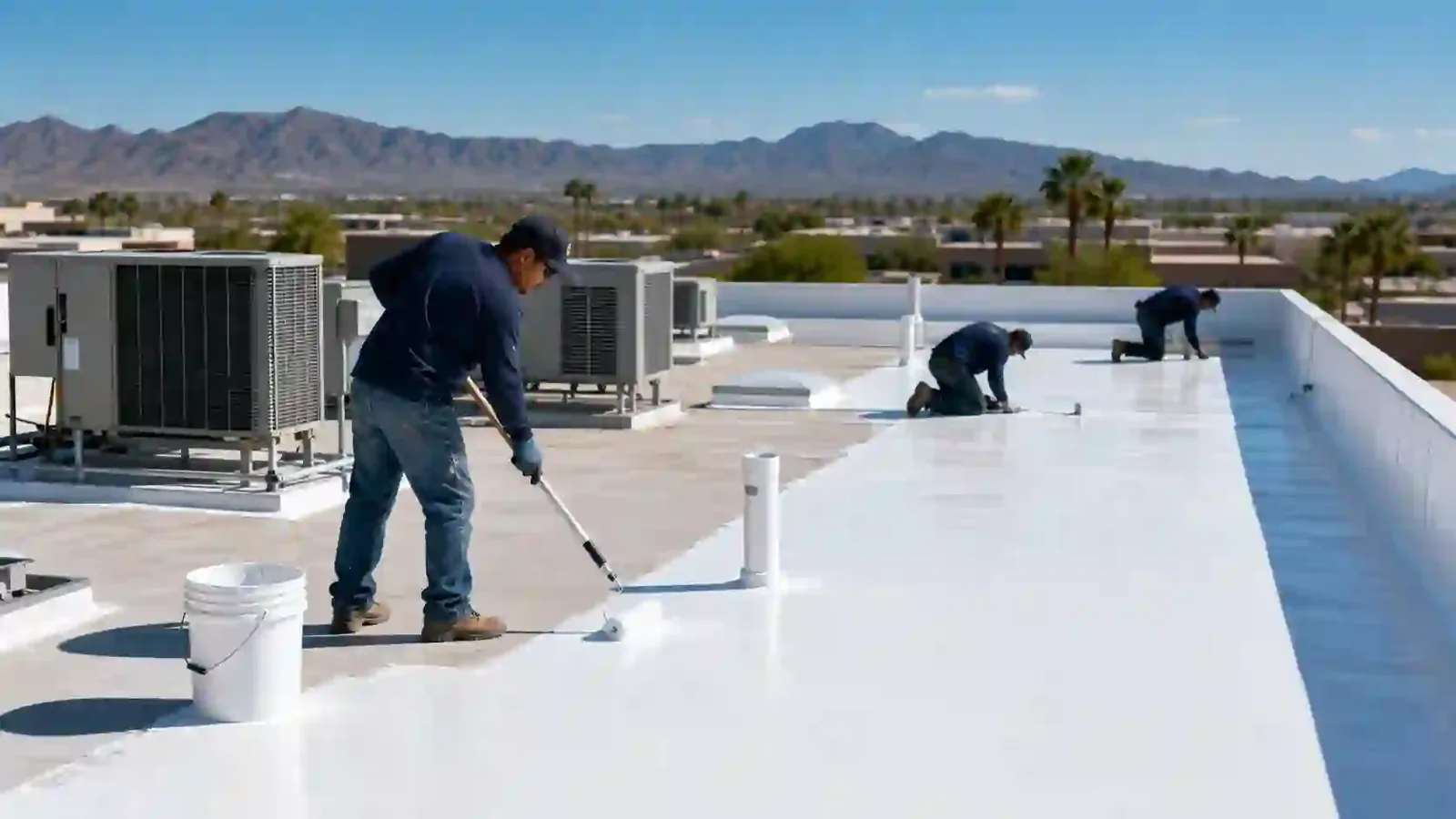
Tell us the building and where the damage is on the roof. We will inspect the membrane, check for wet insulation and give you a written repair estimate.
Next steps for your building:
Related Roofing Work
More commercial roofing work for Glendale and West Valley properties.