Fire Damage Roof Repair in Glendale, AZ
Home / Roof Damage Repair / Fire Damage Roof Repair
Request A
Roof Assessment
Tell us about the building and the roof. We reply with the next practical step for your property.
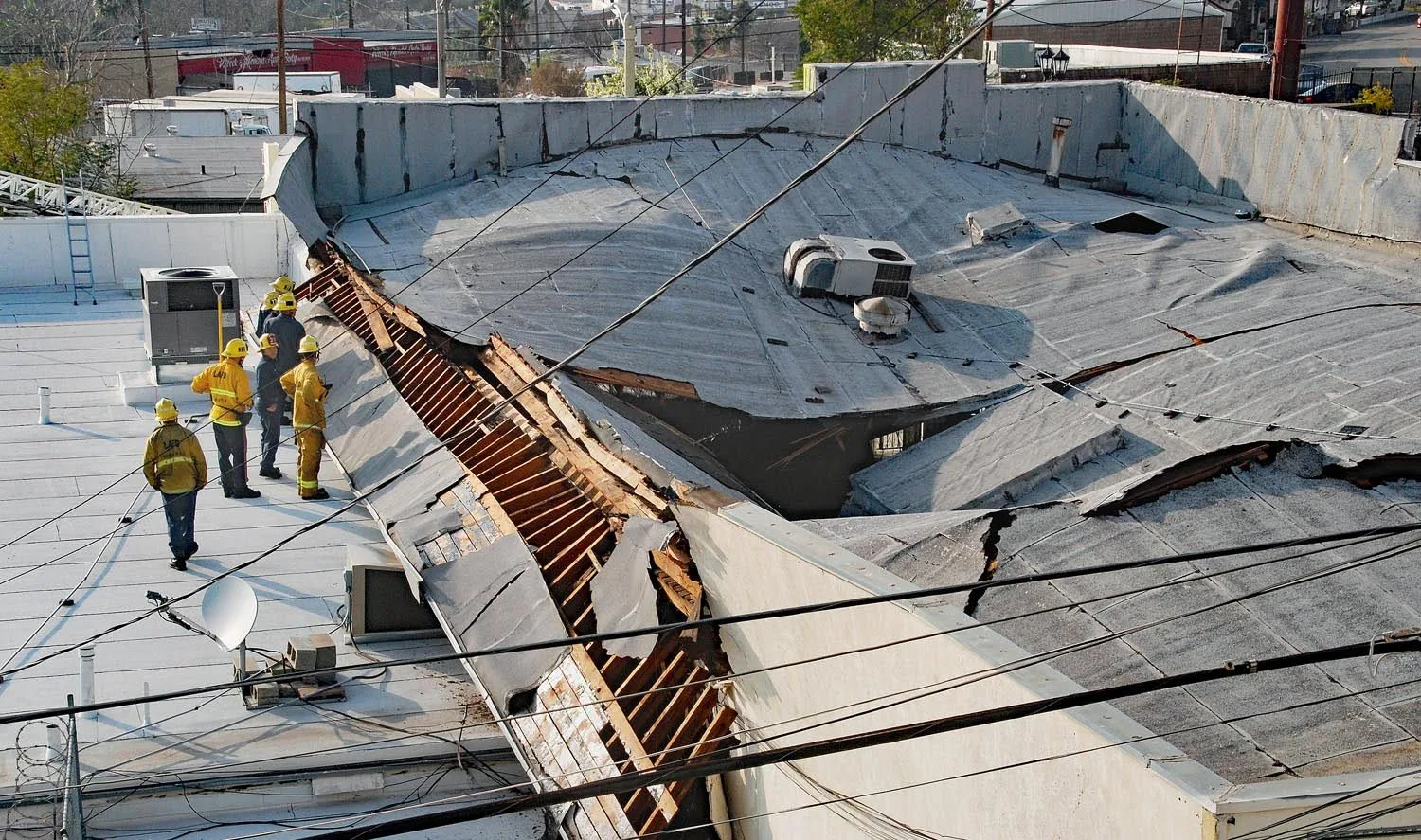
Fire damage roof repair in Glendale, AZ: we inspect what's safe to reach, confirm wet or burned layers, and price tear-off and temporary protection.
After a fire, the roof is rarely the first thing that can be fixed. An engineer may need to clear the deck, the mechanical contractor may need to deal with damaged rooftop units, and other parties may want to see the damage before anything is torn out. Monsoon season in the Desert Southwest runs from June 15 to September 30, so the general contractor also has to keep water out while all of that gets sorted. Fire damage roof repair in Glendale, AZ starts with the part of the roof we are cleared to inspect and can safely reach. We note burned, melted or blistered membrane and list what we still need to check underneath. The estimate covers the roofing we can define and does not assume what the engineer or the equipment contractor will decide.
If the building is near State Farm Stadium at 1 Cardinals Drive or Glendale Main Library at 5959 West Brown Street, tell us the exact address and who is running the project. Each building gets its own inspection. Photos and the history of the fire help us find the damage, but the inspection tells us what shape the materials are in. The owner and contractor get findings tied to specific repairs, not a blanket guess about the whole roof.
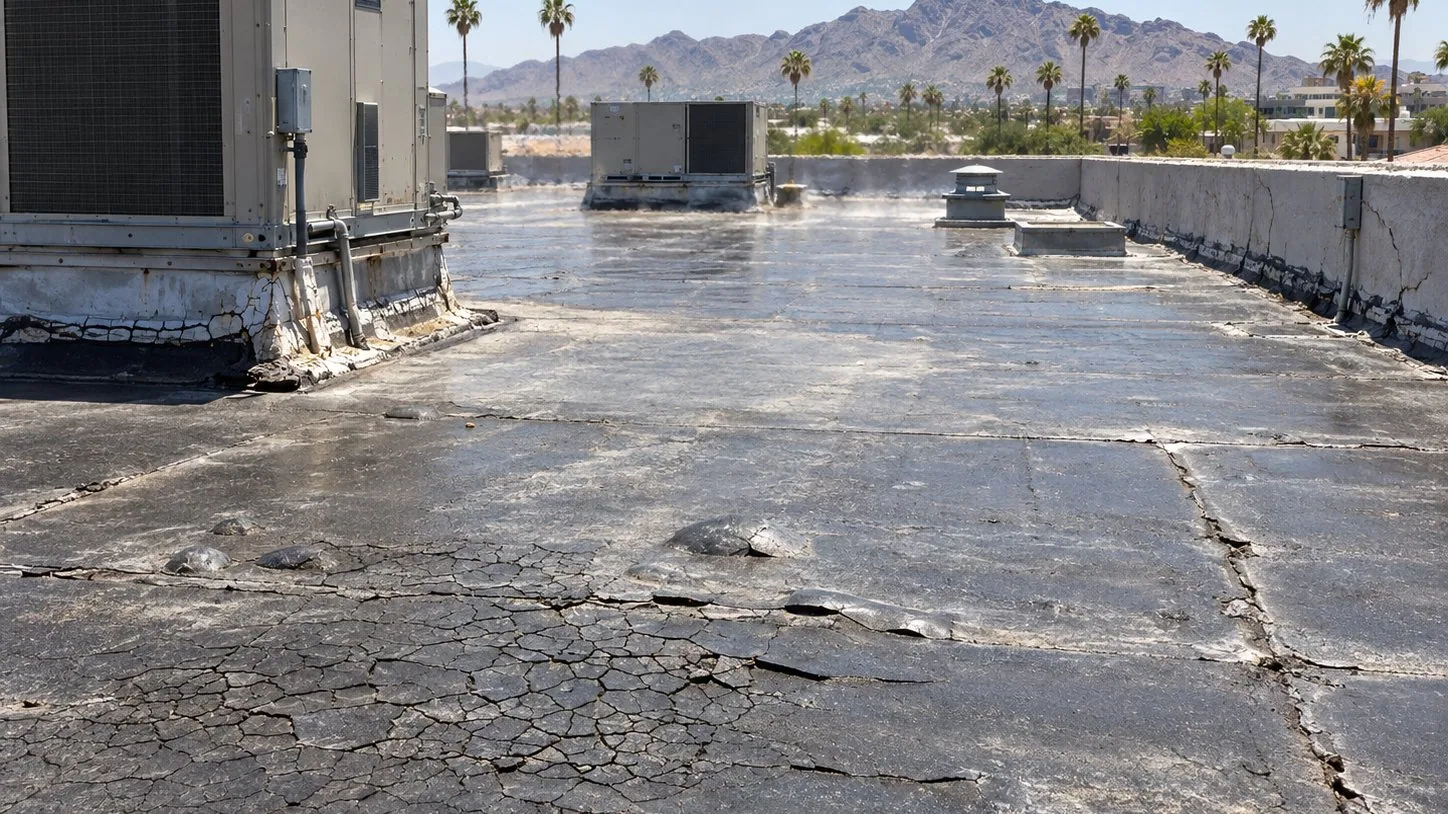
Find out which part of the roof is safe to inspect
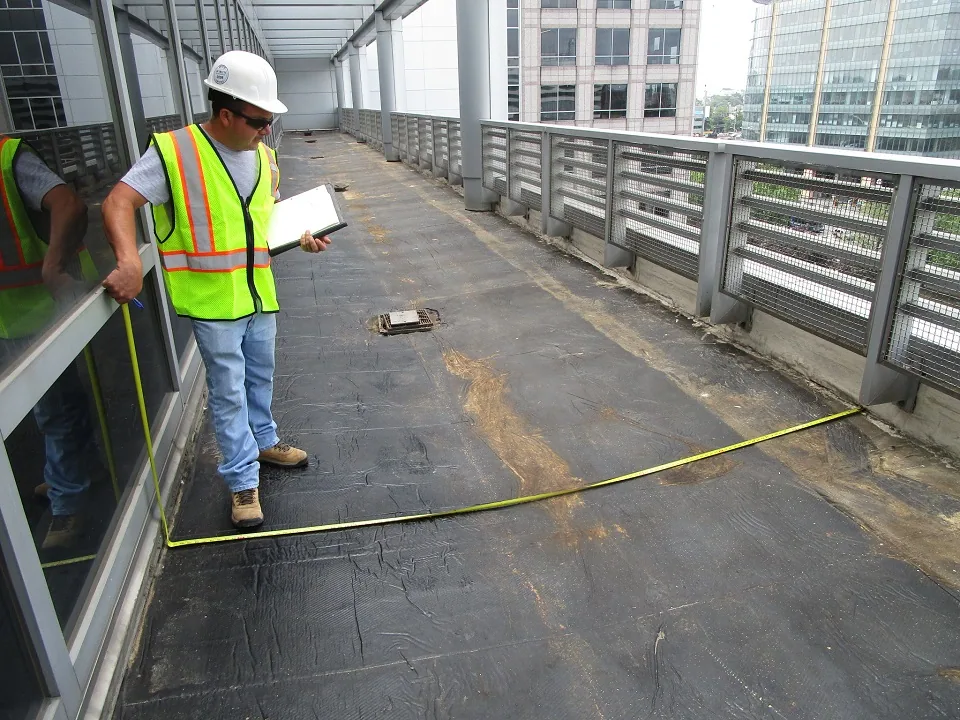
Parts of a fire-damaged roof may not be safe to walk until someone has checked the deck and framing, and utilities may need to be shut off or made safe first. We find out who is making those calls and which part of the roof we can get on. Our inspection stays inside that area. Anywhere we can't reach is listed as not inspected, along with what we would need to know before recommending a permanent repair there. Putting a start date on the schedule doesn't answer a structural question. The general contractor should track that open item before the next roofing step depends on it.
A roof inspection after a fire records the roofing we can see and where it is damaged. We keep the account of the fire separate from what we observe. Different sections can be in very different shape, and some will need a closer look. A photo of the surface shows where the problem is, but it can't tell you whether the deck under it is sound. We list what is still unknown and who should check it, so the contractor can schedule that before treating our findings as the full rebuild plan.
Check each layer before deciding what stays
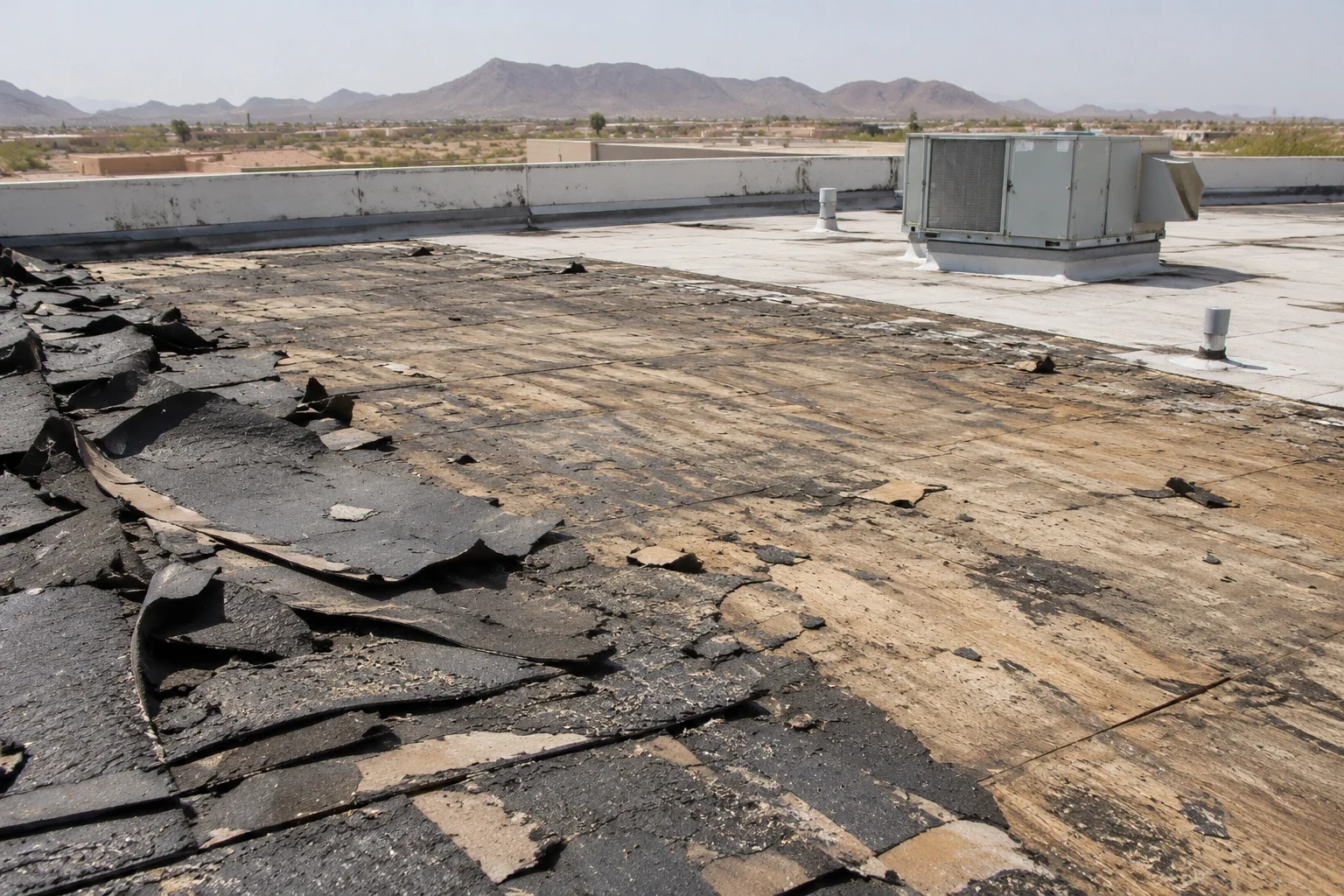
A fire can damage the membrane, the insulation and the cover board in different ways, and each one changes what gets torn off and rebuilt. Heat can melt the membrane in one spot and leave the insulation below it scorched, soaked from firefighting water, or fine. We report only what we have confirmed. If we need a test opening to see the insulation before deciding whether it can stay, the price includes patching that opening. We photograph the layers we expose and keep our conclusions to the spots we checked, not every area we haven't opened.
Water from putting out the fire often ends up in the roof insulation. An infrared moisture survey can show where to look, but the readings have to be read against the roof assembly and confirmed with core cuts. We report what each core shows and how much area is still unconfirmed. That sets the tear-off quantity without treating a scan reading as proof of wet insulation. Decisions about the deck or framing belong to the engineer. We tell you what the roofing depends on, so the contractor can get that answer before the new roof hides the deck.
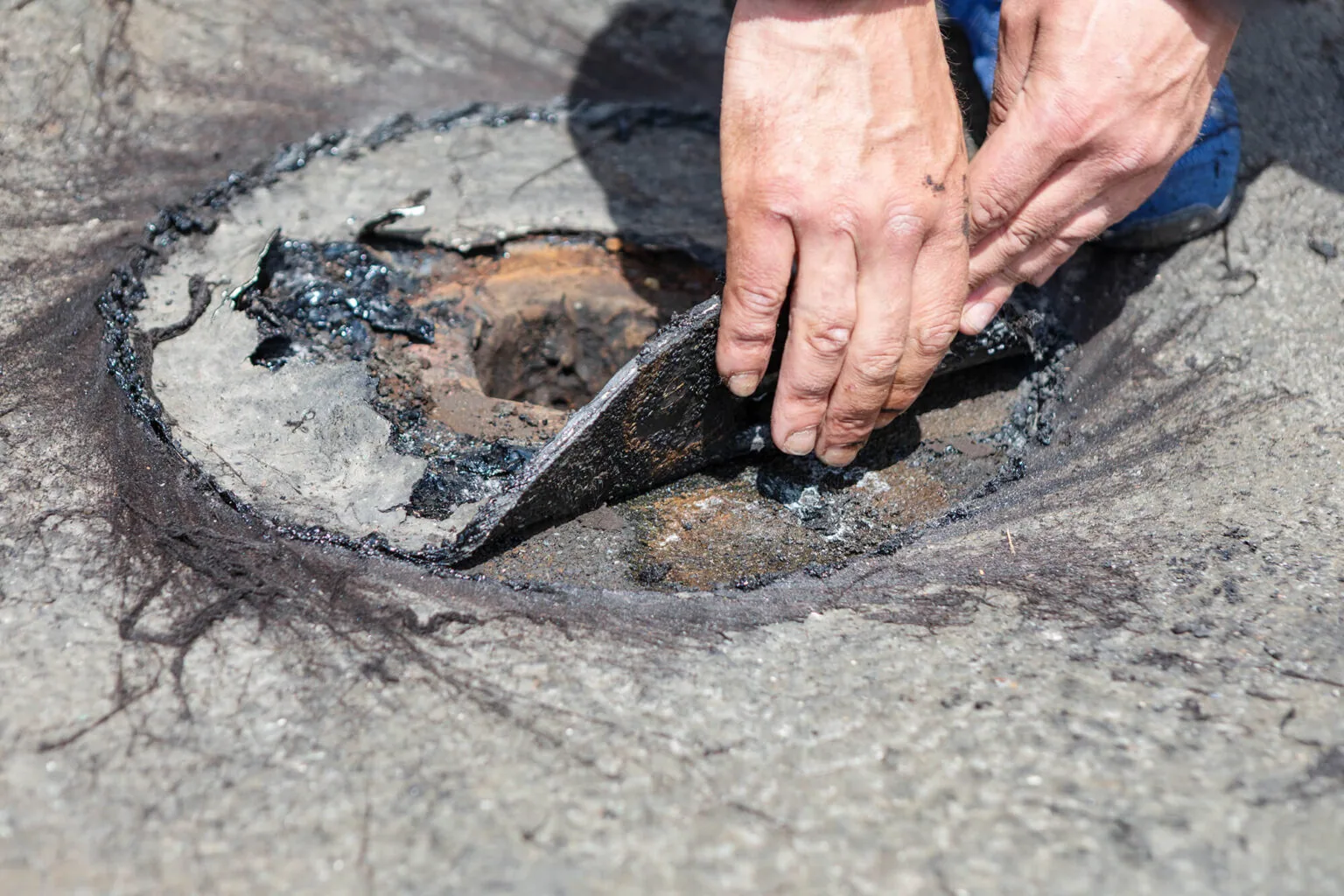
Base the tear-off on what's actually there
A good fire repair estimate shows, in one place, where the damaged roofing stops, what stays and what comes off. It also includes repairs next to the damage that are needed to tie in the new roof. The contractor should be able to tell whether the job is just membrane, or membrane plus insulation, cover board, nailers and flashing details. Crane or hoist time, debris handling and dumpsters belong on the same estimate. Square footage alone tells you none of that; the estimate should list the materials and coordination the repair actually needs.
When roof replacement is on the table, we price the larger area from what the inspection found there. Leaving the old roof in place under a new one only works if the old layers are dry and sound, and that has to be checked, not assumed. If opening the roof turns up more damage, we photograph it and explain the extra work, and the project contact approves it before it gets covered. The owner sees a clear change order, and the contractor can adjust the schedule and protection for that section.
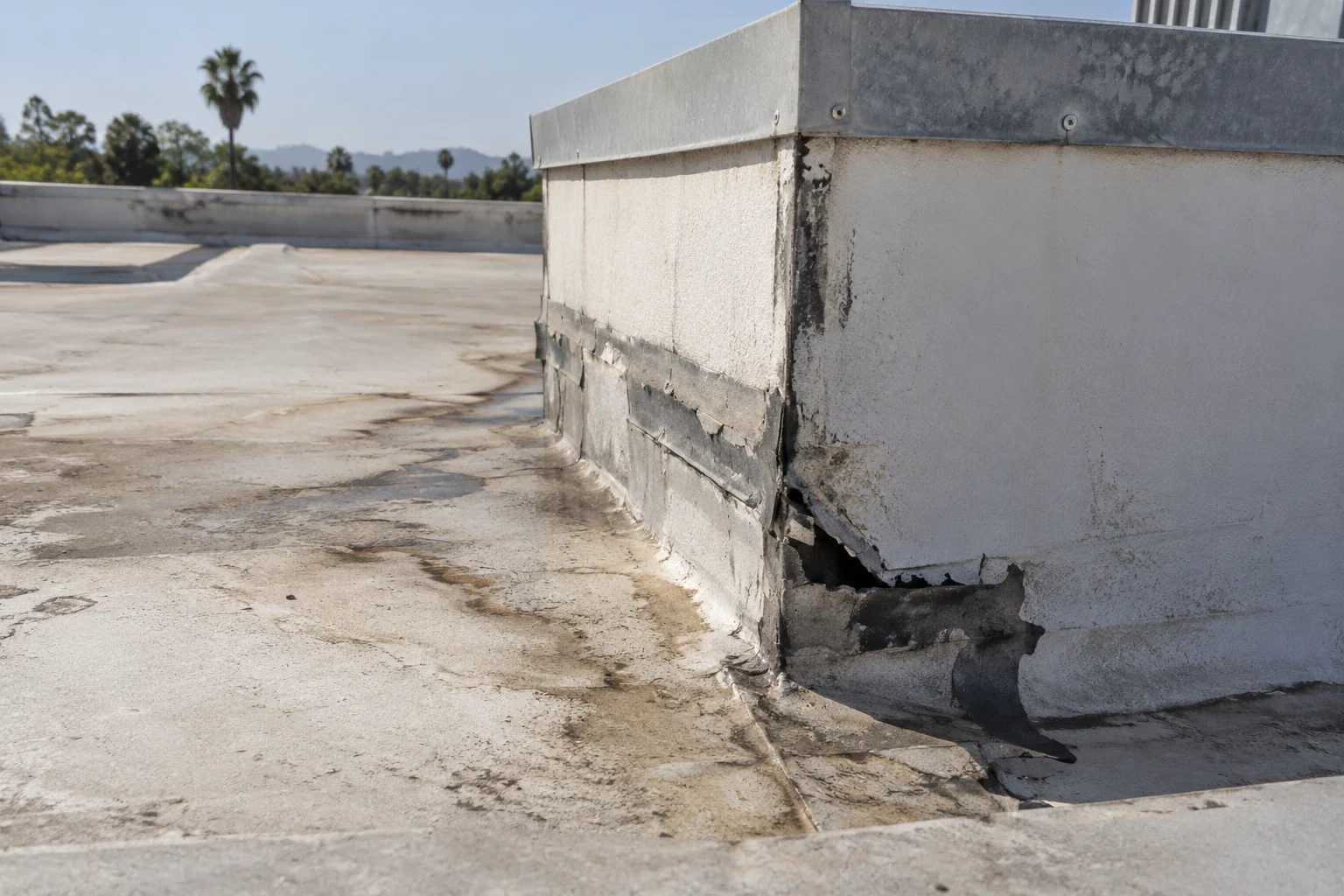
Line up flashing with the other trades' rebuild
After a fire, a roof edge or curb often depends on another trade rebuilding a wall, a curb or a rooftop unit first. We note who is doing that work and what the roofing needs to tie into. If a new curb arrives in a different size, or the wall connection changes, our cut line and prep change too. We raise that before installation so the contractor can get the other work done in time. A flashing repair at a rebuilt wall or curb keeps each trade's part clearly assigned instead of burying it in a general roofing line.
The existing membrane decides how new material bonds to it. We check the old sheet, old patches and the surfaces where the new roofing will tie in. A seam repair is priced apart from a larger tear-off and may need a different method or cut line. We list which problems are included and which fall outside the roofing scope. Every flashing detail needs a solid surface behind it, so we take photos before it is covered, and the final record shows what sits under the finished roof.
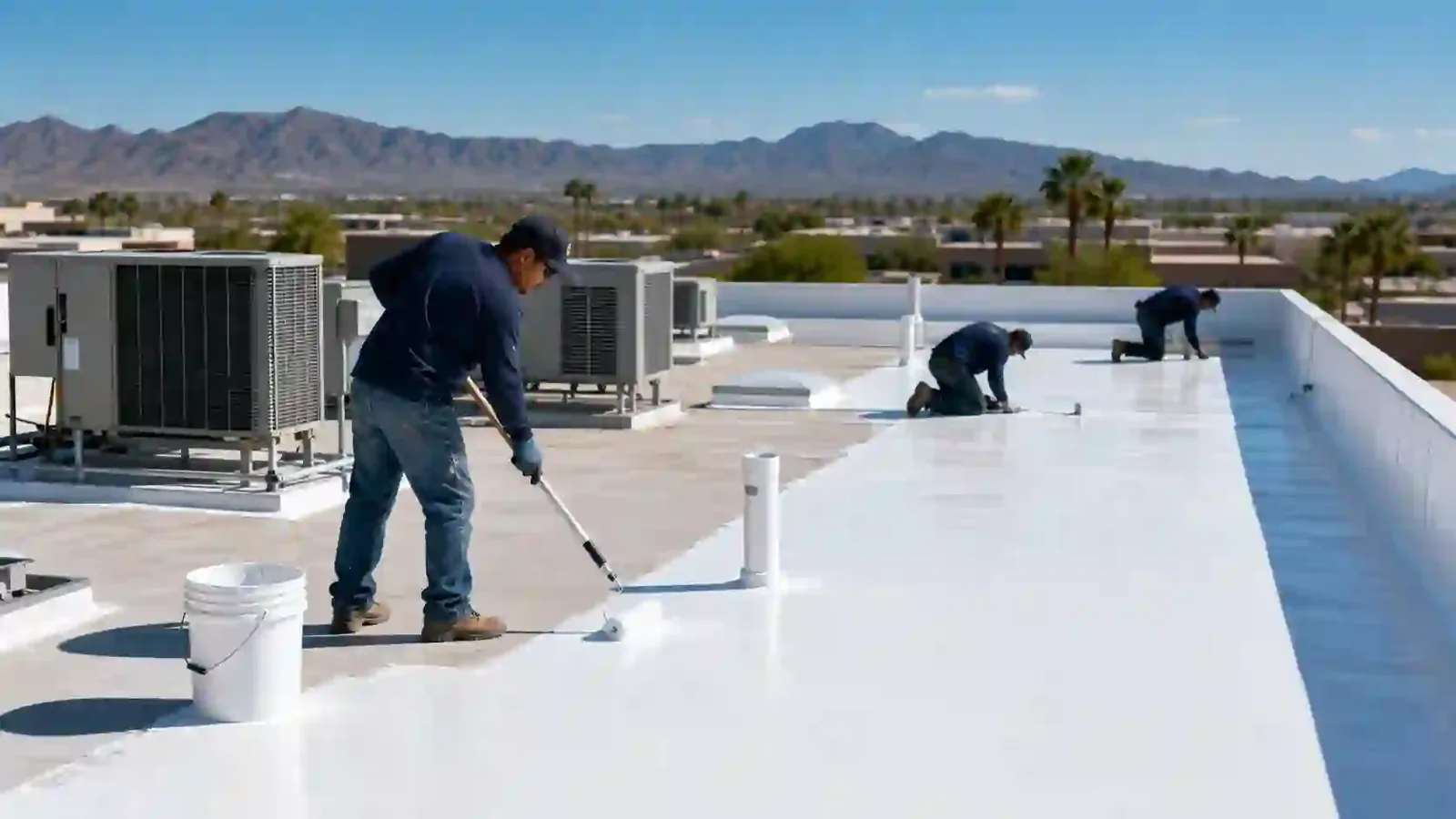
Keep the open roof protected while you wait
When part of the roof is open and waiting on structural repairs or new equipment, it needs temporary protection until the permanent roof goes on. We tell you where it is, what we did to protect it and what is still left to do. At the end of each work day you know what condition the roof is in and who to call if something new comes up. The contractor needs a plan for how much roof is open and what can be finished soon. If another trade falls behind, we look at the protection again instead of assuming yesterday's plan still holds.
On an office building roof, we go over the work area and the route to the roof with the property manager. We ask which tenant spaces or building systems we need to work around. Every building has its own rules, and roofing goes ahead only where we are cleared and conditions allow. We take emergency roof calls after hours, on weekends and on holidays, and any emergency patch is recorded as temporary, separate from the permanent repair still to come.
More on Fire Damage Roof Repair
Keep finished work and open items apart
Each finished section should be easy to find on the roof plan, along with the work approved for it. We keep the photos of exposed layers, the deck or nailer repairs, the prep and the final details together under that location. Change orders sit next to the conditions that caused them. The owner can follow how the finished roof matches the repair that was chosen. A final photo shows the finished surface, and the earlier ones show what is now hidden under it. Any structural or equipment item still open stays on the list until it is done.
For fire-damaged roofs in Arrowhead, the building and work area carry through to closeout. Temporary patches are listed separately from permanent work. Areas still needing investigation, and areas left out of the scope, are listed with the next step and who to contact. Our report gives the contractor and other trades the roofing facts and leaves insurance or contract questions to the people who handle them. The next phase starts from where the roof actually stands, with open items listed rather than hidden under a line that says restoration complete.
Commercial Roofing Questions
What has to happen before you can inspect a fire-damaged roof?
Someone has to confirm which areas are safe to walk and whether structural or utility issues block access. We inspect what we can reach and list the areas we couldn't, with what's needed before we can recommend a permanent repair there.
Can you tell how much roof has to come off just by looking at it?
No. The insulation and cover board under the membrane can be wet or heat-damaged even when the surface looks fine. We confirm with core cuts and keep the unconfirmed area separate, so the tear-off matches what's actually there.
How does other rebuild work affect the roof repair?
The roof can't be finished where it meets a wall, curb or unit until that work is done. We track when it will be ready, any size changes and the prep we need, so the roof isn't closed before the other trade finishes.
What should we know at the end of each phase?
Which spots are temporarily protected, which are permanently finished, and what is still open. Each open item has a next step and a contact, so the contractor knows exactly what condition the roof is in.
Get the roof into the rebuild plan
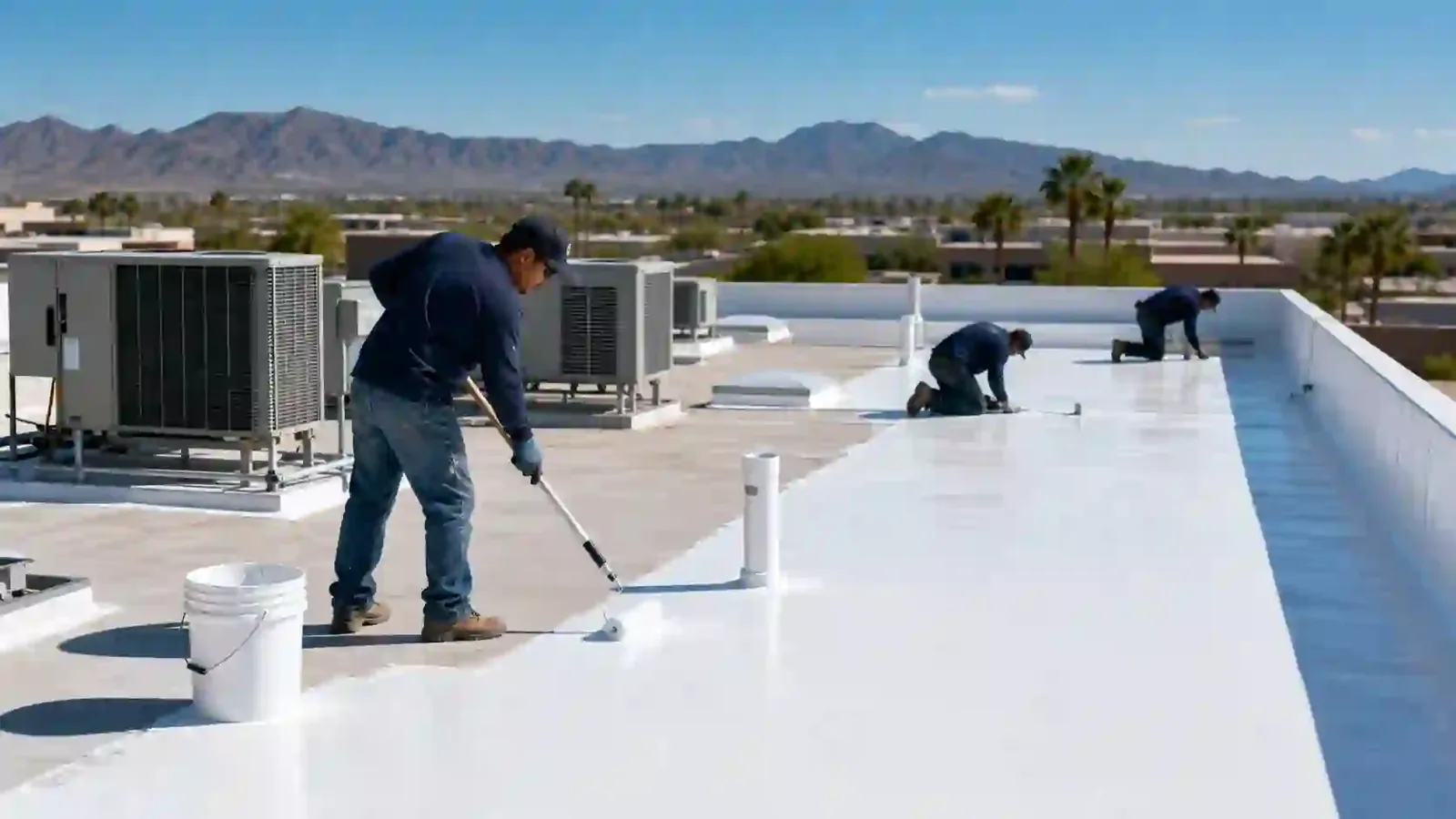
Have the building contact send whatever drawings or reports are available. We'll inspect the roof areas we can safely reach and talk through the insulation, the other trades' work and temporary protection with the general contractor.
Next steps for your building:
Related Roofing Work
More commercial roofing work for Glendale and West Valley properties.