Tolleson Commercial Roof Repair Scope
Home / Service Areas / Tolleson
Request A
Roof Assessment
Tell us about the building and the roof. We reply with the next practical step for your property.
Review Tolleson commercial roof repairs with Glendale roofing support, practical membrane and flashing decisions, clear work limits and useful turnover records.
The regional monsoon calendar makes an explained Tolleson roof repair scope useful before a general contractor commits the opening sequence. Commercial Roof Repair Glendale reviews the examined defect, suitable material connection and protection needed for the operation. June 15 through September 30 is the season used for that regional planning. Bring the work area and receiving contact into the same discussion, so the construction decision includes a practical way to stop and return the roof.
Tolleson’s city center and industrial districts serve different commercial operations, so the roof visit should be planned with the specific property contact. The owner identifies dock schedules, access gates and interior areas that must remain protected. We trace the reported water to the roof zone and check drainage, seams and equipment transitions before assigning a repair. If production or loading cannot pause, the scope can phase work around those constraints while keeping exposed areas closed at the end of each shift. Closeout records the completed detail and any item requiring another trade.
Describe the defect in terms of the connection being repaired
A proposal should make the roof operation understandable. A damaged field area may require a compatible patch, a failed seam may need joint reconstruction, and an inadequate termination may need work at the adjoining wall or curb. We identify the existing covering and examine the relevant detail before describing the correction. State how the repaired material will connect to the surrounding roof. This gives the owner a construction reason for the amount rather than an unexplained promise to seal the leak.
Commercial roof leak repair begins with the water report and the conditions we can examine. Ask for timing, the affected area and recent equipment or roof work. Compare that account with exterior observations without assuming the stain sits directly below the entry point. Where further investigation is needed, explain the question it must answer. The general contractor can then arrange an examination or repair with an actual purpose and an understood work boundary.
Treat the curb and its equipment as connected tasks
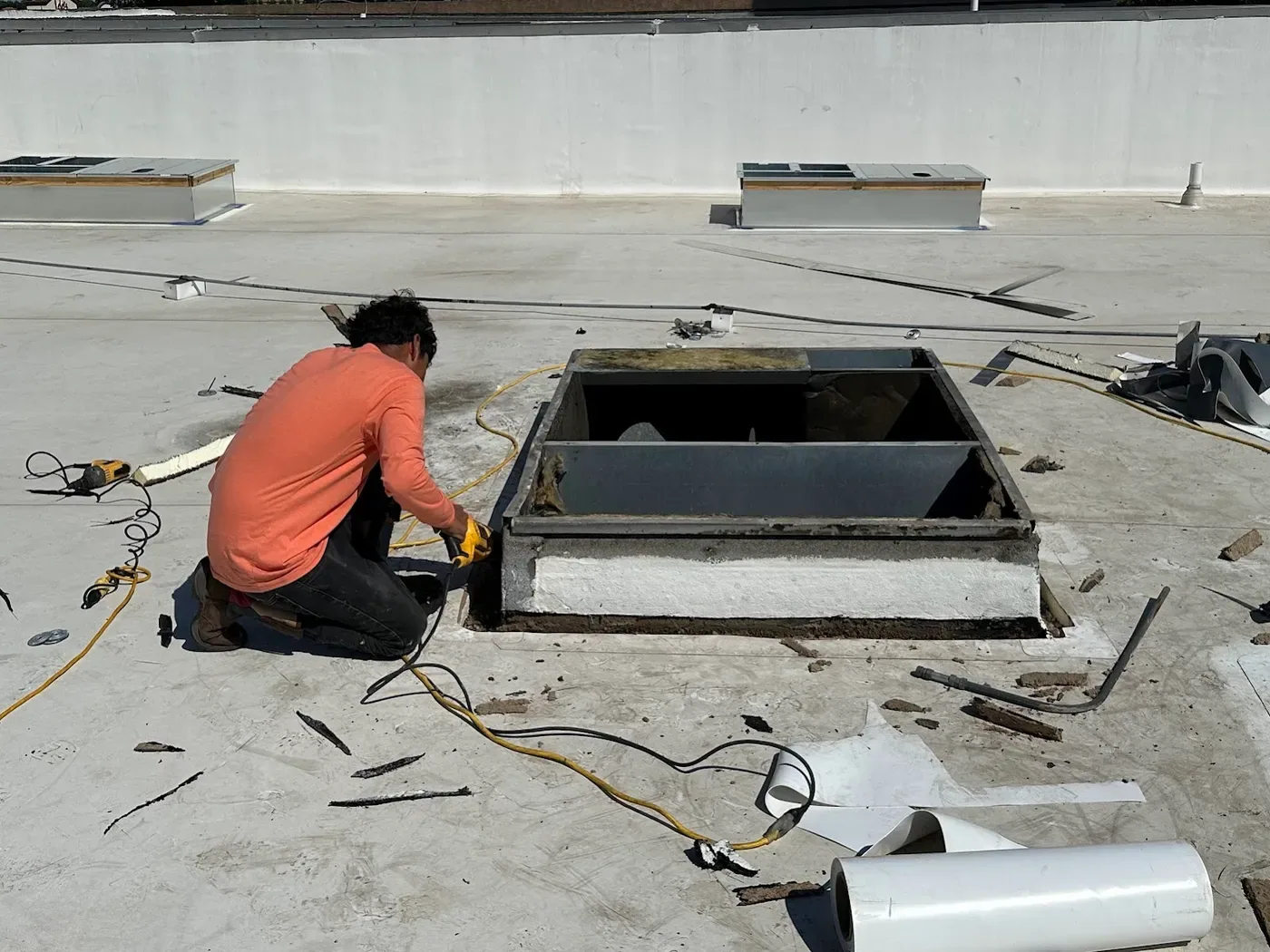
At equipment, explain whether the concern involves the roofing transition or a separate component question. A flashing repair may require access behind an existing connection. Component movement or service should be arranged with the responsible representative before the roofing is opened. We describe the work we will perform and the condition needed from the other operation. A clear dependency helps the owner understand the complete repair without treating equipment performance as part of an undefined roofing promise.
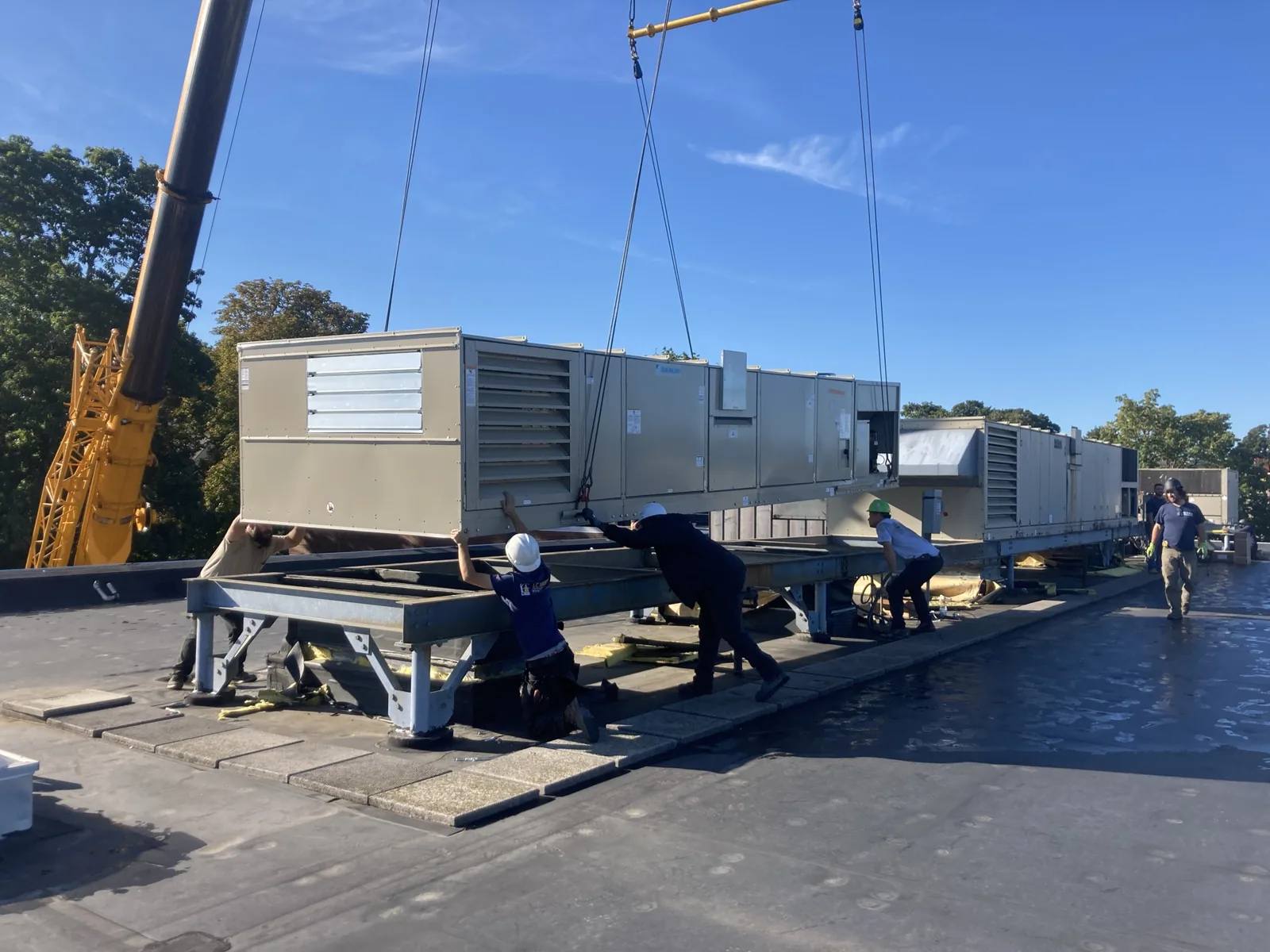
Rooftop equipment curbs and supports work can include a planned return after another task is completed. Explain the interim roofing condition and identify who receives it. The general contractor needs the person arranging the component visit as well as the roofing sequence. Keep the final connection and the separate service visible at turnover, so a delayed component operation has a practical next step and the roof detail is not described as finished prematurely.
Examine below the finish when retention depends on it
A visible membrane may not explain the condition of every layer the proposed method would retain. We identify moisture, support or attachment questions relevant to that choice and discuss suitable further examination. Opening or testing should have a purpose tied to the decision. Explain how the result could change removal, reconstruction or the retained material. The owner can then authorize investigation with a clear reason instead of approve a treatment on a concealed-condition assumption.
If the assembly does not suit limited work, compare the appropriate repair, recover and replacement assessment. State which layers each construction approach would retain and how the details and attachment would be addressed. A wider review should explain the findings that prompted it, the information still needed and the practical operation being considered. The general contractor can evaluate access and protection with that scope while the owner compares choices grounded in the examined roof.
Build coating work around the preparation it needs
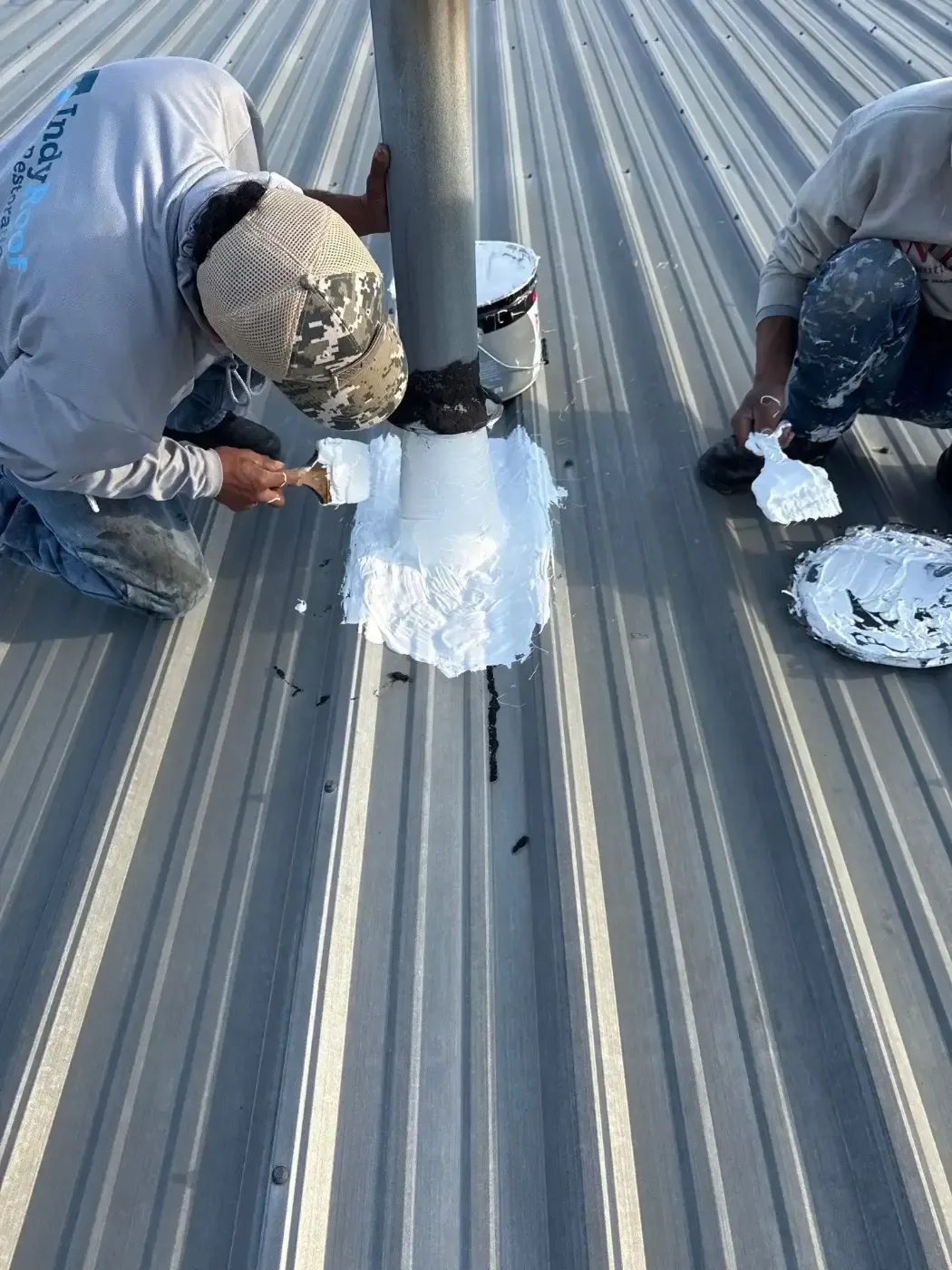
A coating option starts with the existing roof material and a suitable surface. Determine compatibility and whether the retained construction is appropriate. Failed seams or flashing need correction before a treatment relies on them. Clean and prepare the surface using the chosen method, and explain how dust or dampness can delay application. We identify the corrective work and preparation in the roof package, so the general contractor arranges more than a finishing visit.
Roof coating restoration can have a different footprint from removal, but the smaller operation does not decide material suitability. Document repairs that the treatment will cover and explain any unresolved underlying condition. Compare access, protection and the sequence required for each approach. The owner should be able to follow why retaining the roof is proposed and what preparation makes that approach workable, with a clear condition returned if application must pause.
Set the access arrangement before distributing the roof work
Use the property contact's entrance, unloading, staging and occupied-space instructions to plan the operation. We explain the roof area required for cleaning, opening or reconstruction and any component involvement affecting access. Review restrictions with the general contractor before distributing the work. A different route may alter the equipment or daily task boundary. Keep those consequences tied to the proposed operation so the owner understands an access-related adjustment rather than receive a vague schedule change.
Agree on suitable closure at a stopping point and identify who receives the area. Forecast changes or new concealed findings can alter the original work period. We explain the actual roof state and the additional decision needed when that happens. A commercial project in Goodyear should use the contacts and work boundary appropriate to that property. Coordinating nearby jobs does not remove the need for a separate approval and handback arrangement at each building.
More on Tolleson
Compare construction amounts and keep the final task traceable
Review the repaired detail, material preparation, concealed correction, access equipment and protection when comparing amounts. A proposal with a smaller boundary may leave work another includes. We describe those differences and any investigation still needed before a broader operation can be selected. A component task by another representative also needs to remain visible. The general contractor can then arrange the sequence using an understood roofing scope and the owner can connect the cost to the work actually proposed.
Roof asset management can carry the completed detail into a useful property history. At turnover, locate the repair, retain relevant photographs and keep approved changes with applicable written warranty information. Identify any interim condition or separate task still awaiting a return. Explain who receives the record and who arranges that follow-through. The next roof examination then has a specific construction account available, helping us distinguish a new concern from the correction previously completed. For a distinct Avondale roof request, verify its representative, access path and work release before scheduling material handling.
Commercial Roofing Questions
What makes a leak-repair amount understandable?
The detail and method explain the operation. Identify the material connection, preparation and any separate task so the amount can be compared with its actual work boundary.
Does equipment service belong inside every roofing scope?
Component responsibility must be explained separately. We identify the roofing connection and any condition another representative must provide before it can be completed.
When should concealed material receive further examination?
Retention decisions need adequate information. We explain the moisture, support or attachment question and how the investigation could change the proposed construction.
How should dust or dampness affect a coating plan?
Suitable surface conditions guide application. Review the preparation or pause needed for the selected method and explain the roof condition returned during that change.
What should the receiving contact have at turnover?
Locate the completed correction and retain relevant photographs, approved changes and applicable written warranty information. Keep open component tasks with the person arranging the return.
Explain the Tolleson roof scope before the opening
Arrange a pre-roofing meeting for your Tolleson commercial property. We can review the examined condition, material method and practical stopping plan with the general contractor and the contacts arranging access, approval and turnover.
Next steps for your building:
Related Roofing Work
More commercial roofing work for Glendale and West Valley properties.