Acrylic Roof Coatings in Glendale, AZ
Home / Roof Systems / Acrylic Roof Coatings
Request A
Roof Assessment
Tell us about the building and the roof. We reply with the next practical step for your property.
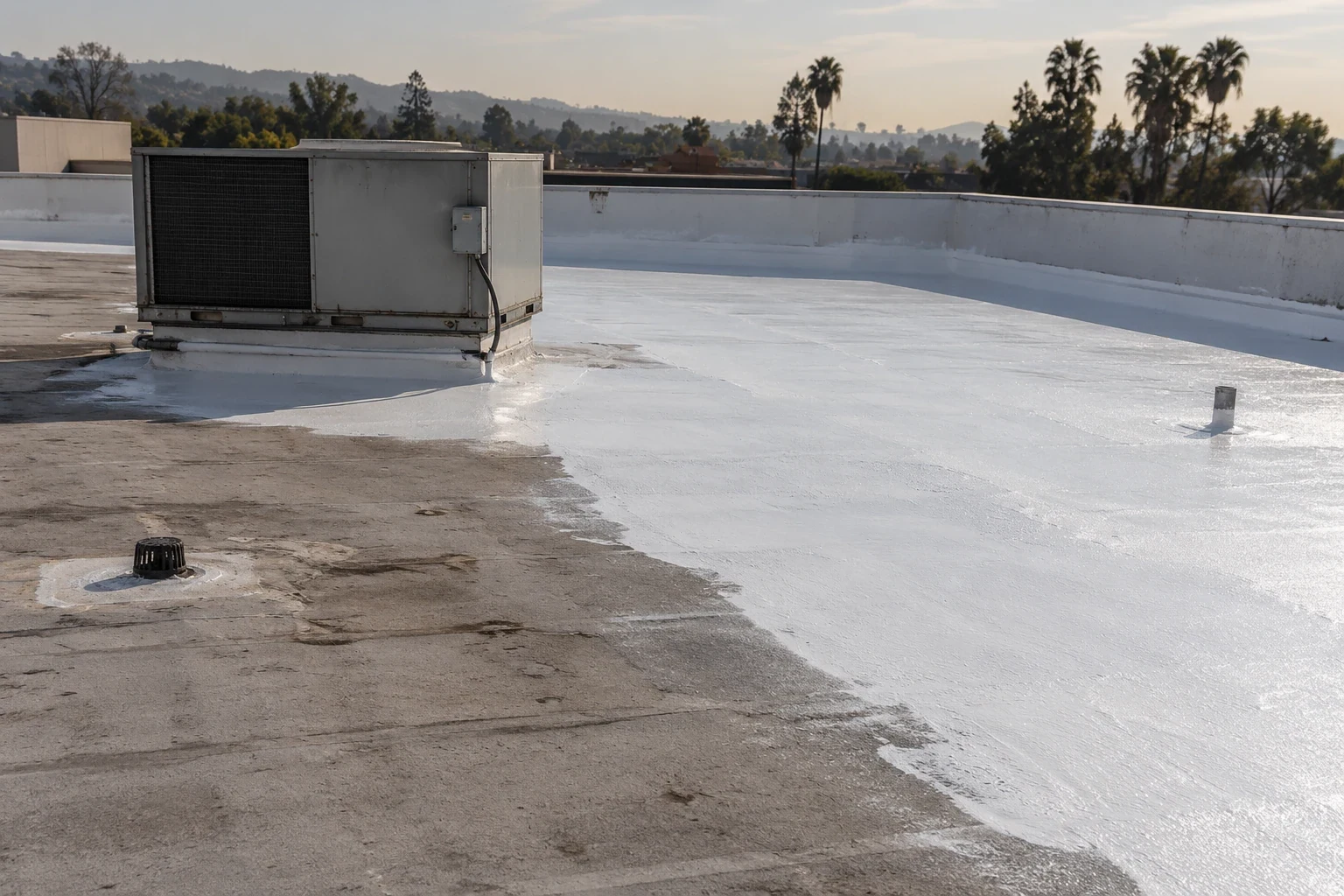
Evaluate acrylic roof restoration in Glendale by existing substrate, moisture, repairs, drying conditions, drainage and current product specifications.
West Valley sun and monsoon timing make preparation and application windows part of the roof-restoration plan. Acrylic roof coatings are liquid-applied products used in specified restoration or protective systems. Suitability depends on the receiving roof, prior coating layers, repair condition, surface preparation, weather window and approved application build. A reflective finish is not by itself proof that the roof has been repaired, dried or made suitable for continued use.
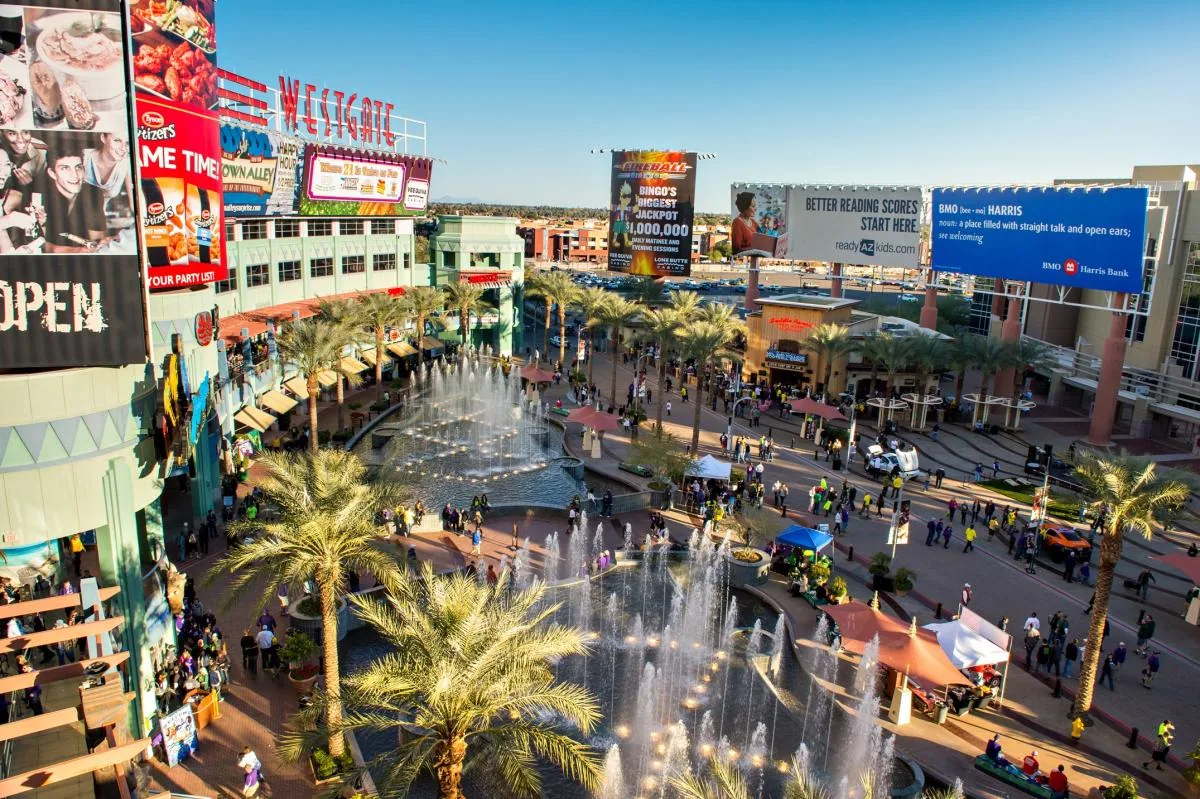
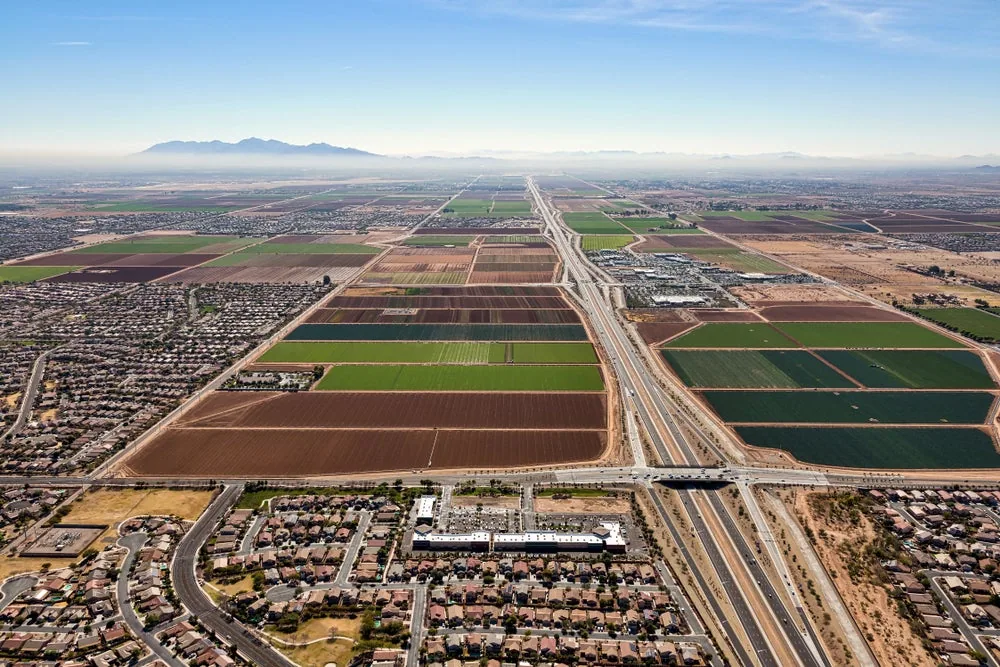
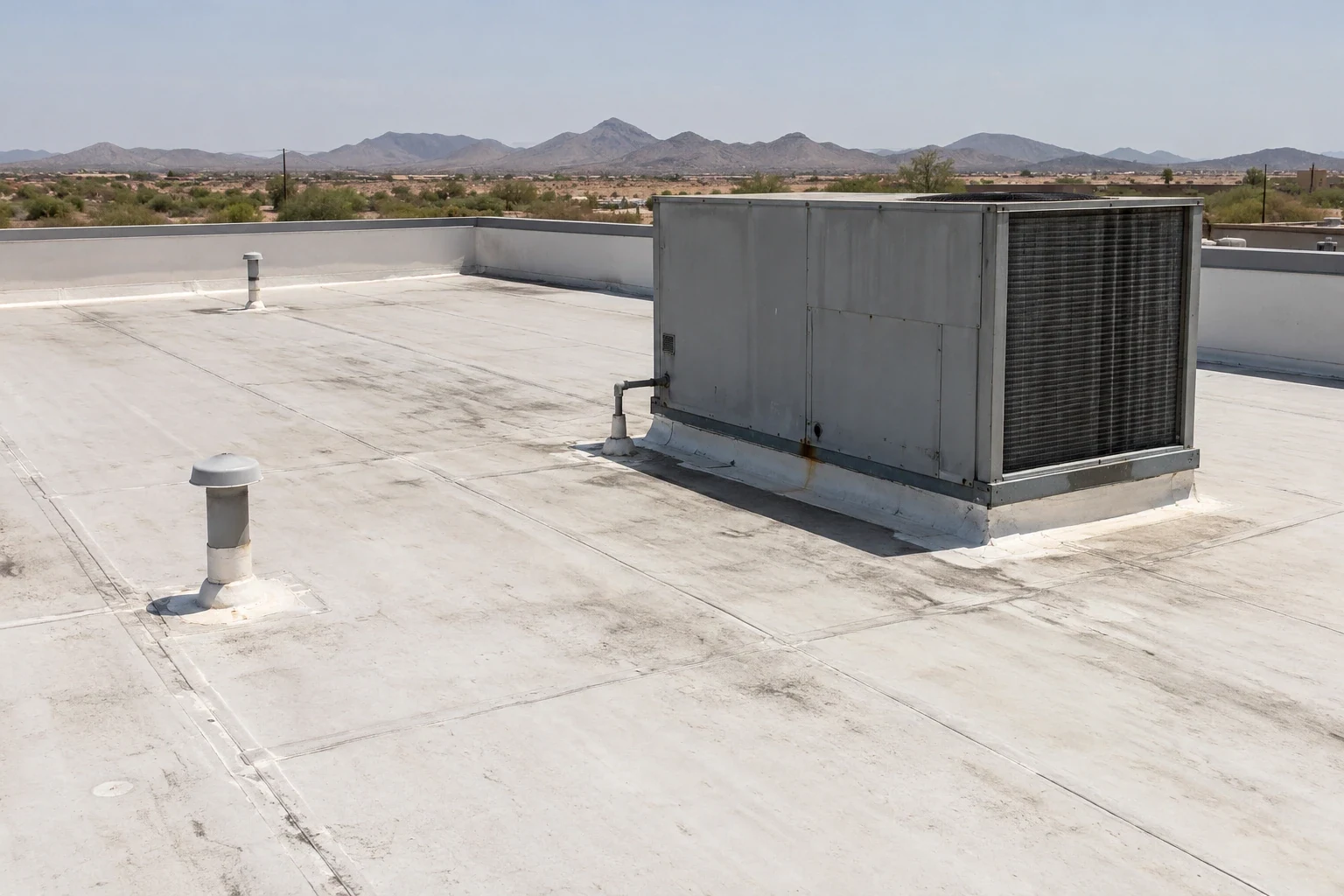
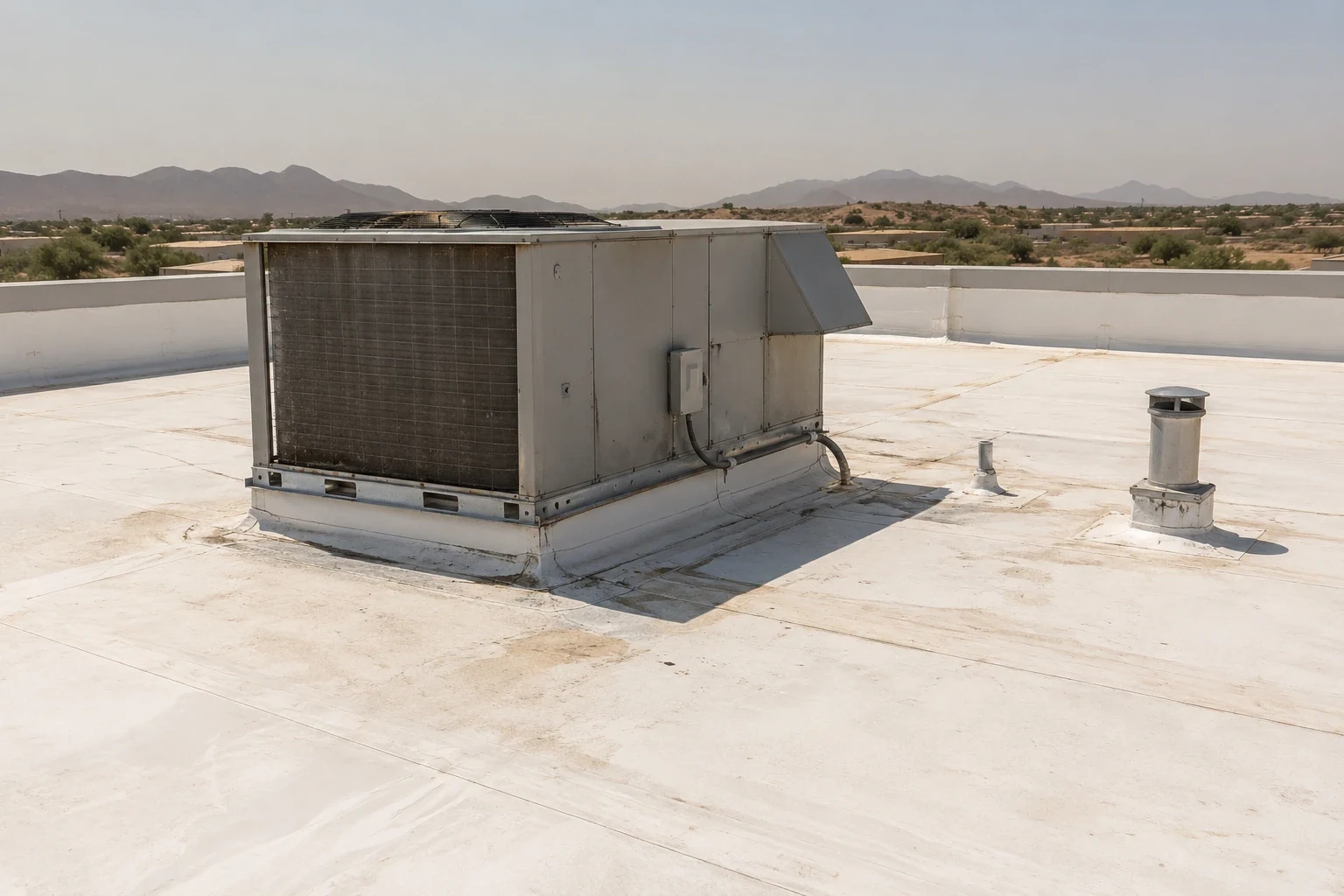
On a commercial building near Westgate Entertainment District or Loop 303 Industrial Corridor, begin with the roof plan and the materials actually present. Identify low areas, drains, open seams, damaged flashings, equipment routes and evidence of prior coating. These place names help locate the work; they do not predict whether an acrylic system fits that roof.
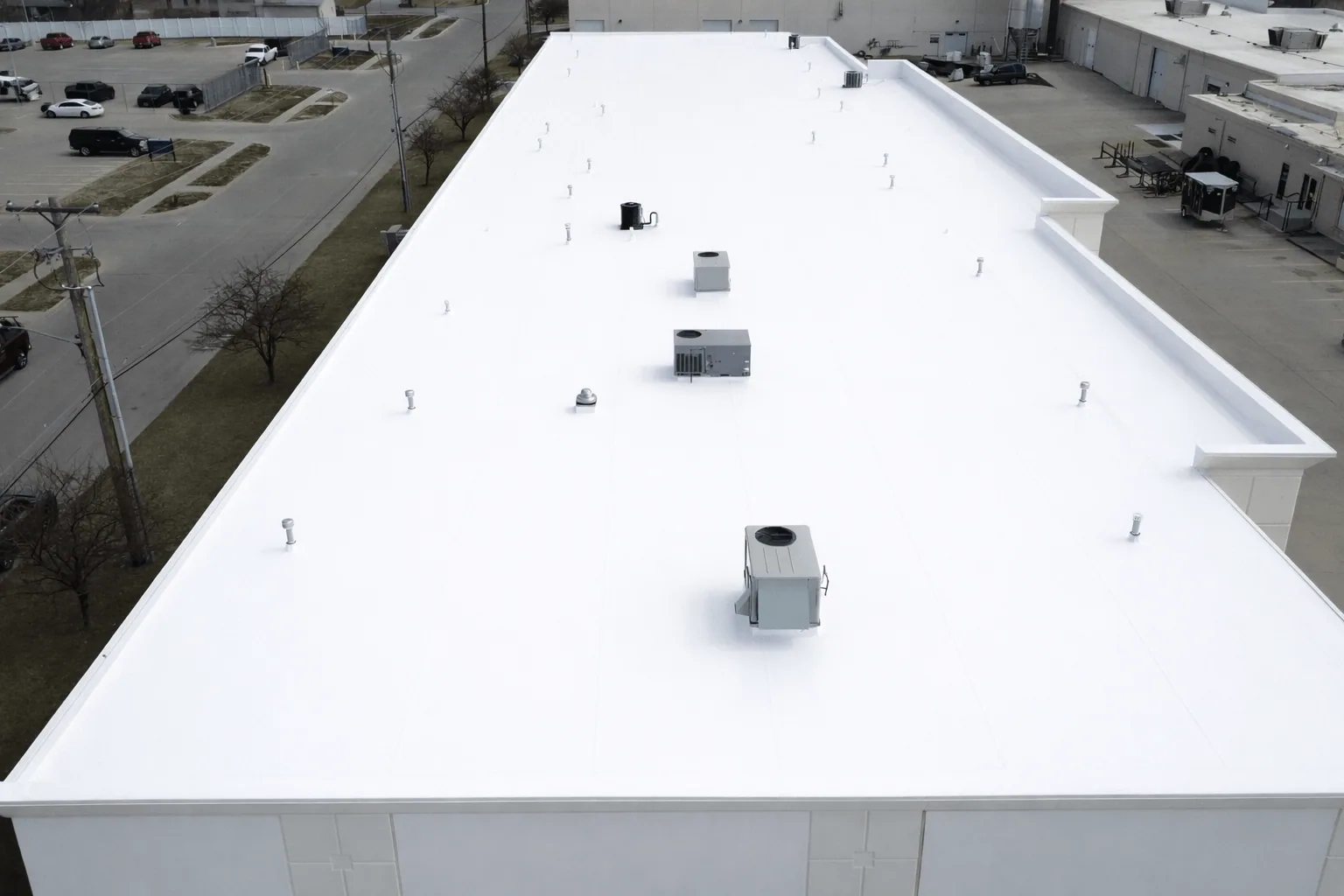
Name the full acrylic system, not just the topcoat
Some product families pair acrylic topcoats with particular base coats or reinforcement. Henry, for example, describes AcryShield 610 FST as a fast-setting acrylic topcoat intended for named base-coat options and lists several substrate-specific system specifications. That is a product example, not a statement that all acrylic coatings share those substrates, approvals or weather limits. Match every layer and accessory to the chosen manufacturer's current documentation.
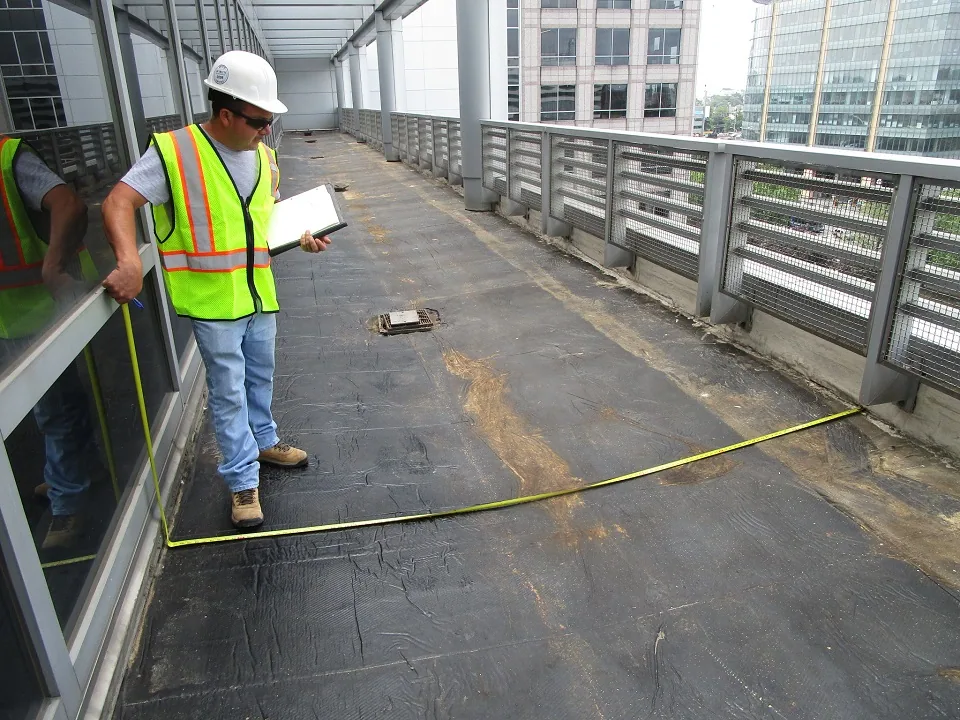
Record the existing roof material, surface texture, coating chemistry, repairs, patch products, rust, dirt, chalking and areas of standing water. Mixed systems may require separate preparations or different primers. If the receiving layer cannot be identified, use manufacturer guidance and an adhesion test rather than applying over an assumed compatible surface.
Compare silicone coatings and SPF assemblies by the condition of the roof, application constraints and maintenance plan. A coating restoration and a newly built SPF roof are different scopes, even when both use liquid-applied protective layers.
Resolve moisture and repairs before the coating work
Look for wet insulation, open laps, blisters, punctures, loose metal, rust, damaged flashing, brittle sealants and areas where water remains. Distinguish defects that can be repaired from conditions that call for opening, drying, removal or deck work. A commercial roof inspection can document visible roof conditions and photographs; it cannot establish the condition of concealed layers without appropriate testing.
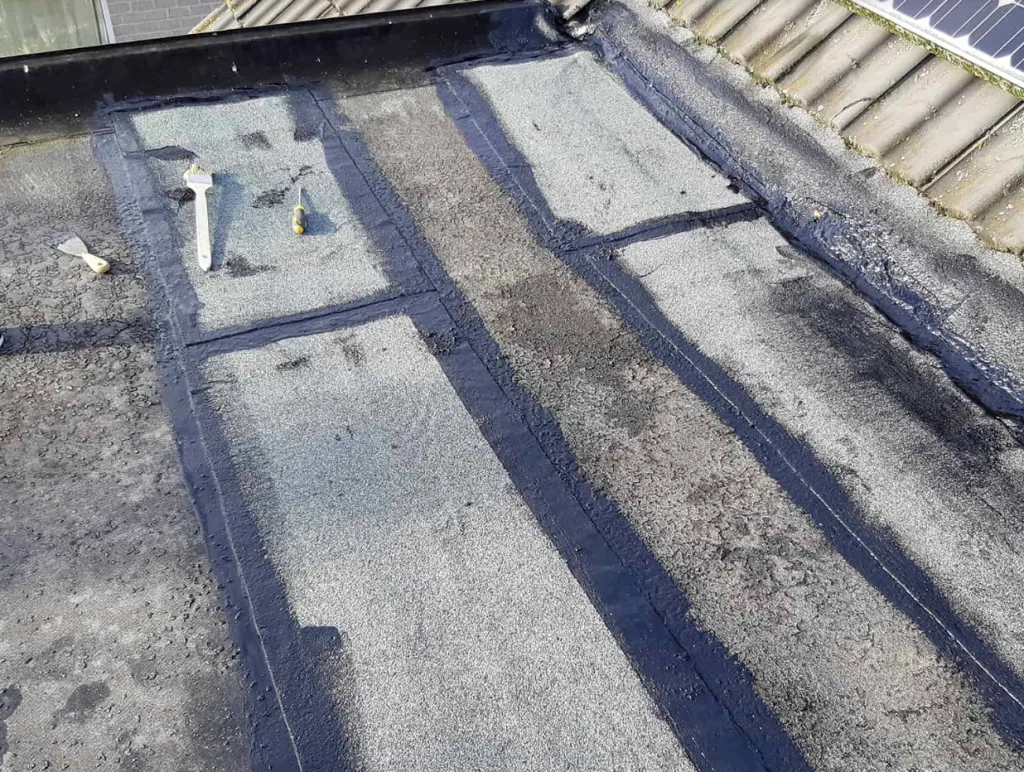
List each included repair by location and material. Specify the patch or flashing products, substrate preparation and cure period before topcoating. If a cap sheet, single-ply membrane or metal panel receives the coating, verify the exact system listing and any required primer. Test adhesion where required and record the preparation, product and result for each representative surface.
Do not use a topcoat to conceal uncorrected openings or wet materials. Define drainage repairs separately. If insulation is being replaced, tie the thickness and tapered elevations to the drain locations and cover-board detail through the insulation and cover-board scope.
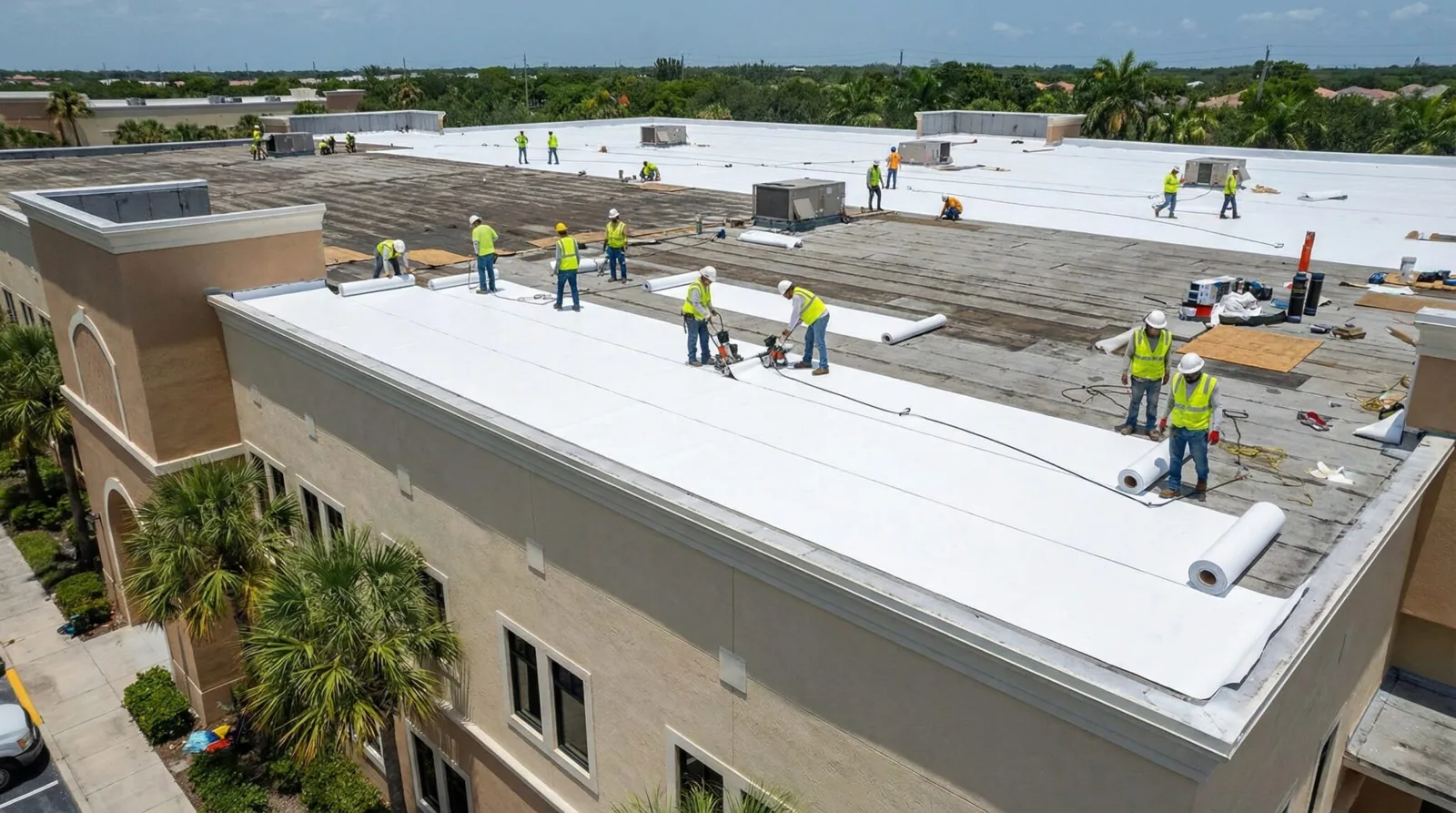
Plan the application around Glendale conditions
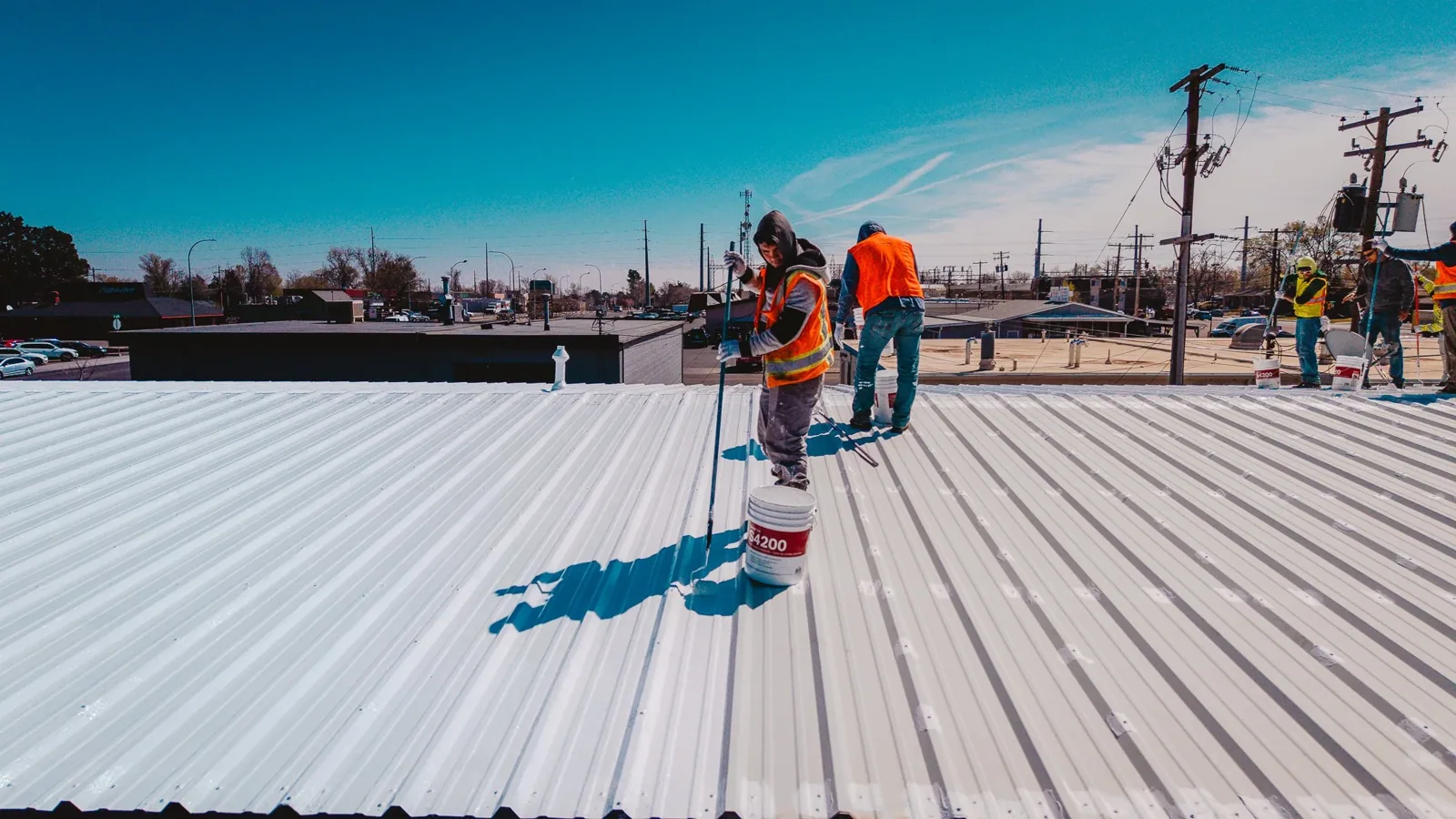
Acrylic application depends on the selected product's temperature, humidity, dew point, substrate moisture and precipitation limits. Schedule cleaning and repairs early enough for the roof to dry and for each layer to cure within the required window. Some products are designed to resist early wash-off after a stated period; that feature applies only to the named product and conditions in its data sheet. It is not a reason to coat over a damp surface or ignore a forecast.
Divide the roof into manageable work zones and show how drains and access routes stay clear. Protect intake openings, rooftop units, vehicles and adjacent finishes against overspray. Secure staging and material storage. If weather changes during installation, document the affected area and resume only when the system instructions permit it.
Westgate properties may have operating schedules and public access to coordinate. Confirm work hours, tenant notifications, parking or loading restrictions and temporary barriers with the owner. Similar coordination is needed near Loop 303 where deliveries, truck routes or neighboring work can affect staging. These are project logistics, not assumptions about any specific building.
Separate reflectivity from assembly performance
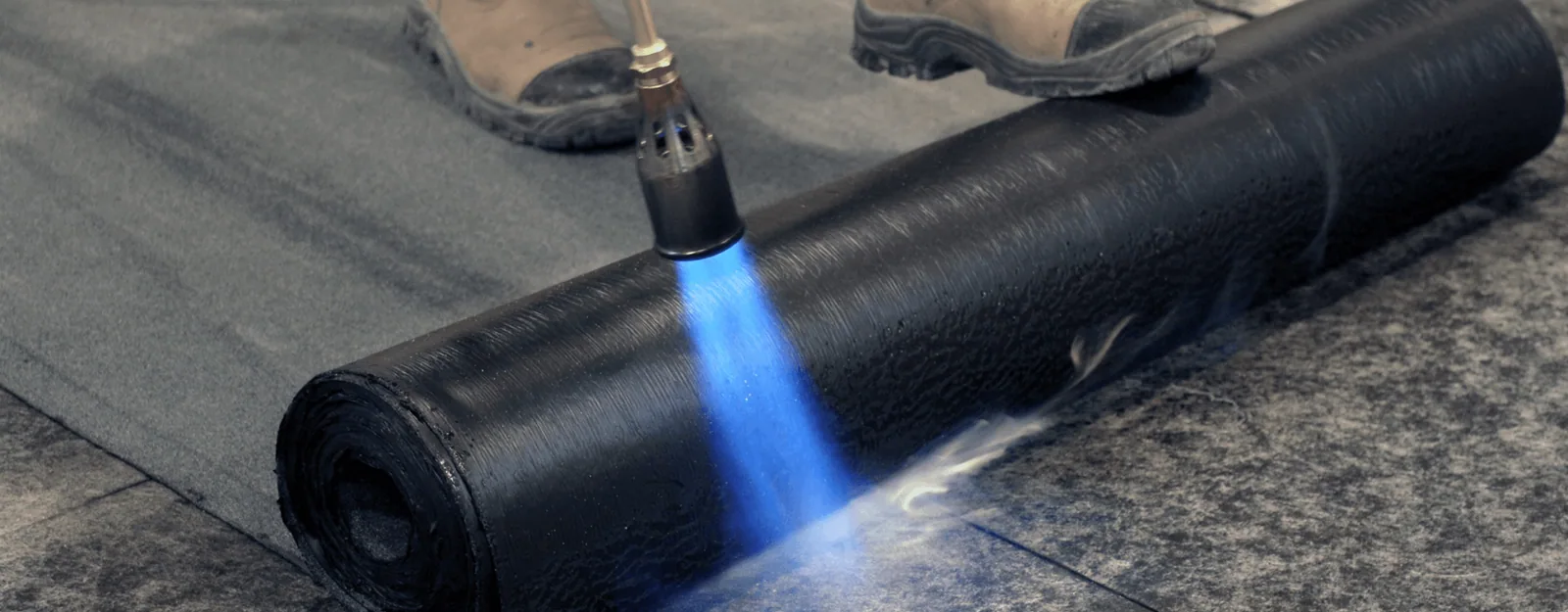
Coating color and reflectance can affect the exposed surface, but energy savings depend on the entire roof assembly, existing insulation, climate, building operation and the selected product's rated properties. Avoid promising a fixed utility reduction from color alone. If energy performance is part of the scope, use the applicable rating data and a project-specific analysis rather than a generic coating claim.
Confirm required dry-film thickness, number of coats, reinforcement at seams and penetrations, coverage rate, cure conditions and quality checks from the system documents. Record readings or material quantities at defined locations. A proposal should state which work complies with a written system specification and what exception needs review.
For edge transitions, drains and curbs, show separate details and compatible sealants. Where the coating stops at a different roof material, show a clean termination that can be inspected later. Do not bridge a moving joint or membrane seam without a detail that permits the expected movement and matches the product's limits.
Compare restoration with other roof options
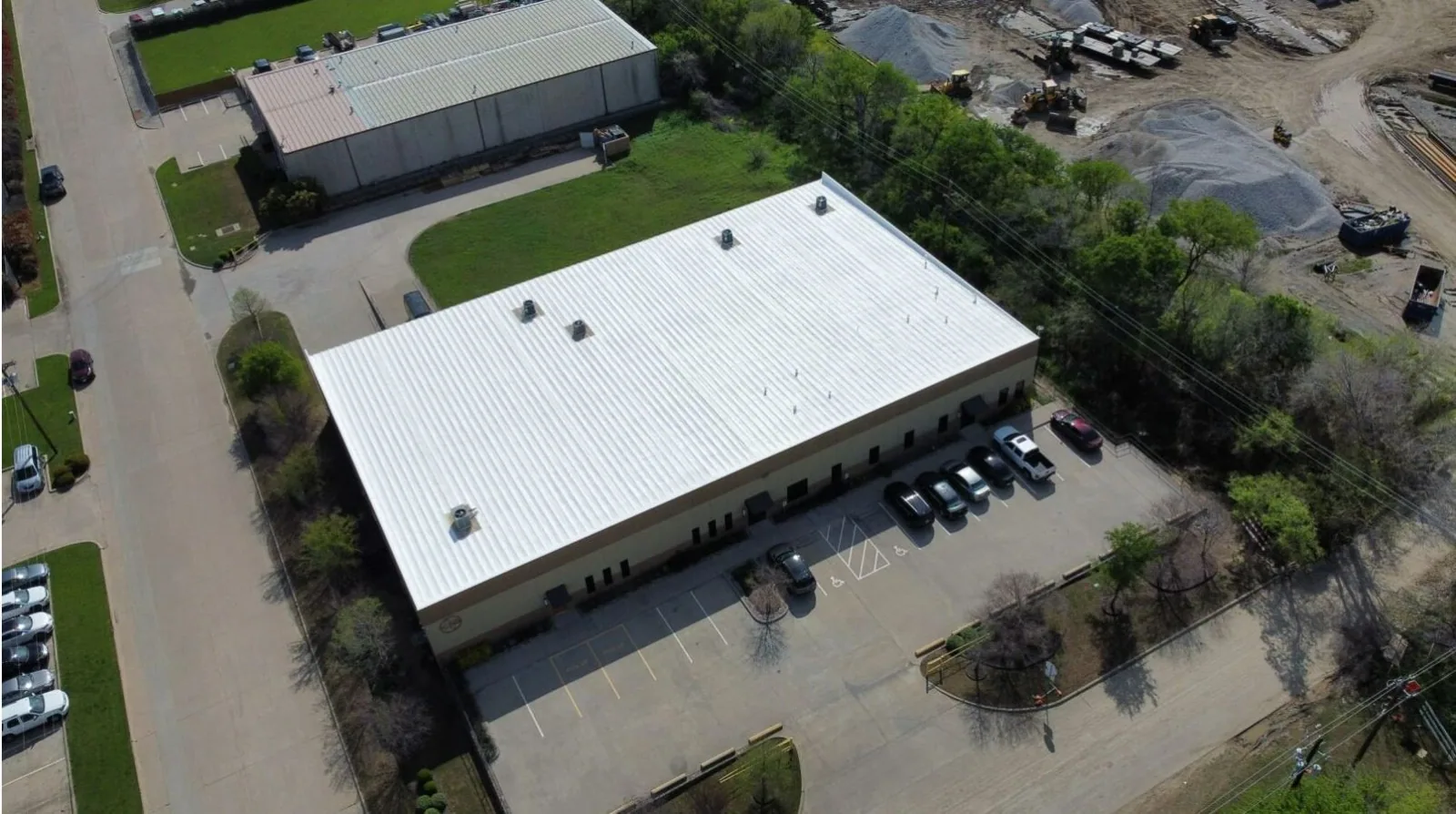
Restoration may fit when the existing roof is suitable to retain, moisture is addressed, repairs are defined, and the selected coating system allows the proposed substrate. When the deck or insulation is wet, widespread attachment is failing or drainage requires substantial change, compare restoration with a recover or replacement. Keep those alternatives on the same roof area and state removal and concealed-condition assumptions clearly.
At completion, file the approved review documents, product data, primer and coat records, application conditions, repaired details, photographs and written warranty terms if issued. Mark the limits of coated sections and note any substrate that was not restored. A maintenance record should show the next review date, accessible drains and equipment paths, and any use restrictions.
Glendale publishes current code and permitting information. Confirm the permit, plan-review and inspection requirements for the specific building and scope before work starts. A coating specification, even one with third-party approvals, does not replace jurisdictional review or project-specific acceptance.
More on Acrylic Roof Coatings
Commercial Roofing Questions
Can acrylic roof coating go over any commercial roof?
No. The exact product system, receiving material, moisture, surface condition, primer and preparation determine suitability. Check current manufacturer instructions for the named substrate.
What does a fast-setting acrylic topcoat mean?
It describes a product-specific feature. Henry lists that property for AcryShield 610 FST; application limits, base coats and rain exposure remain governed by its data sheet.
Can a white acrylic coating reduce energy use?
No. Surface reflectance is only one factor; insulation, assembly, weather and building use also affect energy performance. Use rated product data and project analysis.
Should wet insulation be coated over?
A coating does not dry or replace wet roof materials. Determine the extent of moisture and specify removal, drying or other corrective work before the surface is restored.
What should an acrylic restoration scope specify?
Name the product system, substrate, preparation, repairs, primer, application build, weather limits, transitions, drainage work and closeout records.
Review an acrylic restoration proposal
Share the Glendale roof plan, product history, observed leaks, photographs and project schedule. We can separate confirmed repairs from substrate questions and identify the acrylic system documents needed for comparison.
Next steps for your building:
Related Roofing Work
More commercial roofing work for Glendale and West Valley properties.