Public Agency Roofing in Glendale, AZ
Home / Industries We Serve / Public Agency Roofing
Request A
Roof Assessment
Tell us about the building and the roof. We reply with the next practical step for your property.
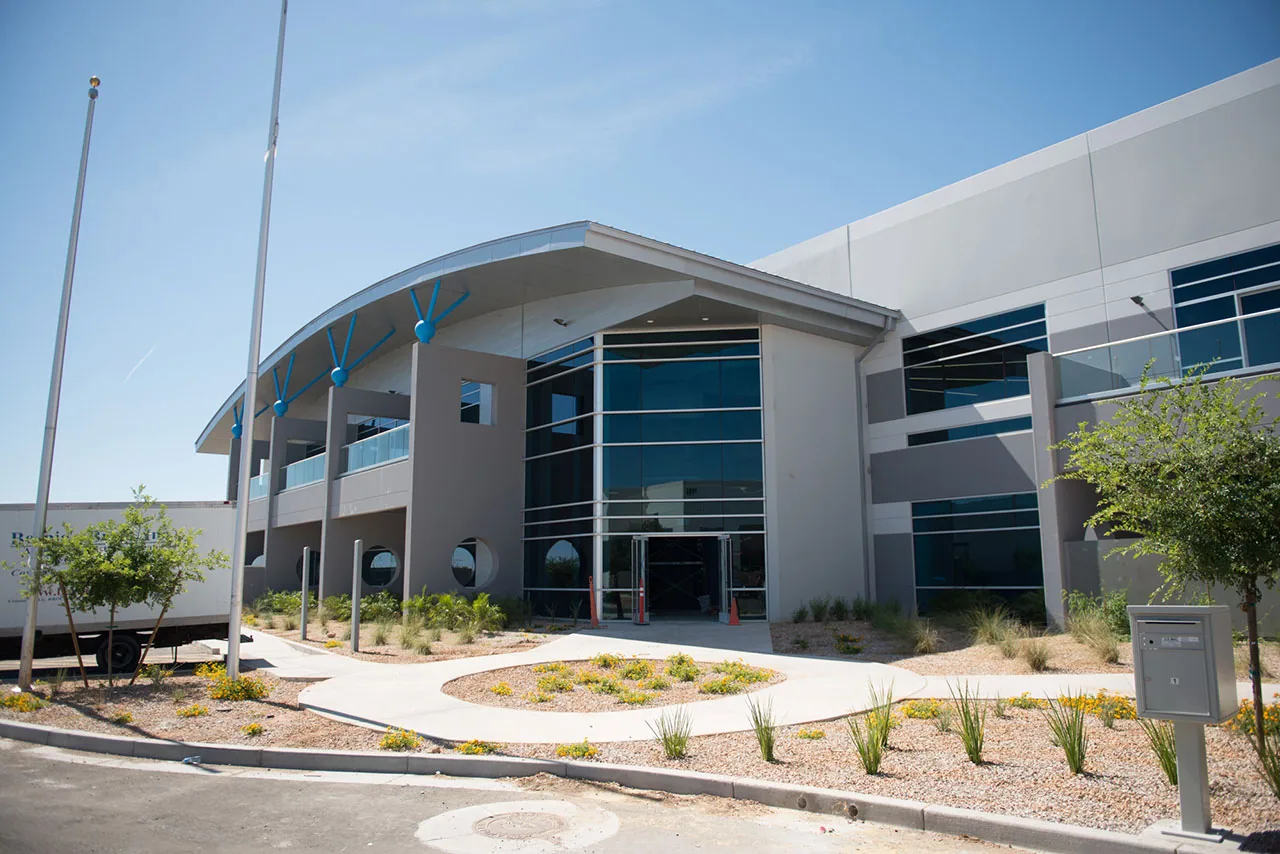
Public agency roofing in Glendale, AZ: leak investigations, clear repair scopes, protection for staff and the public, and a closeout file you can use.
When a public building's roof work falls inside monsoon season, which runs June 15 through September 30 in the Desert Southwest, the plan has to show how each open section gets closed up before a storm. Public agency roofing in Glendale, AZ starts with the specific building and what the agency is ready to approve: an inspection, a targeted repair or a full replacement. We tie our roof findings to that decision so your facilities staff and the general contractor know what it takes to finish. Temporary protection is part of the tear-off plan from day one, not something figured out after the membrane is already off.
Glendale Main Library is at 5959 West Brown Street, and State Farm Stadium is at 1 Cardinals Drive. Landmarks like those help place a building, but every request still needs the actual facility address, the roof areas we can reach and a project contact. Drawings, past repair records and warranty paperwork help. We inspect the areas you authorize and tell you up front what that visit can and cannot answer, before anyone uses it to plan work across a whole facility.
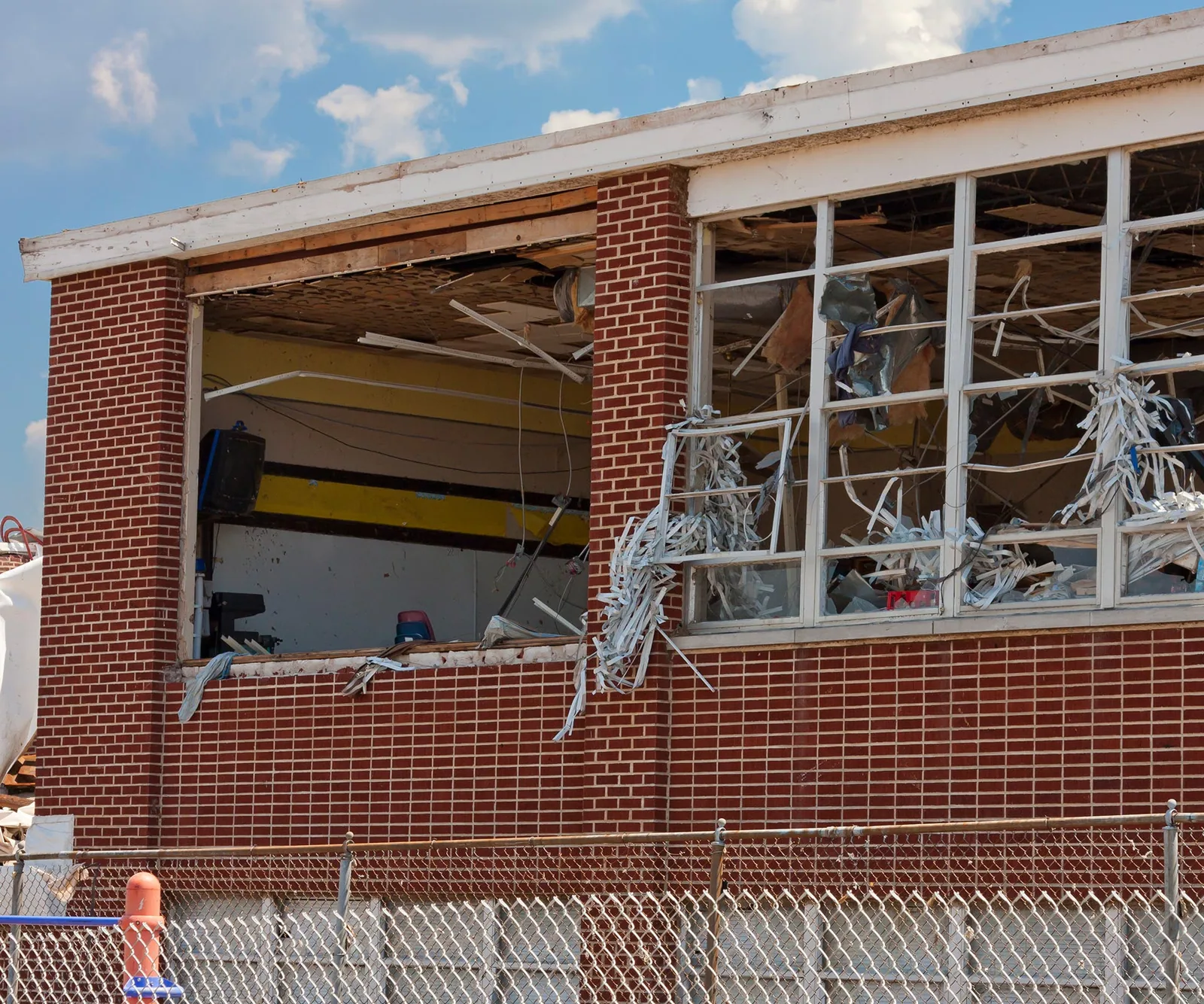
Tracking down leaks in a public building
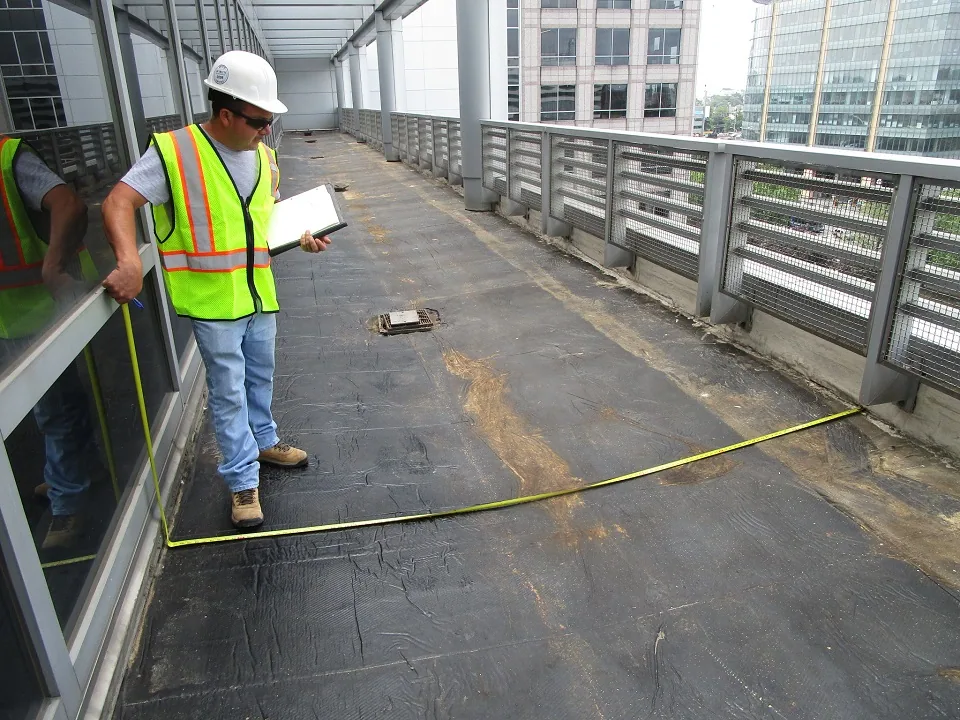
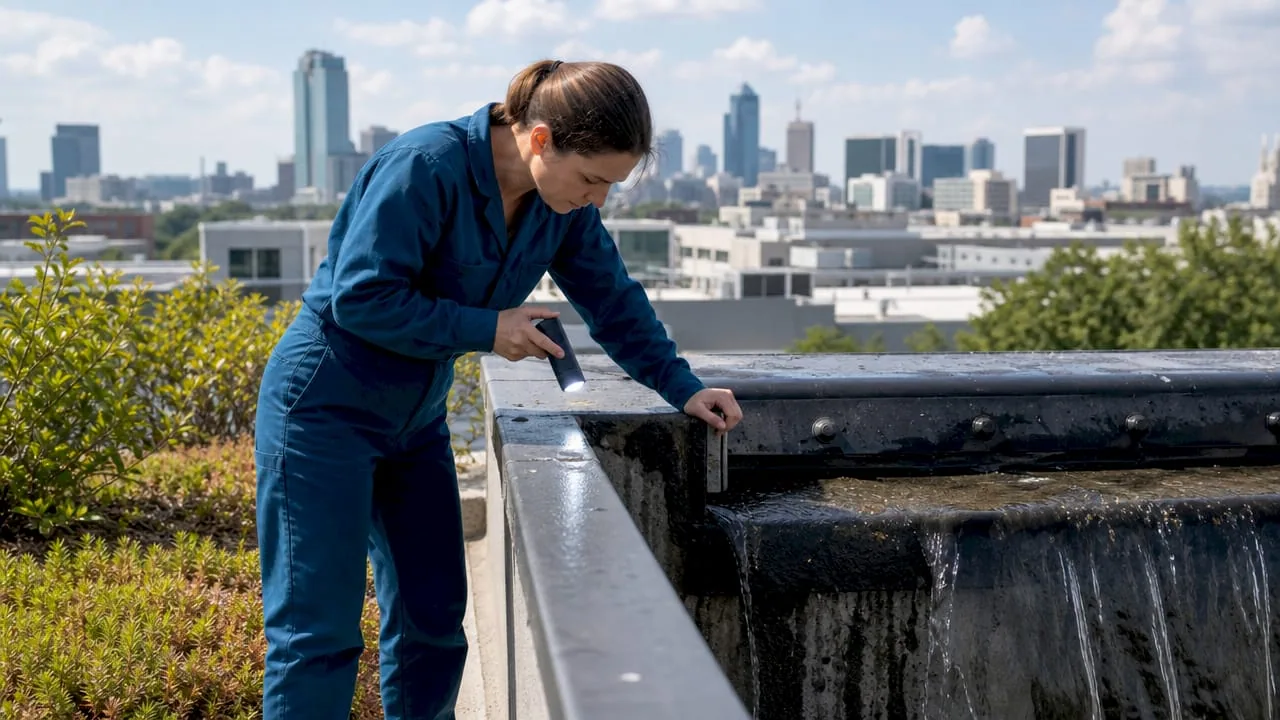
A leak investigation starts with the room where water showed up and when it happened. We compare that with the roof above: seams, wall flashing, curbs and rooftop units. Sometimes a split lap seam right above the stain explains everything and a local repair will do. Other times water runs under the membrane from somewhere else, and finding it takes more work. We explain both possibilities. The agency can approve the investigation it needs without treating every ceiling stain as proof of where the roof failed.
A roof inspection marks each finding on a plan with photos. Old repair records help explain patches and changes we see, but we keep that history apart from the roof's condition today. If we need to cut a core to see the insulation or deck, we say why and how we will patch it. Areas we could not reach are listed as unchecked. Your contractor sees exactly what is still unknown before any repair or replacement depends on it.
What the scope of work should spell out
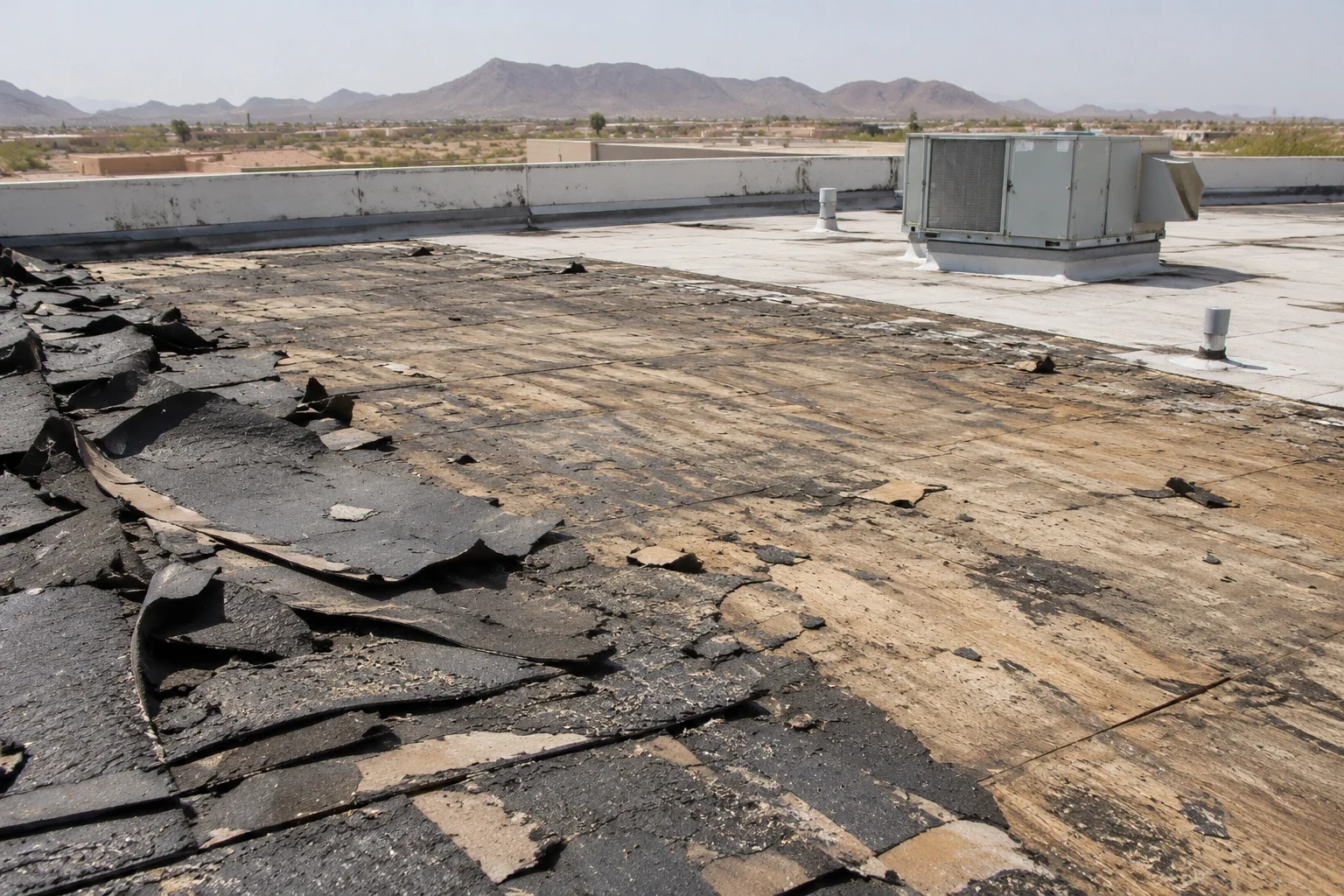
A roofing scope should say what comes off, what stays and how the new work ties into the existing roof. A small repair needs sound membrane and solid backing around it to attach to. A full replacement involves more than the membrane: insulation, fasteners, roof edges, drains and flashing all come into it. We price what the findings support and list separately any quantities that depend on what we find once the roof is open. Your facilities staff can see how the proposed work matches the roof's actual condition, rather than reading a generic product description.
A roof replacement proposal should list each layer removed and the new roof assembly going on, including edge and flashing repairs. A recover or coating only works if the existing roof is dry and sound enough to keep, and we explain the testing that confirms it. If the agency is weighing more than one option, we show what each keeps, replaces and leaves open. The general contractor can then plan the work area and weather protection around a complete scope, with open items still visible before the price is treated as final.
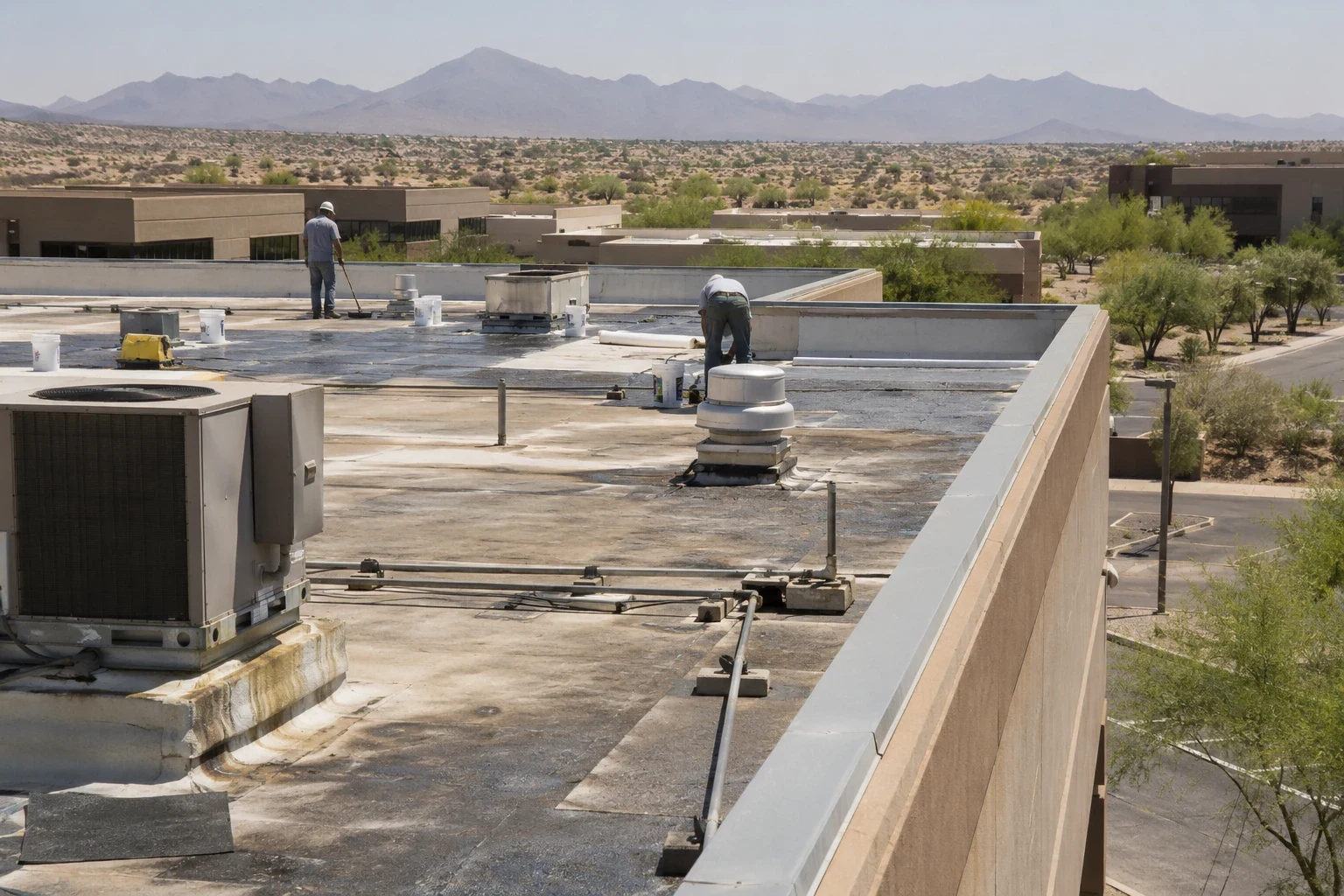
Drains, walls and equipment that affect the roof
A drain with torn membrane flashing may also have a cracked pipe below it. A failed wall flashing may need the parapet behind it rebuilt before new flashing goes on. A new rooftop unit can mean a taller or larger curb, or a new penetration. Each of these needs a location and someone assigned to do it. We spell out the roof repair and what has to be ready under it, so the general contractor can schedule that work first instead of burying it in a vague waterproofing line.
Our drain and scupper scope says whether the problem is debris, damaged flashing or something that needs a plumber or designer. Cleaning a drain does not rebuild its flashing. Fixing a pipe is not the same as changing the roof slope. We tell you what our inspection supports and what still needs another trade to look at it. That lets the agency judge the permanent repair on its merits, while the general contractor lines up the plumbing, wall or mechanical work that must be done before we can close the roof.
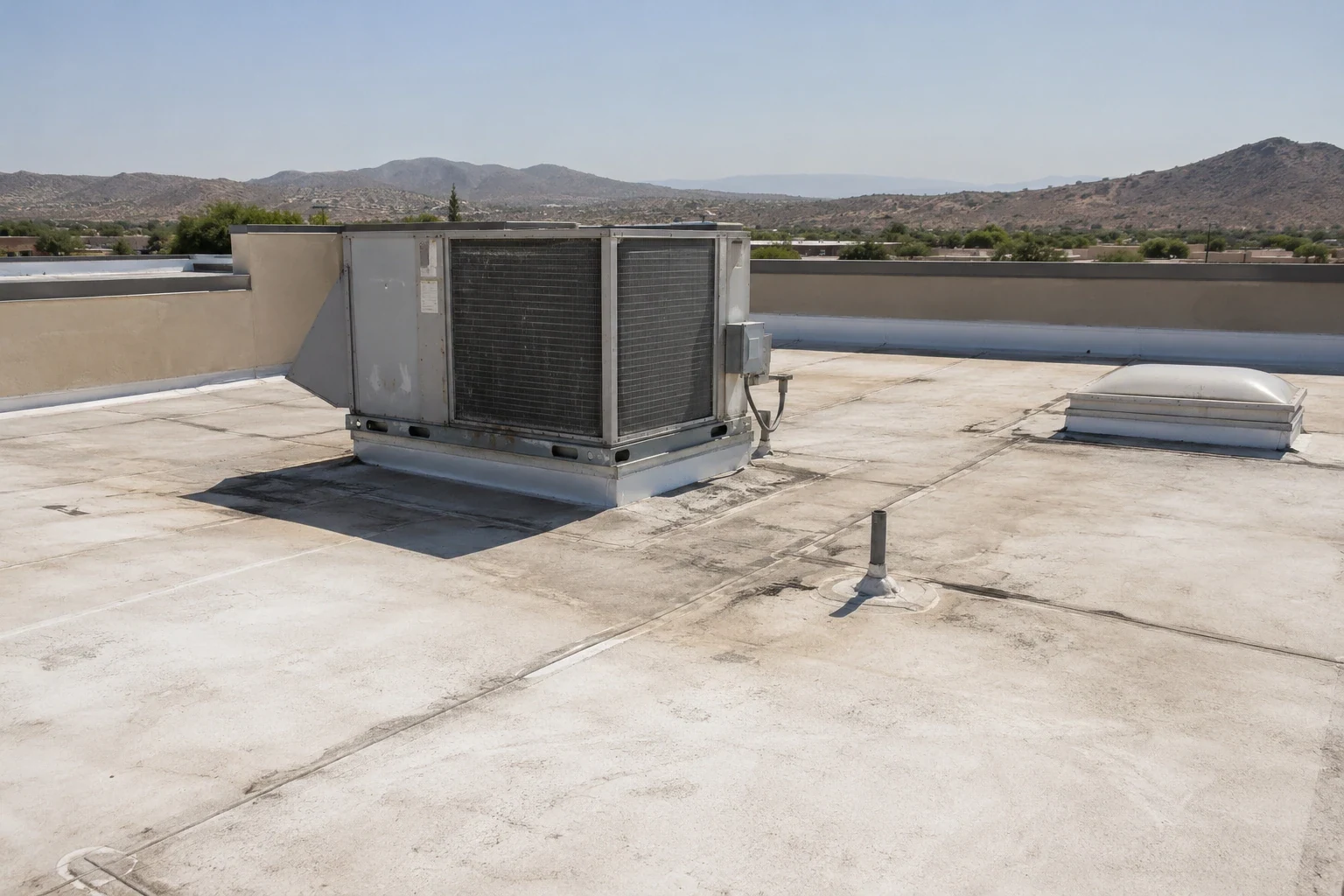
Working around staff and the public
Tearing off roof over an occupied space means planning for the people underneath. Your facility contact tells us which routes are off limits, where we can stage and what notices go out to staff and visitors. We explain how material comes off the roof, where it goes and how long each area stays open, so you can decide what to cover or relocate inside. Noise, dust, odors and rooftop air intakes get matched to the method we are actually using. Access rules for one wing may not work for another, so we confirm each area.
For school district roofing, the building name and contact stay on every plan and report. A general contractor running the larger project needs to know where another trade controls access or when the roof can be closed. If we find more damage and the work area grows, we explain how that affects the protection already in place. The agency gets the reason in writing, so the next approval covers protection and access, not just extra material.
When a storm interrupts the work
Some open areas have to wait on a part, another trade or a decision about damaged material. At the end of each workday we record how each of those areas is sealed. We agree with you on how an open section stays protected while the permanent repair is pending. The general contractor should know what temporary measure is in place and who handles the next step. If another trade runs late, we recheck the temporary protection instead of assuming the original plan still fits.
For a building in Historic Downtown Glendale, the status report names the exact building and the spot on the roof. If an urgent leak comes up after hours, we can respond overnight, on weekends and on holidays. We tell you what can be done given the access and conditions we find. Temporary protection and permanent repair are listed separately. The agency can see what the emergency visit did, and the contractor can plan the rest of the work.
More on Public Agency Roofing
The closeout file your facility keeps
When the work is done, you should be able to find it on the roof and know what was installed. We photograph wood nailers, insulation and prep work before they are closed up, and keep those photos next to shots of the finished detail. Every approved change order is filed with photos of the damage that caused it. Your facilities staff and the general contractor can match what was built to what was approved. Areas we could not inspect, items left out of scope and anything unfinished are listed on their own, not lost under a single project-complete line.
The file includes the written warranty for the installed materials and the maintenance the new roof needs. If a leak is reported later, you can compare it with what was repaired and what was recommended but not done. Where another trade owns an open item, the file names who to call and what comes next. Anyone new on your facilities team can pick up the history without piecing it together from an invoice total and one photo of the finished roof.
Commercial Roofing Questions
What should an investigation request include?
The building address, the roof areas we can reach, the room where water showed up and a project contact. If the visit can't confirm the cause, we tell you what further checking is needed before a permanent repair is priced.
Does cleaning a drain fix every drainage problem?
No. Cleaning clears a clog. Torn flashing at the drain, a broken pipe below or a low spot in the roof each needs its own repair, and we list them separately.
How will we hear about a change in tear-off scope?
Before the extra work starts. We send photos of what we found, how much more needs to come off and how it affects protection or access, and we wait for approval from the project contact.
What records do we get when the roof work is done?
A closeout file with photos of hidden work before it was closed up, a plan showing where repairs were made, warranty paperwork, maintenance needs and a list of open items. It lets you compare future leak reports with the work done.
Plan your facility's roof work with us
Set up a pre-construction meeting for the building. We will go over the roof findings, what your staff needs to prepare and how open areas stay protected through the schedule.
Next steps for your building:
Related Roofing Work
More commercial roofing work for Glendale and West Valley properties.